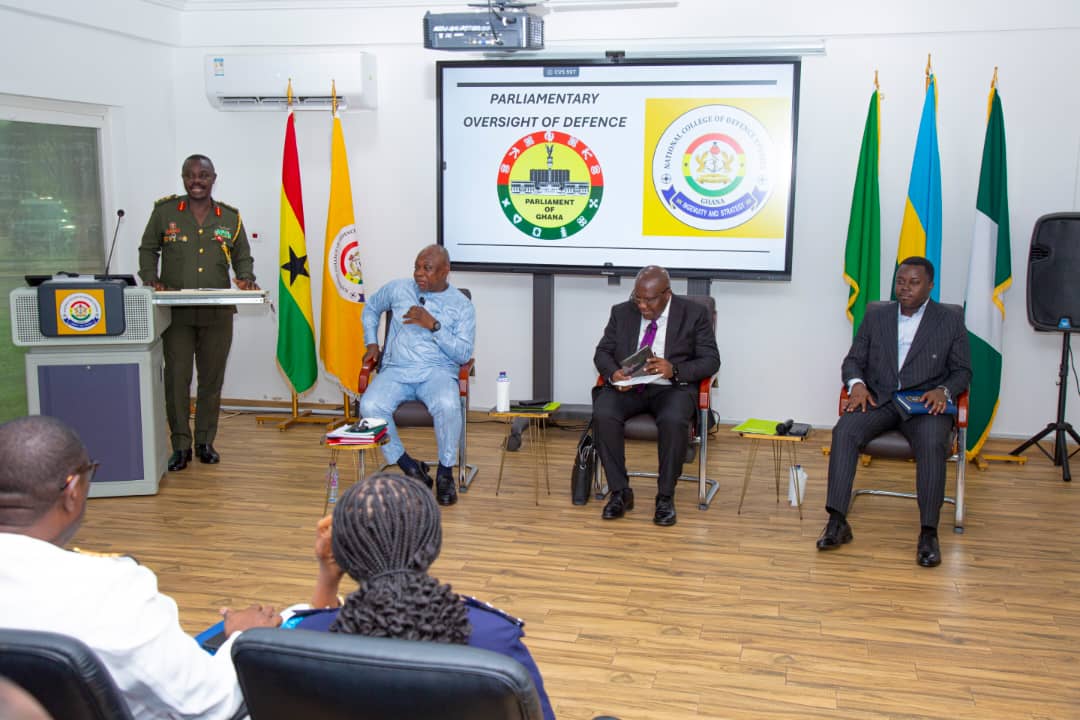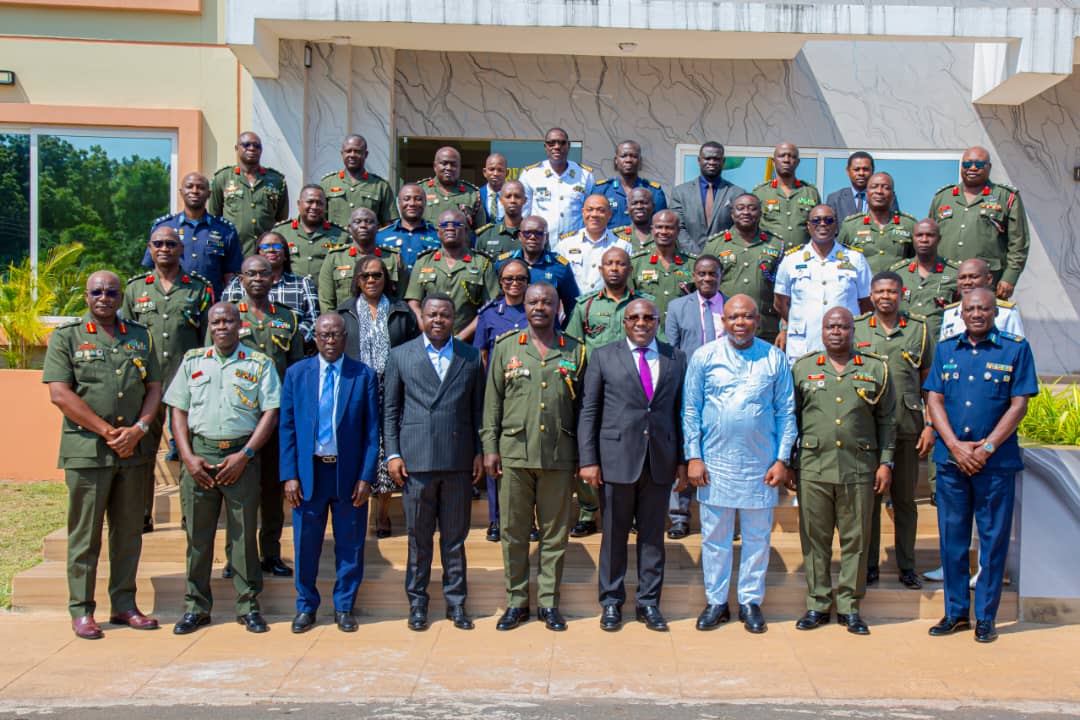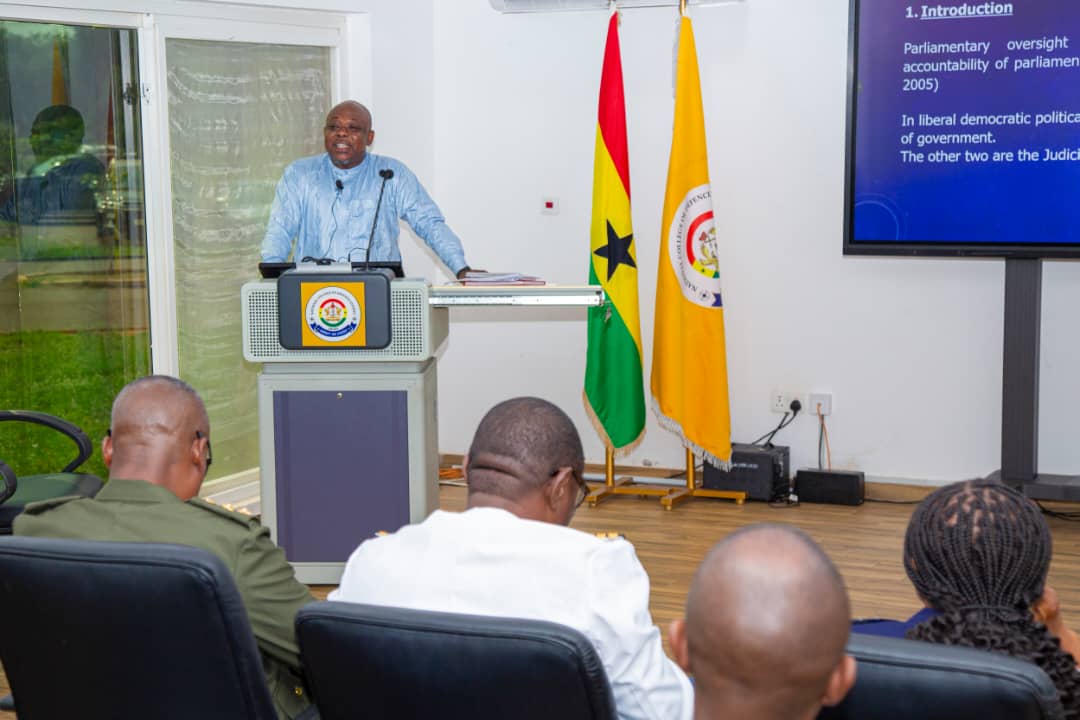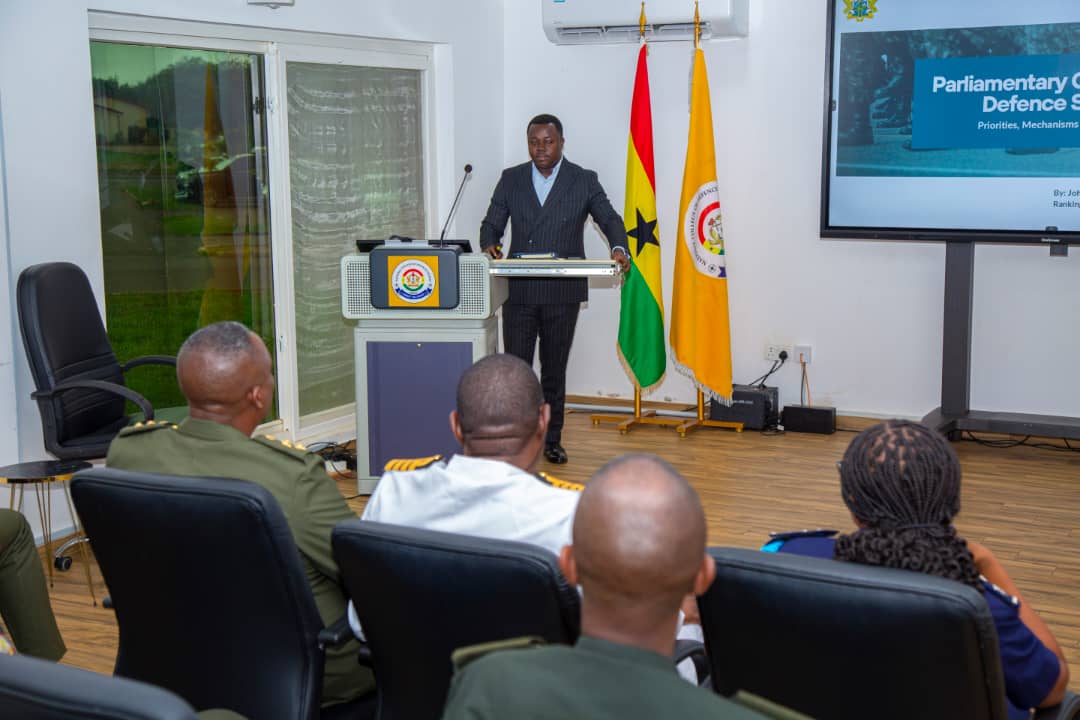
A seminar held for participants of Course 2-2025 of the National College of Defence Studies (NCDS) on 26 November 2025 underscored the critical role of Parliament in ensuring accountability, transparency, and effective governance within Ghana’s Defence and security sector. The event brought together experts and legislators to examine the constitutional basis, mechanisms, and challenges of parliamentary oversight.
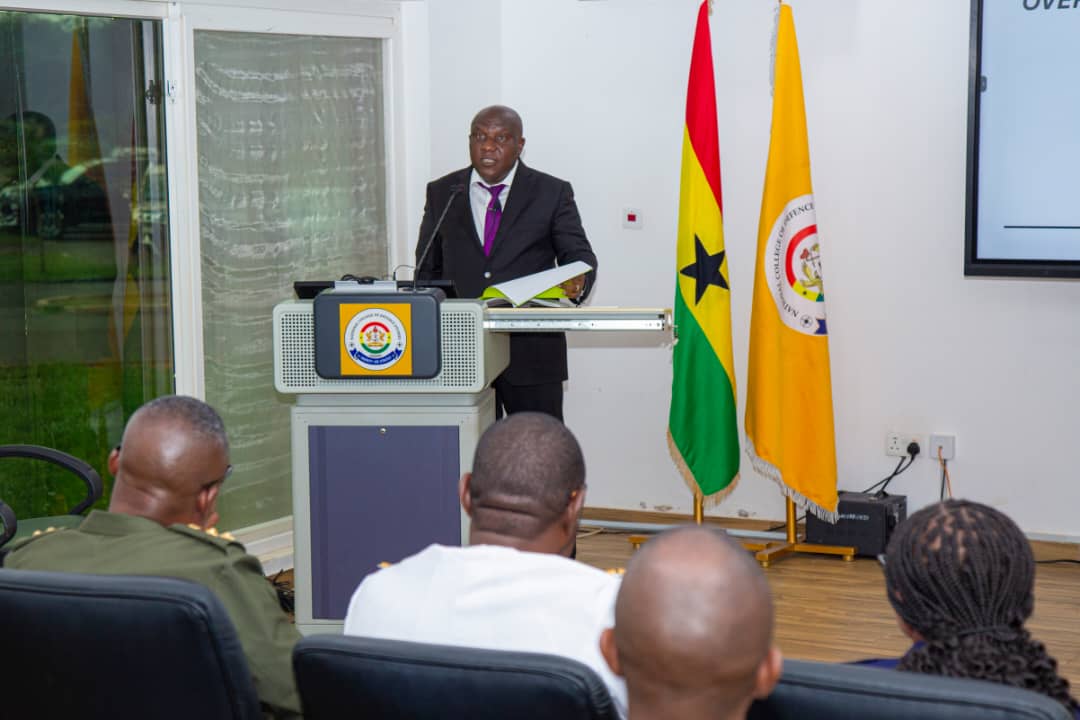
Opening the session, Dean of NCDS, Professor John Akokpari, outlined Parliament’s oversight mandate as established under Article 103 of the 1992 Constitution, noting the key role of select committees such as the Public Accounts Committee (PAC) and the Committee on Defence and Interior (PSCDI). He emphasized that oversight responsibilities span fiscal control, management, and policy, and extend across the Ministry of Defence, the Ministry of the Interior, and the National Security Secretariat.
The seminar was chaired by former Member of Parliament (MP) for Mpraeso, Hon Seth Kwame Acheampong, and featured MP for Builsa North, Hon James Agalga, and MP for Assin South, Hon Rev. John Ntim-Fordjour, as panellists. The speakers stressed that parliamentary oversight remains central to democratic control over the security sector. They highlighted constitutional provisions such as Article 75, which defines executive authority and parliamentary checks, and Article 11, which guides the conduct of the Armed Forces.
The panellists outlined Parliament’s responsibilities, including debating and passing Defence-related laws, approving major procurements, authorizing peacekeeping deployments, and developing Defence policy within Ghana’s national security framework. They referenced the Ghana National Security Strategy, which has been submitted to Parliament for consideration.
Despite these responsibilities, the speakers acknowledged persistent challenges, including limited transparency and capacity gaps. Although parliamentary committees receive technical support from experts within the Ghana Armed Forces (GAF), the Ghana Police Service, and the Ghana Prisons Service, they noted that these constraints continue to affect the effectiveness of oversight.
Discussions also focused on budgetary pressures and the need to retool the GAF to address emerging security threats such as money laundering, illegal mining, violent extremism, and peacekeeping demands. The constitutional provisions guiding these responsibilities, including Articles 174, 179, and 212, were highlighted.
Key mechanisms for oversight cited during the seminar included Defence budget approval, military agreement vetting, enforcement of the Defence Sector Act, ministerial vetting, procurement scrutiny, and the summoning of Defence officials. The panellists cautioned strongly against the politicization of Defence matters, emphasizing that national security must remain a non-partisan priority. Participants engaged the panel with questions on how parliamentary oversight could expedite funding for military retooling to enhance operational readiness.
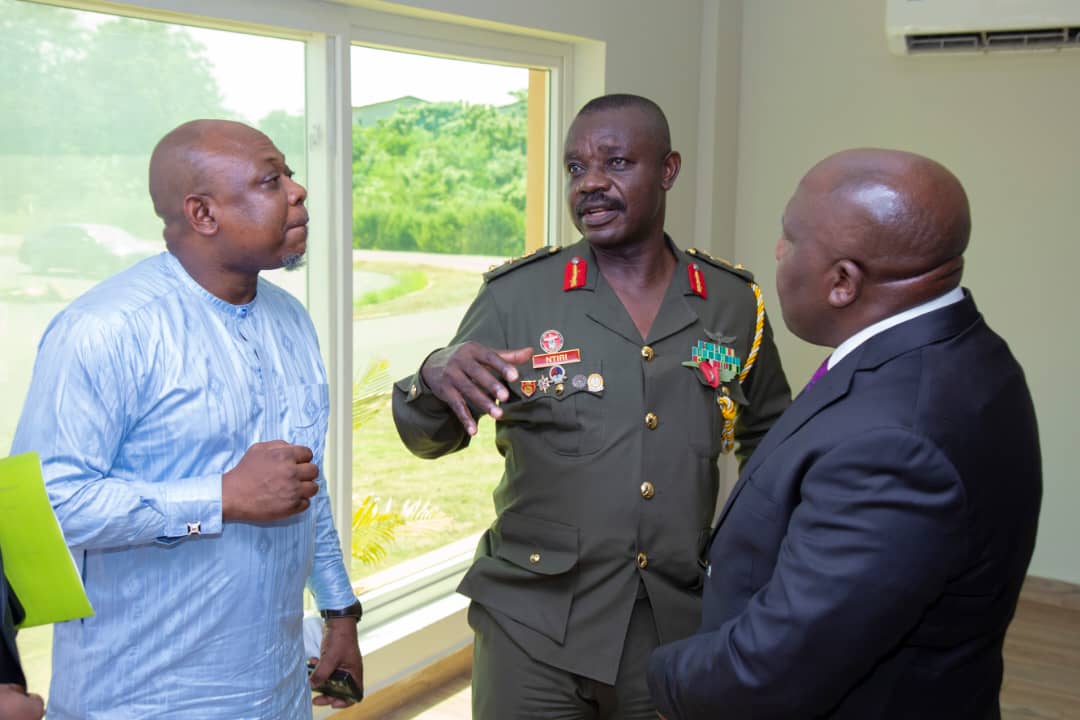
In concluding the event, Acting Commandant Brigadier General Frederick Dankyi Ntiri presented plaques to the panellists, acknowledging their contributions and the value of their insights to the course participants. The seminar reaffirmed the importance of robust parliamentary oversight as a cornerstone of Ghana’s democracy and security governance.