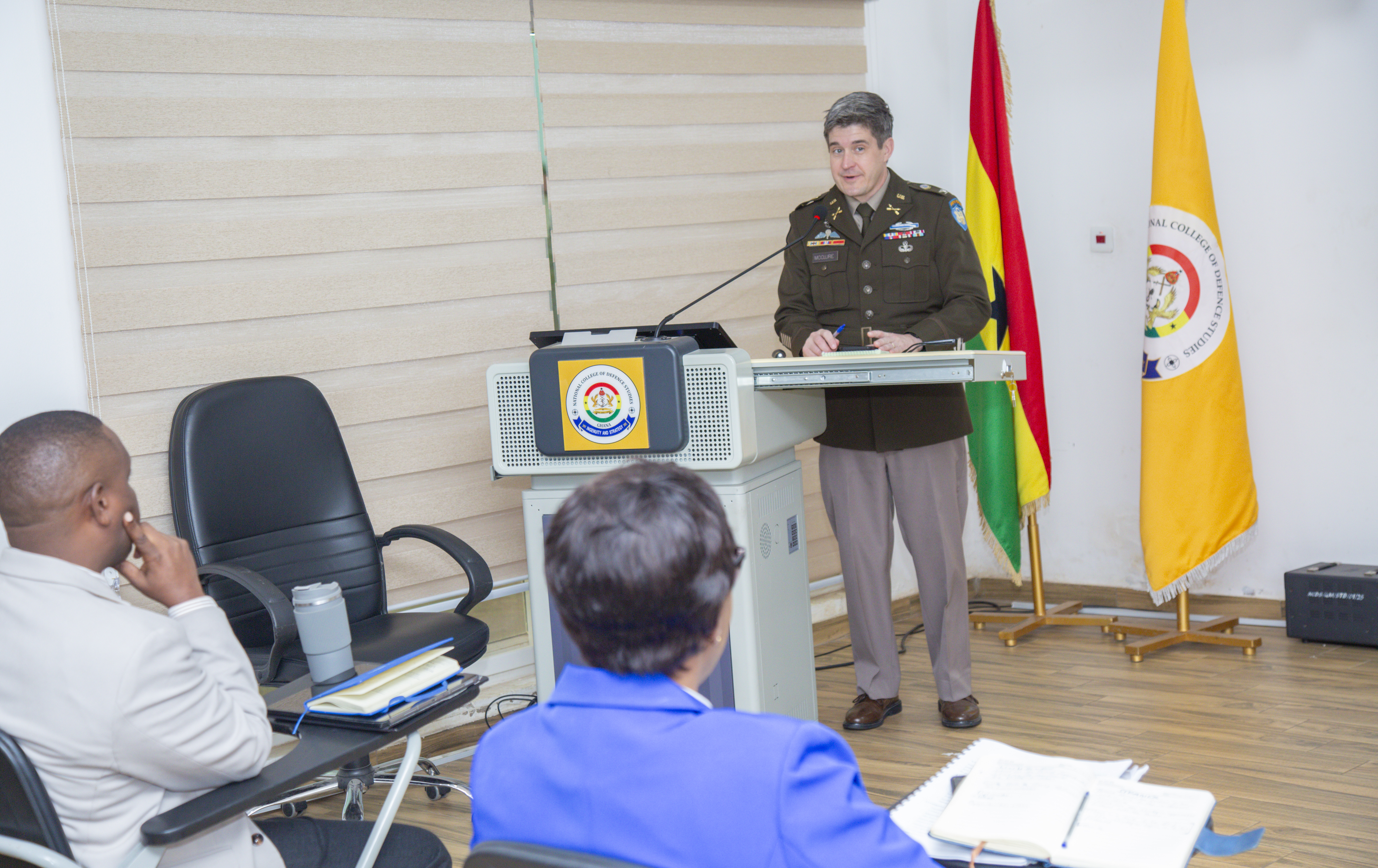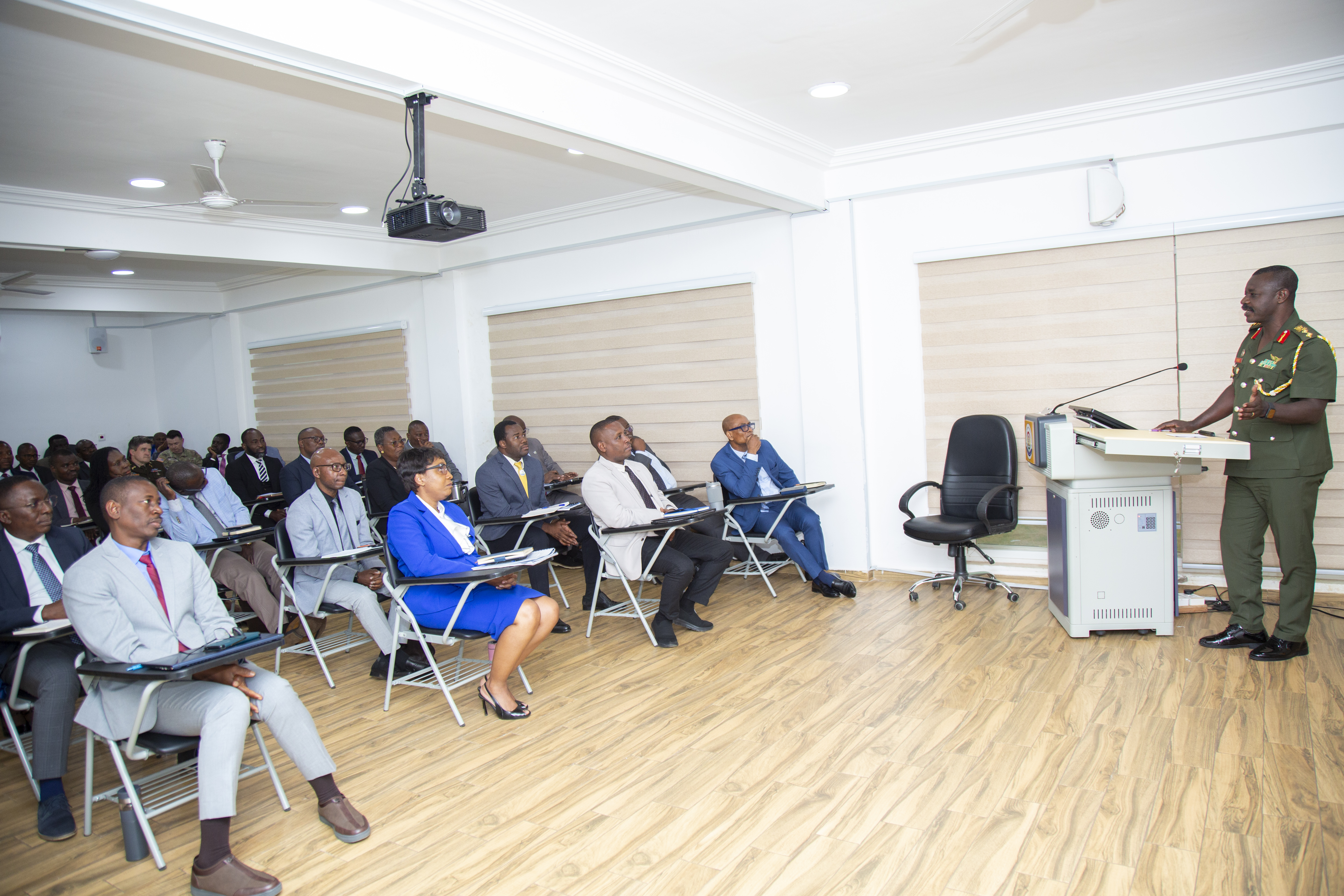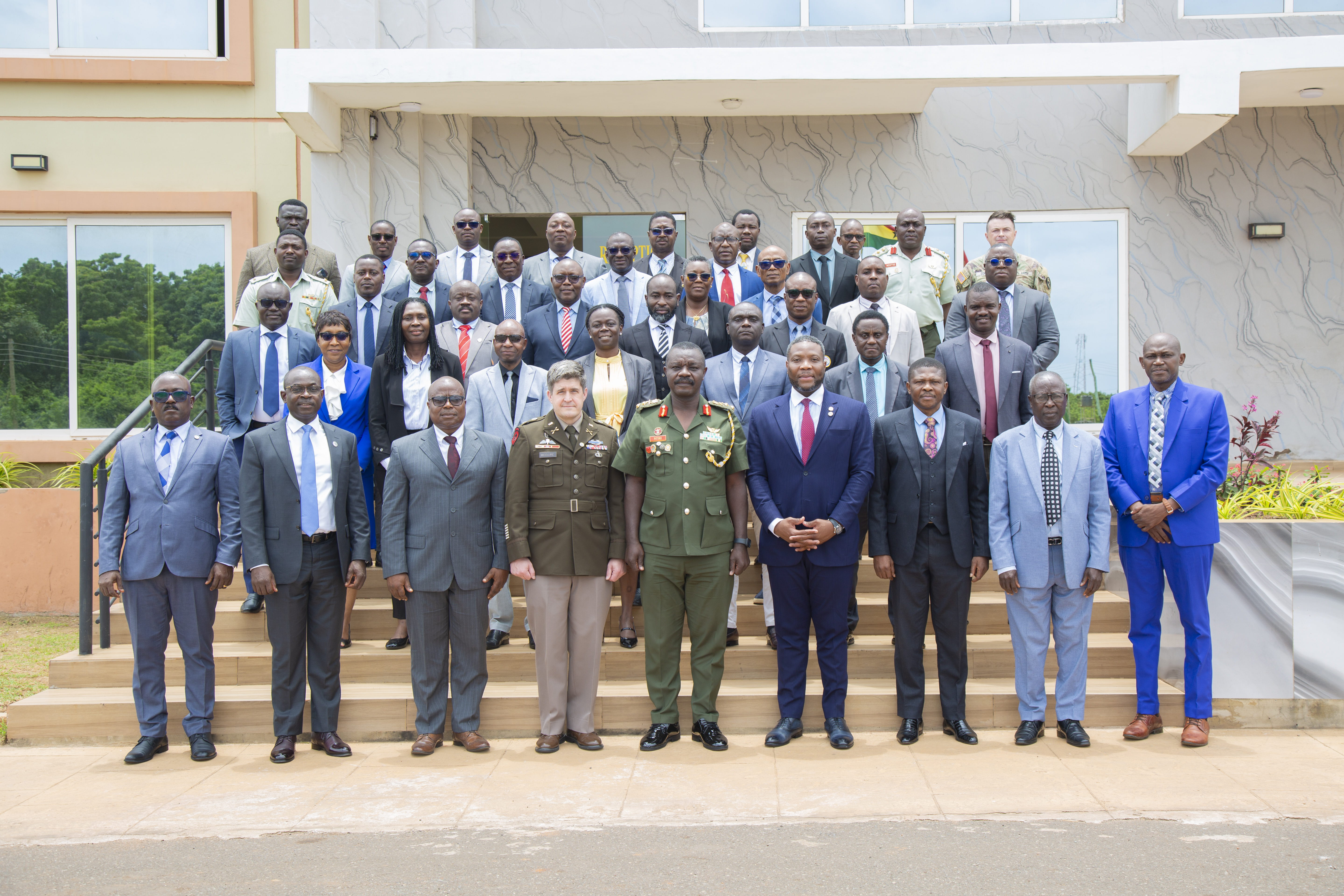
The African Centre for Strategic Studies (ACSS) organised a two-week National Security Strategy (NSS) workshop for participants of Course 3-2026 at the National College of Defence Studies (NCDS).
The programme, held from Monday, 3 August to Thursday, 13 August, 2026, at the NCDS, was designed to equip participants with the knowledge and practical skills required to understand and develop a National Security Strategy.
The workshop placed particular emphasis on moving beyond abstract security doctrines towards practical, sustainable and context-specific approaches to developing national security strategy.
The facilitators, Colonel Shawn McLure and Professor Joel Amegbor of ACSS led participants through a range of topics aimed at strengthening strategic thinking, enhancing their understanding of contemporary security challenges in a volatile, uncertain, ambigious and complex global security environment and the requirement to develop a feasible and acceptable national security strategy.
ACSS, an institution under the United States Department of Defense and part of the National Defense University in Washington, D.C., is dedicated to enhancing Africa’s capacity to address security challenges through research, education and strategic engagement.
During the workshop, the facilitators examined the evolution of security within the African context, tracing its development from pre-colonial societies through state- and regime-focused security systems during the colonial and Cold War eras to the contemporary concept of human security.
They explained that human security complements, rather than replaces state security, while highlighting the expanding role of security institutions in areas including disaster response, border and maritime security, and peace operations.
Strategic thinking and national interest formed a central part of the workshop. Participants were introduced to realism, liberalism and constructivism as different approaches to understanding instruments of power, institutions and identity in international relations.
The facilitators emphasised that national interests and national values form the foundation of effective security strategies. Participants were taken through distinguish national interests from strategic objectives, vulnerabilities, risks, threats and the categorisation national interests into vital, important and peripheral interests.
A significant component of the workshop focused on the institutional processes required to develop and implement a National Security Strategy.
Participants examined how the drafting processes could be coordinated through structured committees and considered key phases of strategy development, including initiation, assessment, drafting, consultation, approval, dissemination, implementation, monitoring and review.
The facilitators stressed that an effective National Security Strategy must establish clear priorities, maintain a strong connection between objectives and available resources, use clear and accessible language, ensure institutional ownership and provide a practical pathway for implementation.
Participants were also taken through translating strategic objectives into actionable plans, align national security strategies with national budgets, and establish effective systems for monitoring, evaluation and periodic review.
In his remarks at the conclusion of the programme, the Commandant of the National College of Defence Studies, Major General Frederick Dankyi Ntiri, urged participants to continue collaborating and sharing information as they work towards developing strategies that would contribute meaningfully to national development and security.
On behalf of the faculty and staff of the College, Major General Ntiri expressed appreciation to Colonel Shawn McLure and Professor Joel Amegbor for sharing their knowledge, expertise and professional experiences with the participants.
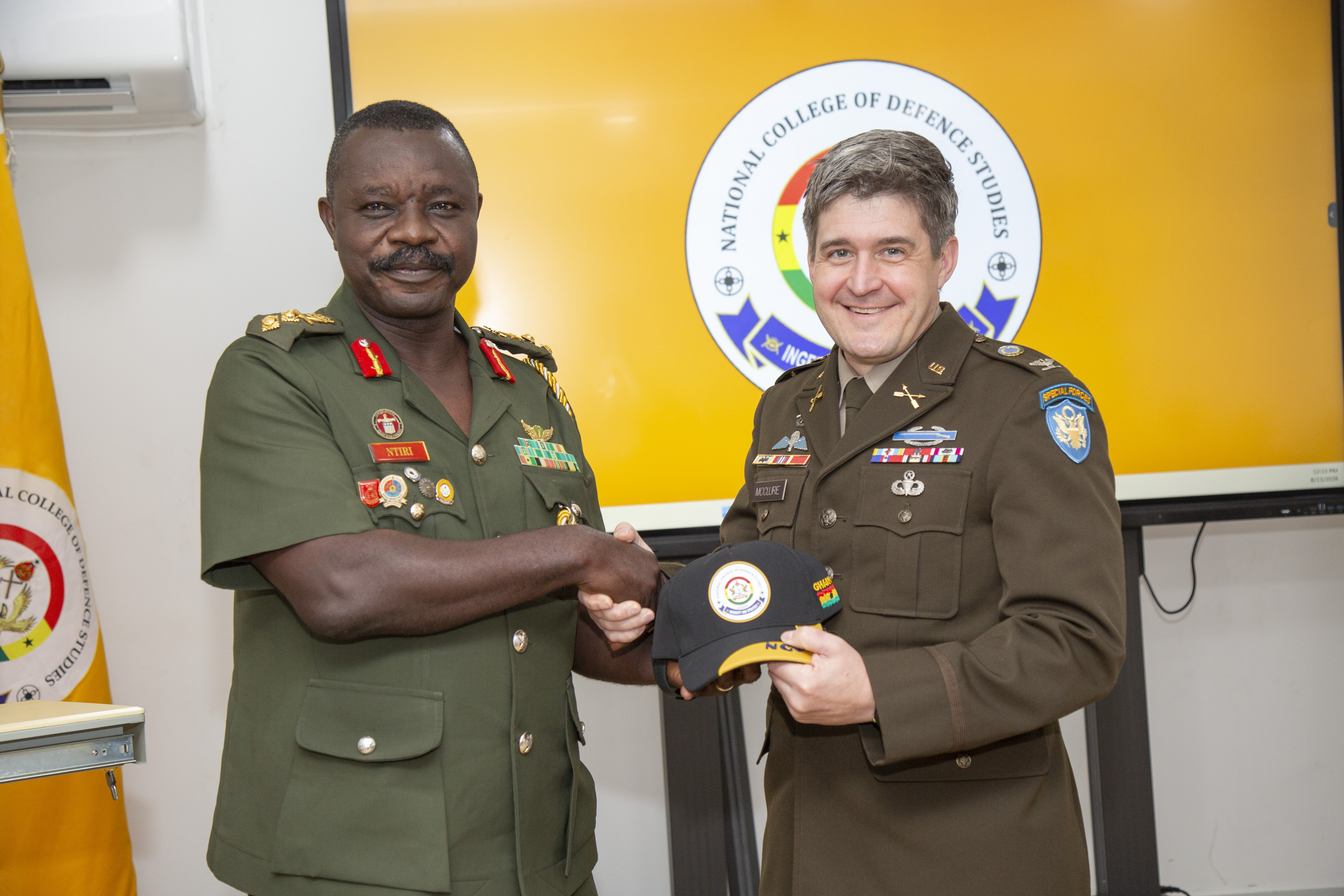
As part of the closing ceremony, the Commandant presented souvenirs to the ACSS facilitation team in appreciation of their contribution to the strategy making, the which is core to the curriculum of NCDS.