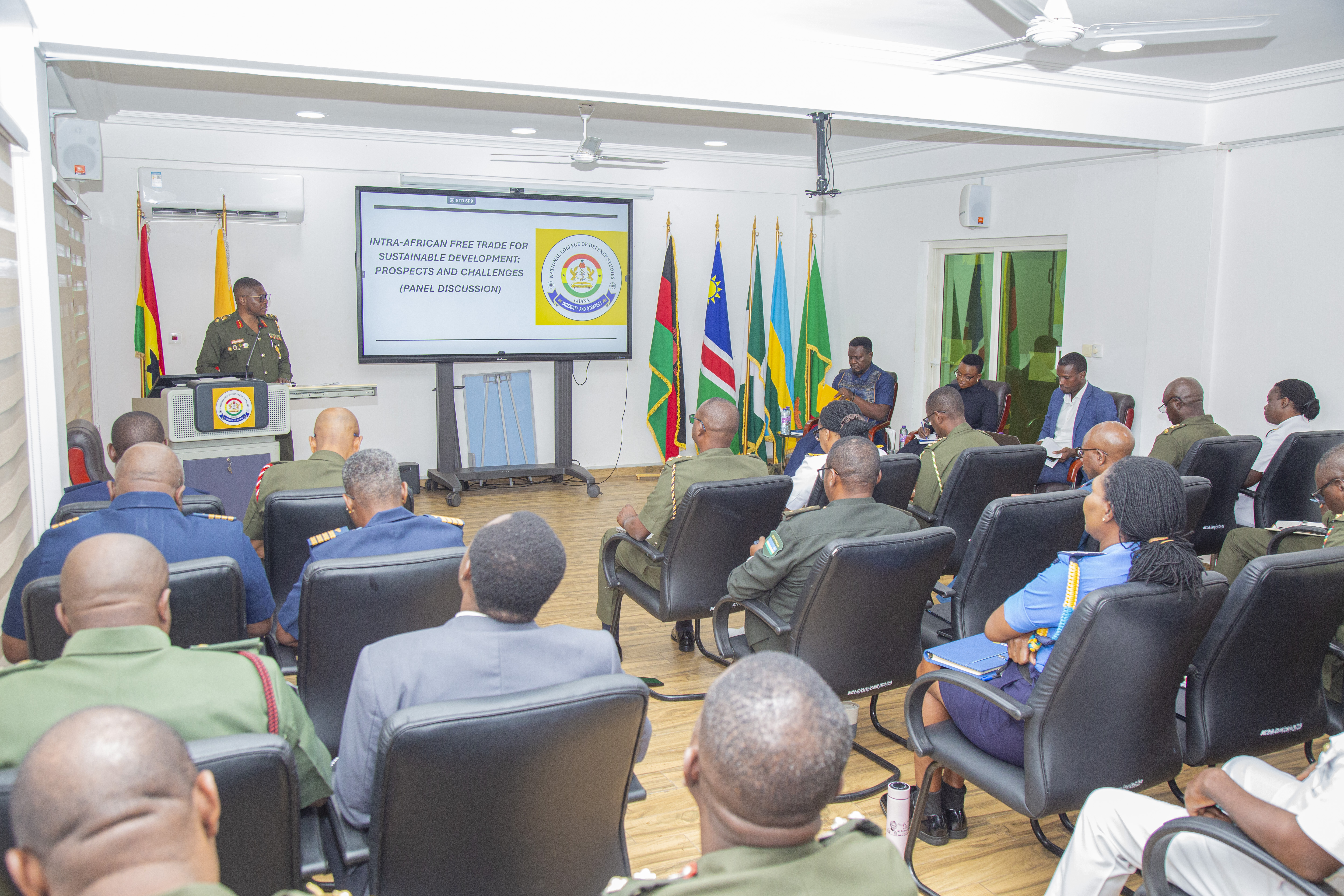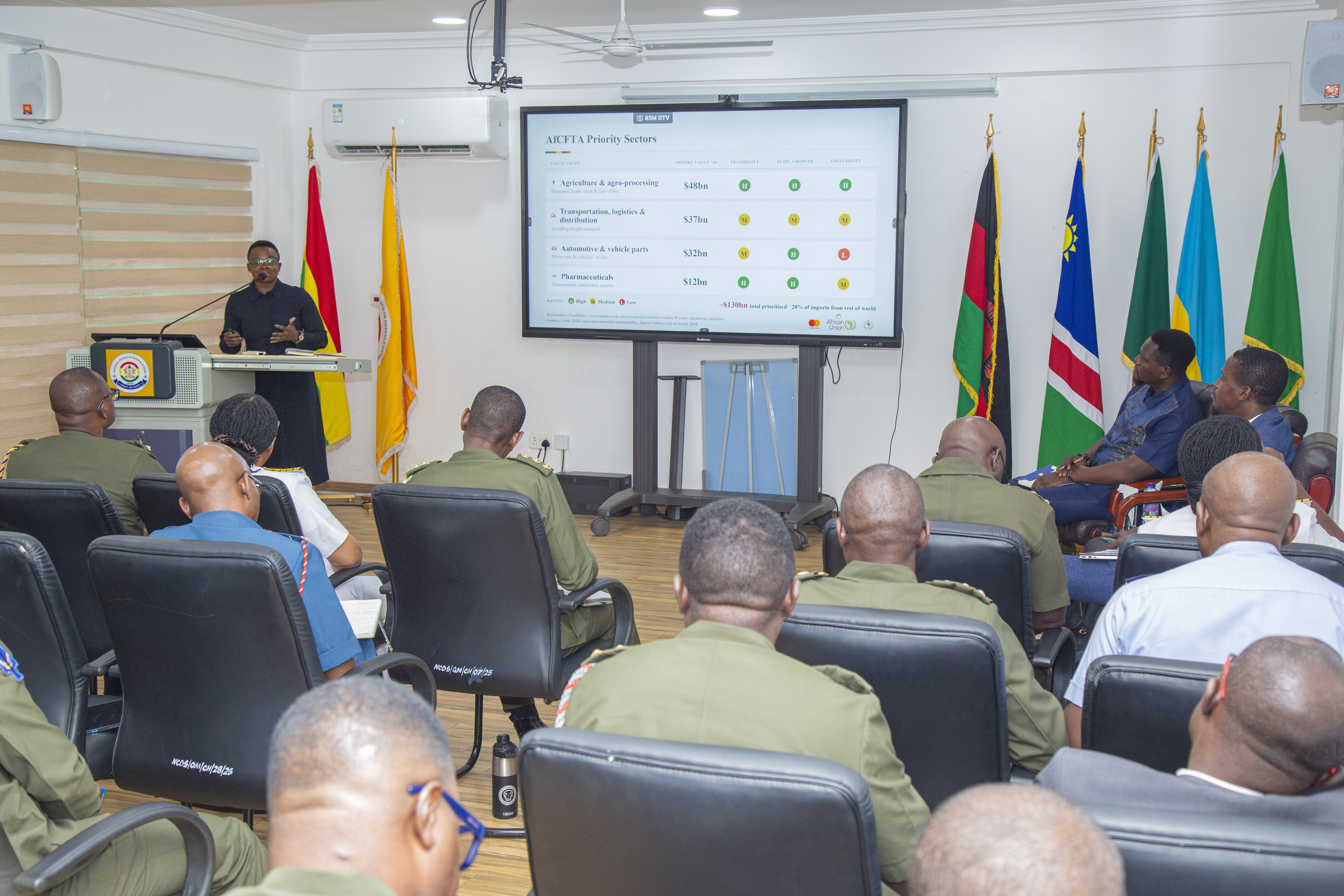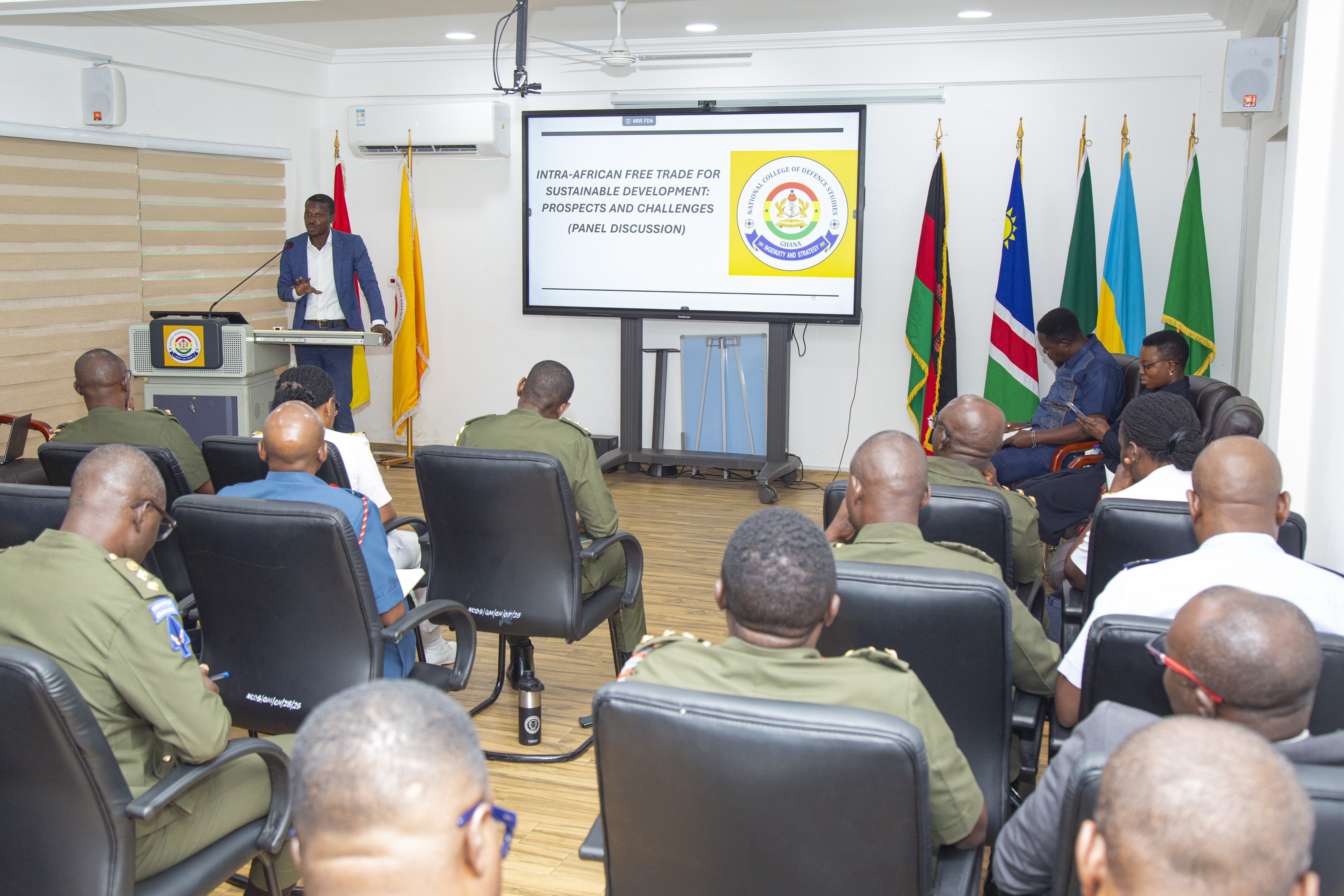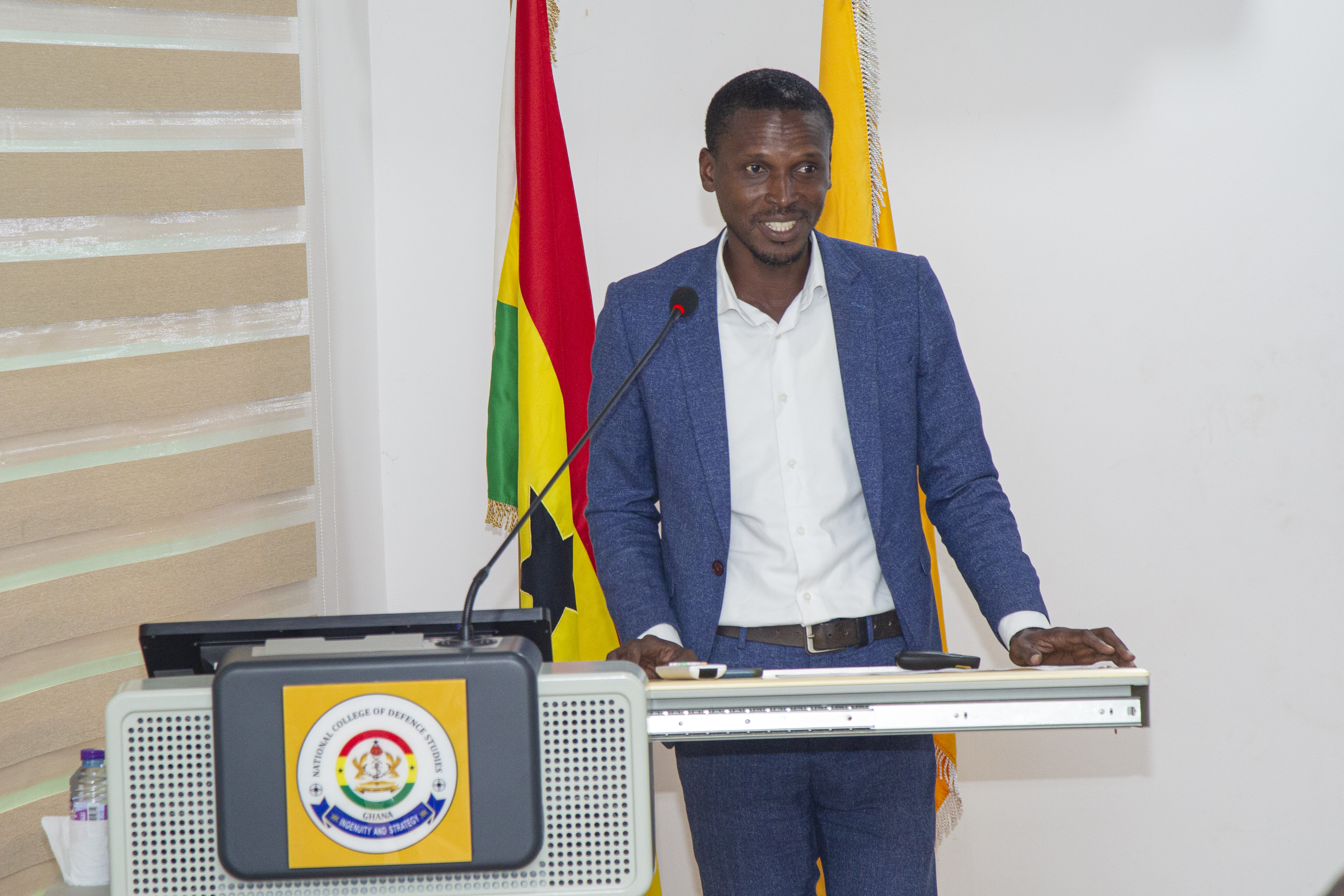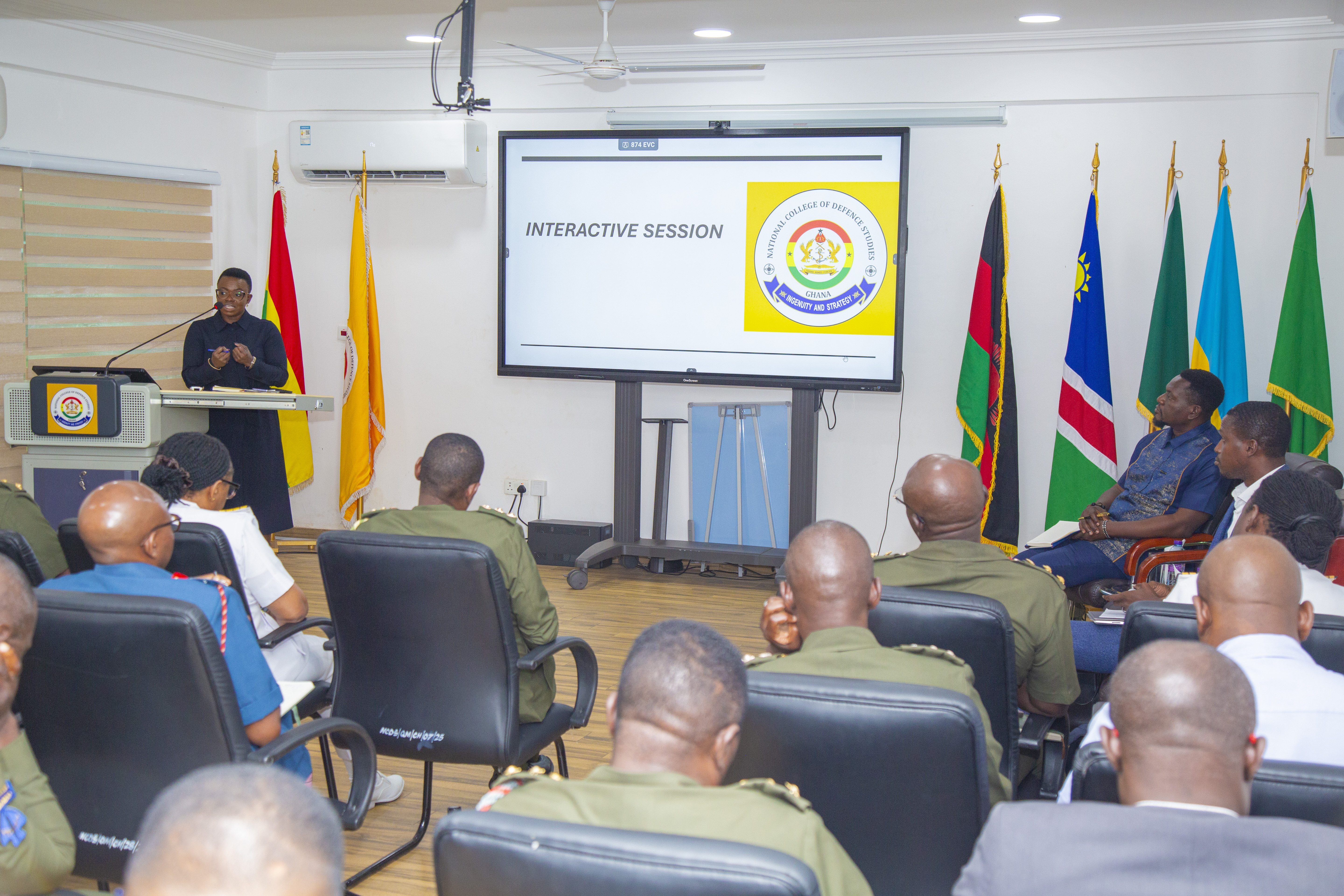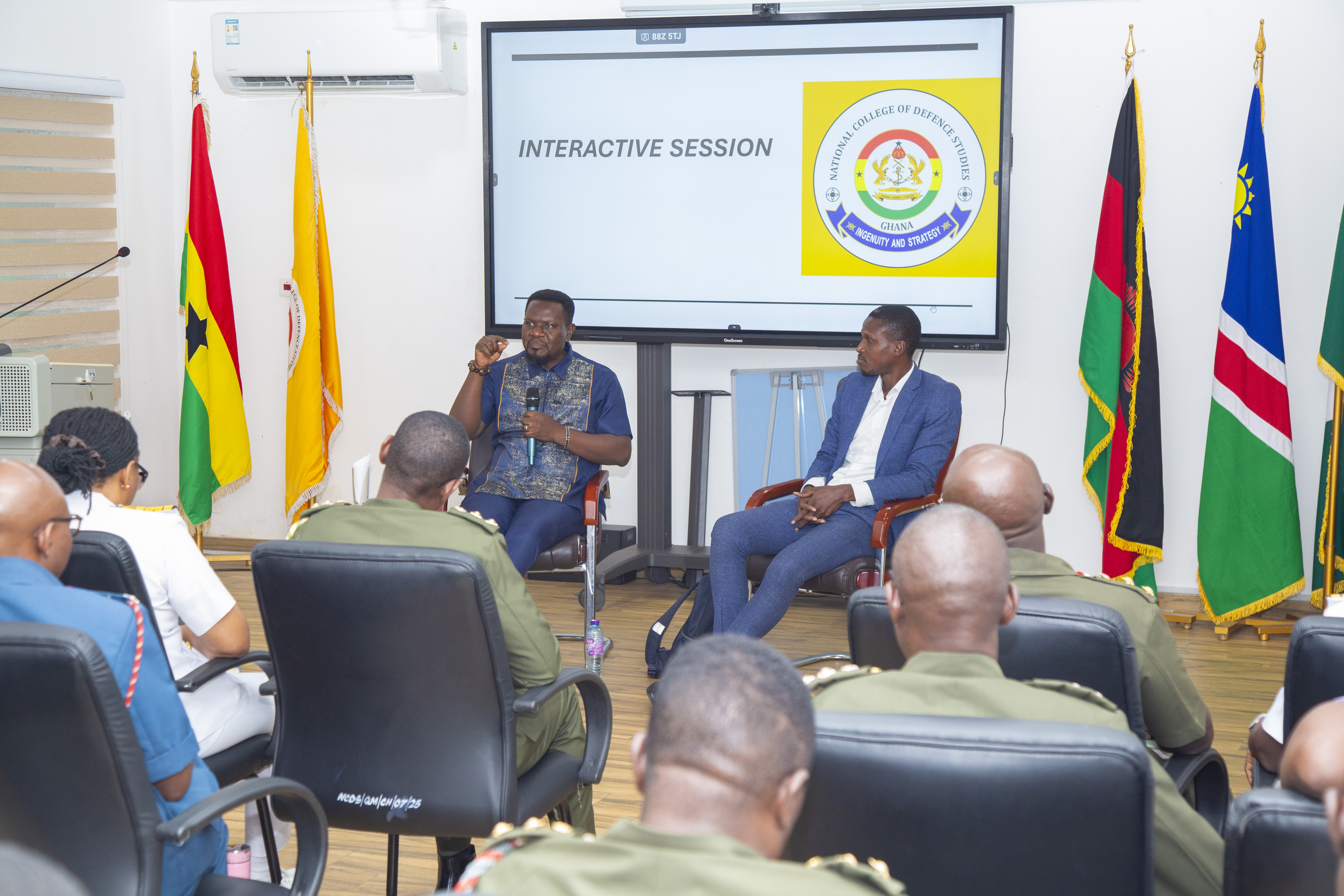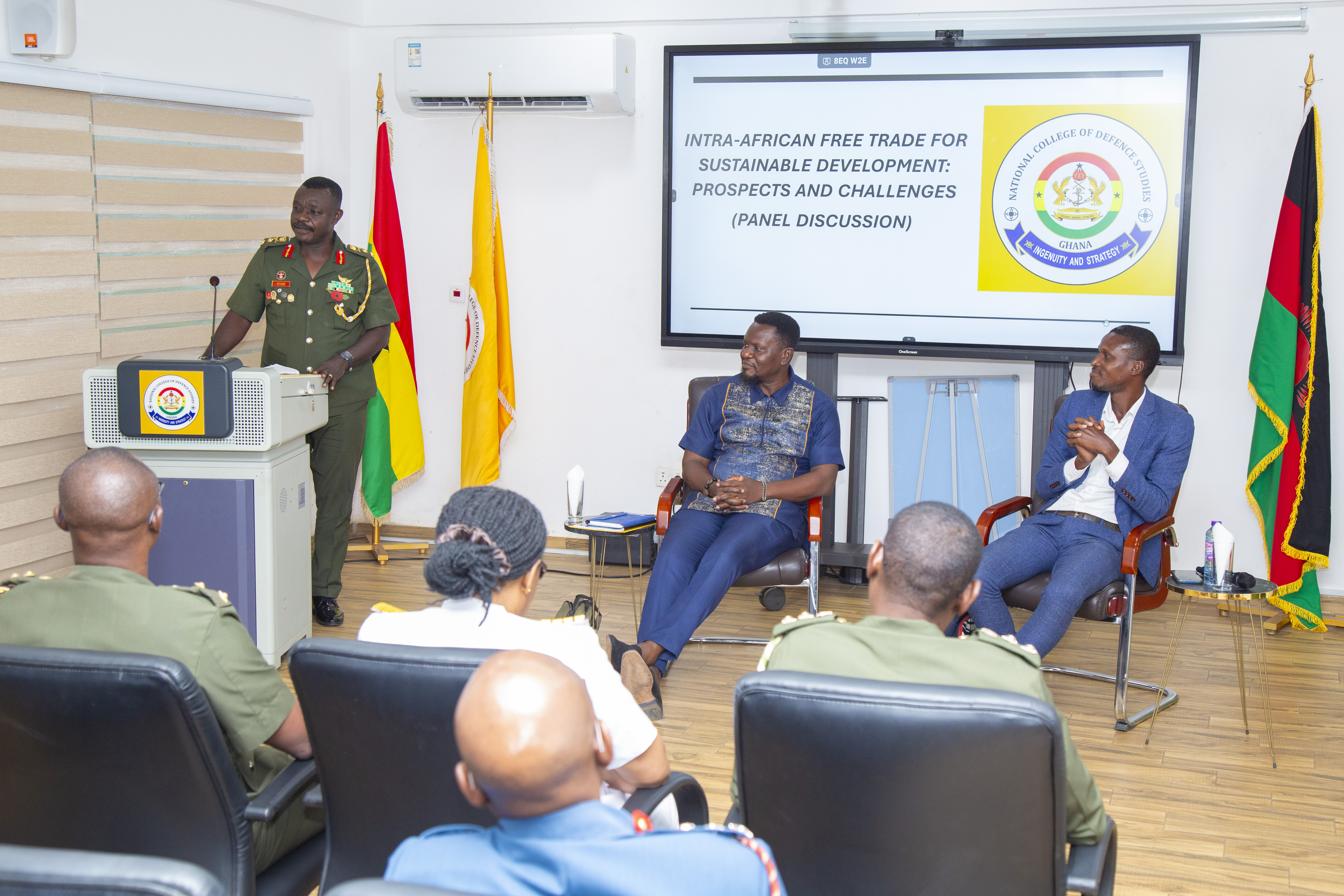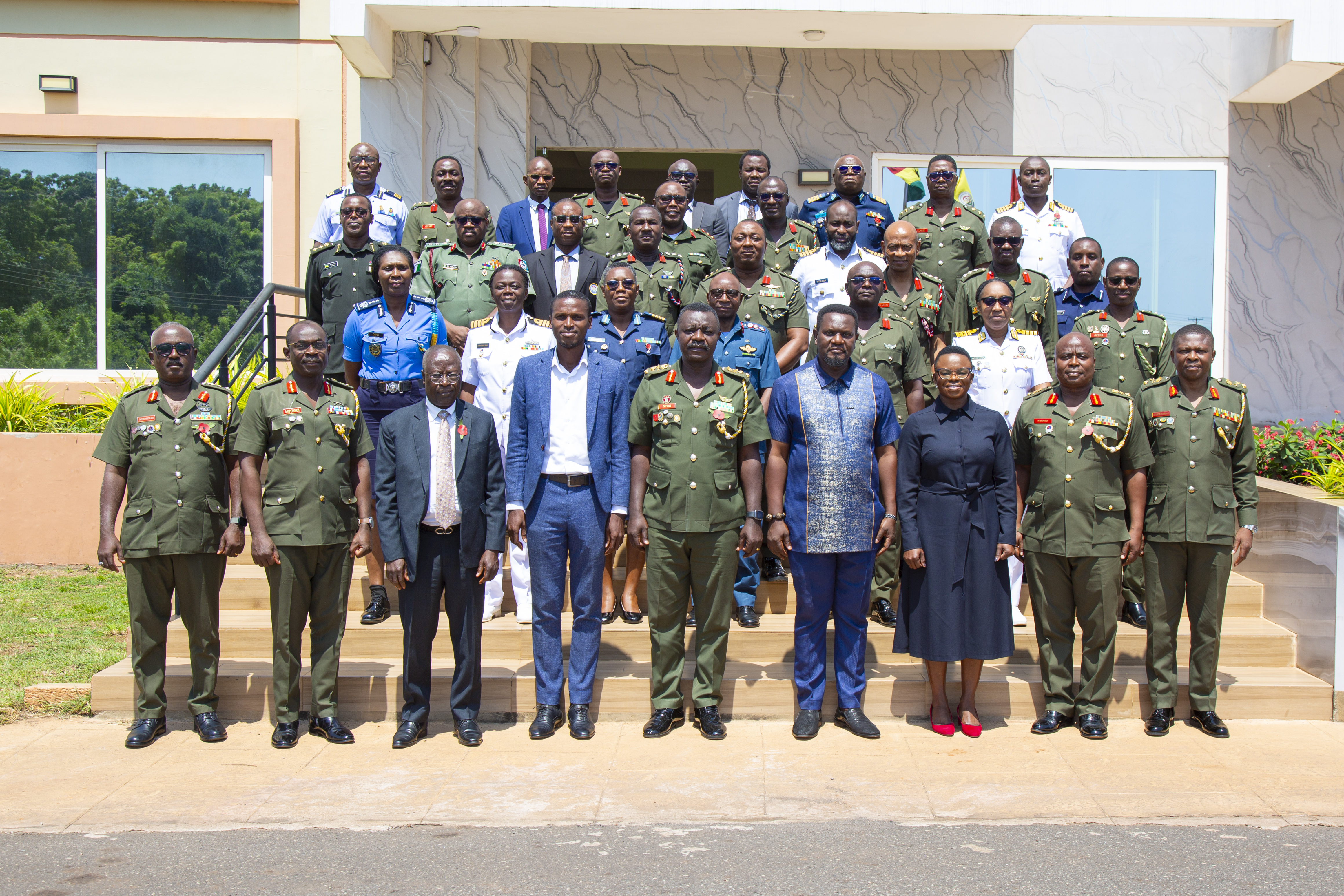
The National College of Defence Studies (NCDS) has organised a panel discussion for participants of Course 3-2026 on the theme, “Intra-African Free Trade for Sustainable Development: Prospects and Challenges.”
The seminar, held on Wednesday, 4 November 2026, at the College Auditorium, sought to deepen participants’ understanding and appreciation of the opportunities and challenges associated with intra-African trade and its role in promoting sustainable development across the Continent.
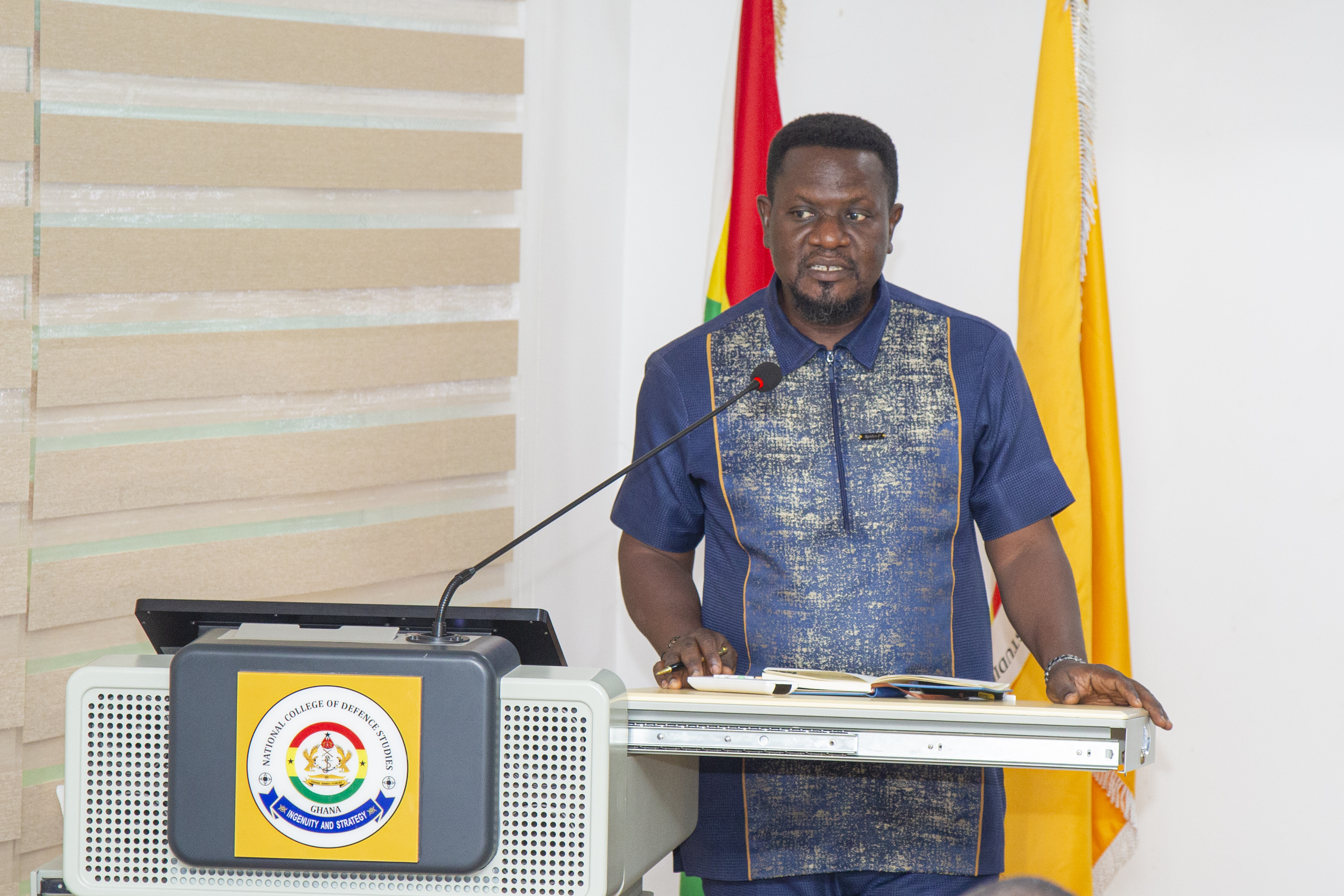
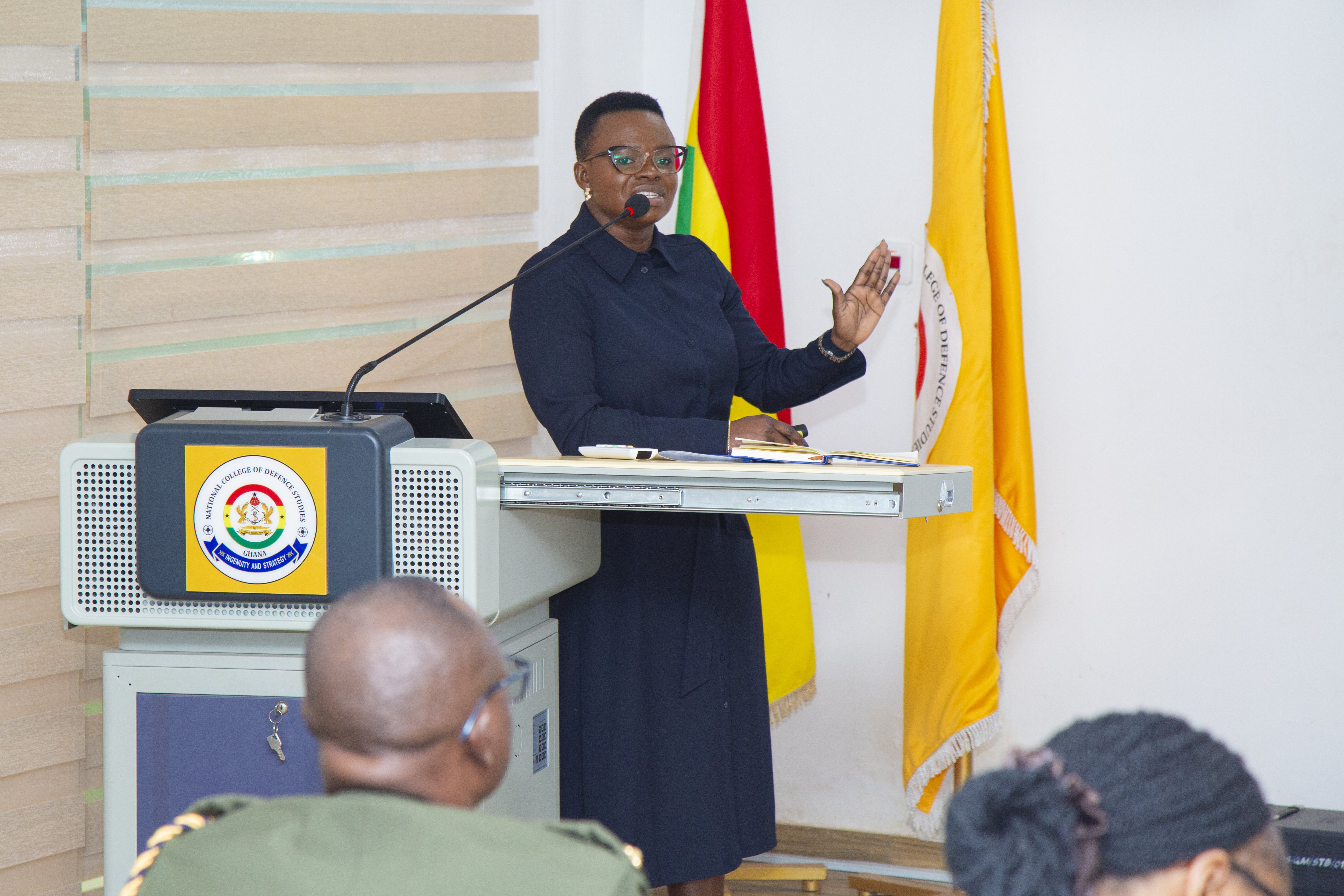
The discussion was chaired by Mr Louis Yaw Afful, Executive Director of the African Continental Free Trade Area (AfCFTA) Secretariat. The distinguished panelists included Mr Samuel Doe Adzimah, Principal Industrial Promoter at Ministry of Trade and Industry, Ms Cynthia E Gnassingbe-Essonam, Director of Private Sector Engagement and Communications, and Mr Joseph Obeng, a representative of TOBINCO.
The discussions focused on key issues affecting Africa’s private sector and the continental free trade environment. In his remarks, the Chairman highlighted the importance of integrating security considerations into the AfCFTA framework. He observed that although security was not traditionally a central component of the protocol, efforts were being made to ensure that the military and broader security sector were adequately recognised and incorporated into the framework.
The panelists described the AfCFTA as a significant opportunity to transform Africa’s economic landscape. They emphasised that the initiative goes beyond reducing tariffs and facilitating the movement of goods across borders. Rather, it represents a broader economic transformation agenda aimed at connecting African markets, strengthening regional production systems, developing competitive businesses, attracting investment and creating employment opportunities.
It was further emphasised that trade agreements alone do not automatically make businesses competitive and that businesses thrive when the operating environment enables them to produce efficiently, access financing, distribute and market their products, and receive payments without unnecessary barriers.
The panelists observed that, over the years, African countries have pursued economic independence, industrialisation and regional integration. Despite the Continent’s abundant human and natural resources, many African economies continue to depend heavily on external markets for essential manufactured goods, including pharmaceuticals. They therefore underscored the need to strengthen local production capacity, promote industrialisation and expand intra-African trade.
Additionally, they reiterated that the private sector remains the engine of trade, investment and economic growth, stressing that its active participation is essential to the successful implementation of the AfCFTA and the realisation of its benefits across the Continent.
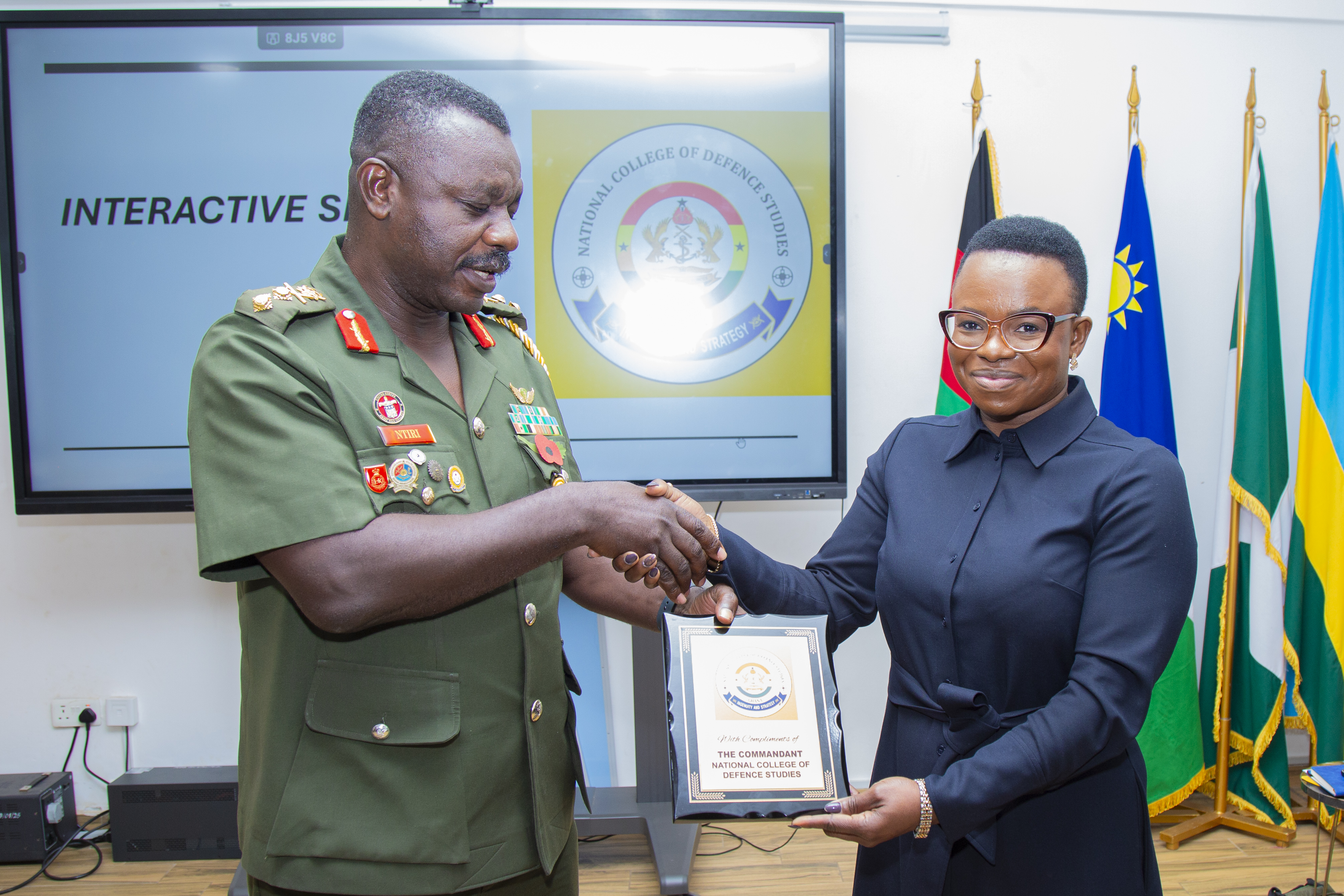
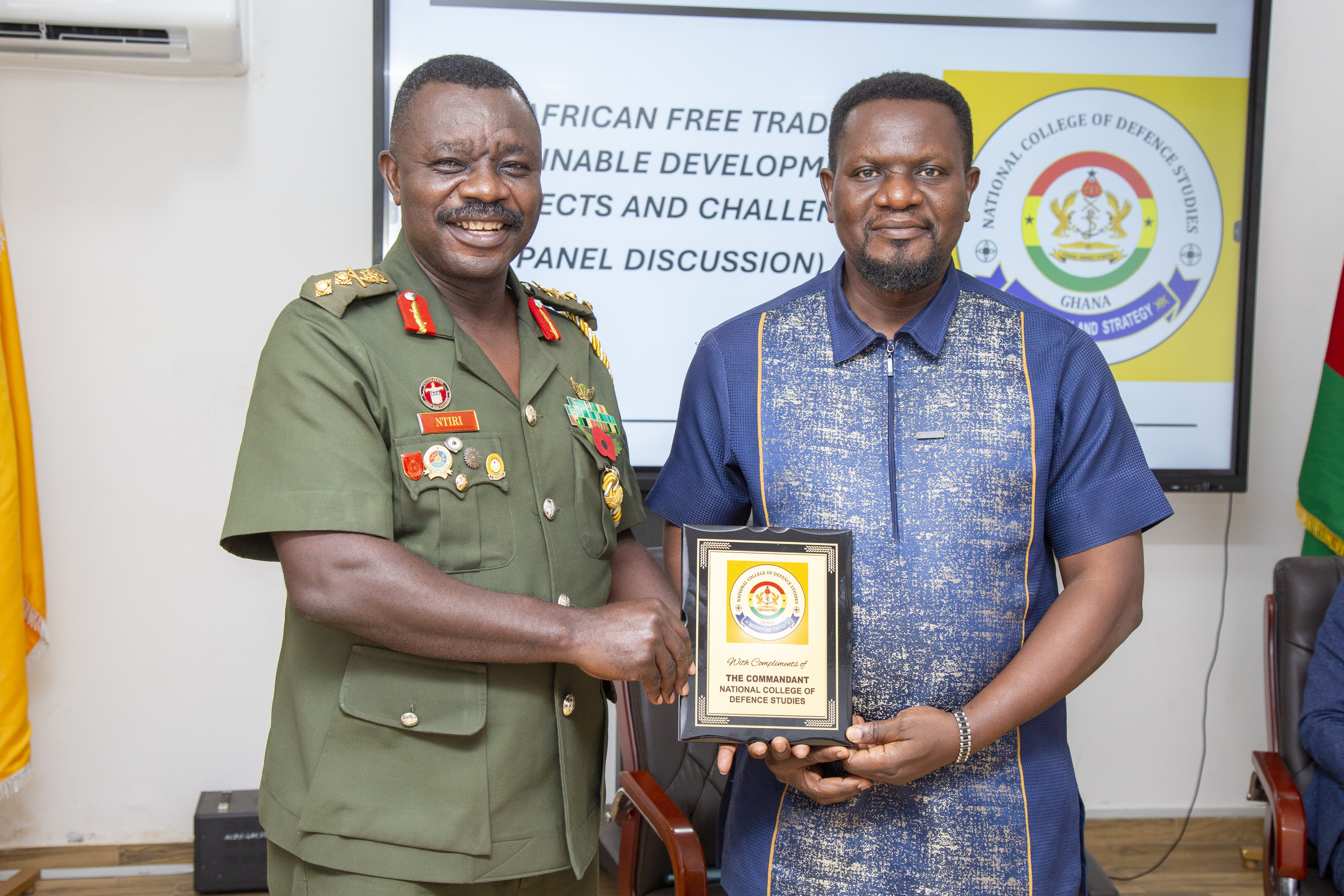
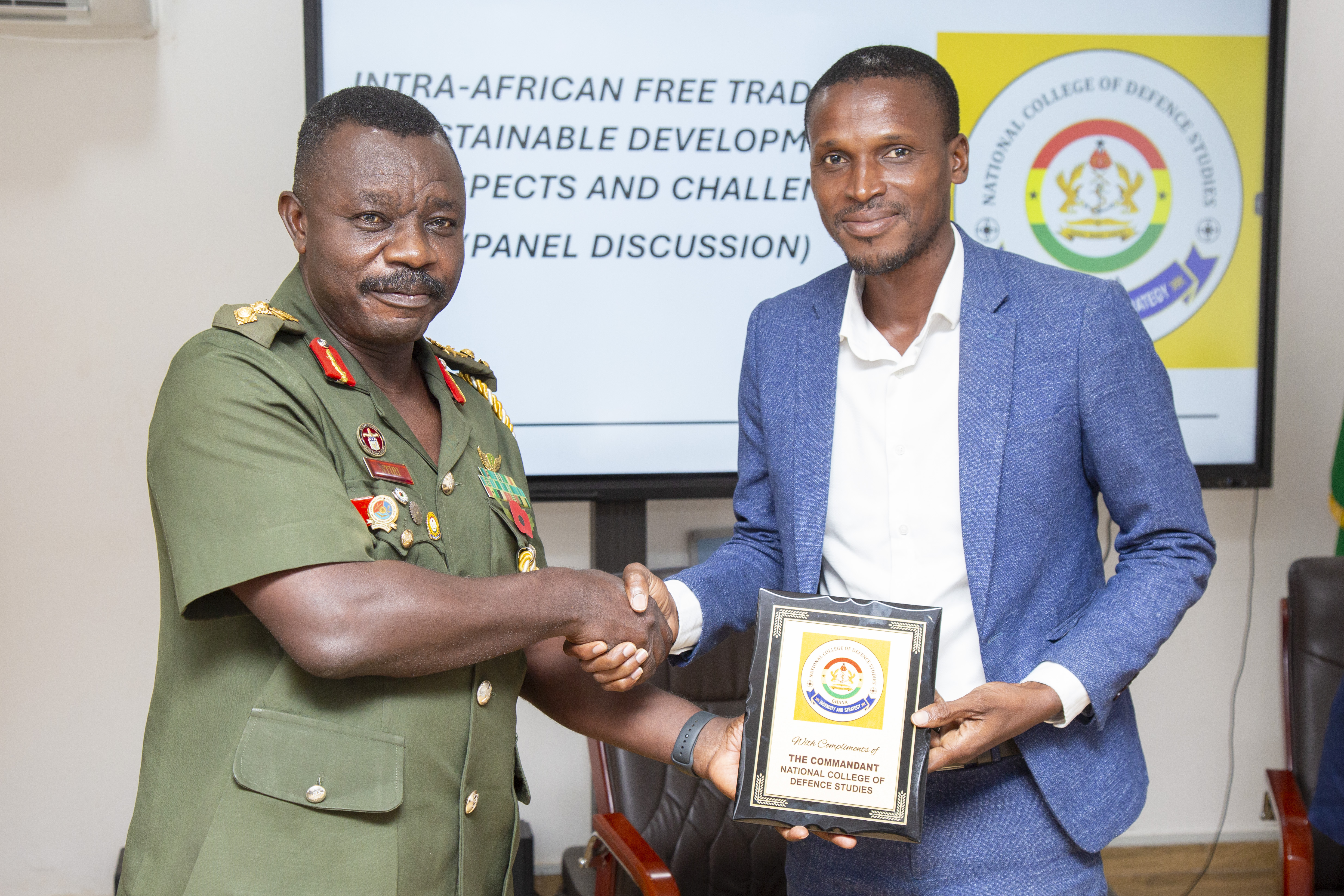
In his closing remarks, the Commandant of NCDS, Major General Frederick Dankyi Ntiri, expressed appreciation to the chairman and panelists for sharing their expertise, knowledge and perspectives with the participants. He noted the importance of the discussions in broadening participants’ understanding of the opportunities and challenges associated with intra-African trade and its implications for Africa’s sustainable development. On behalf of the College, the Commandant presented commemorative plaques to the panelists in recognition of their valuable contributions to the seminar and their commitment to strengthening professional understanding of intra-African free trade and sustainable development.