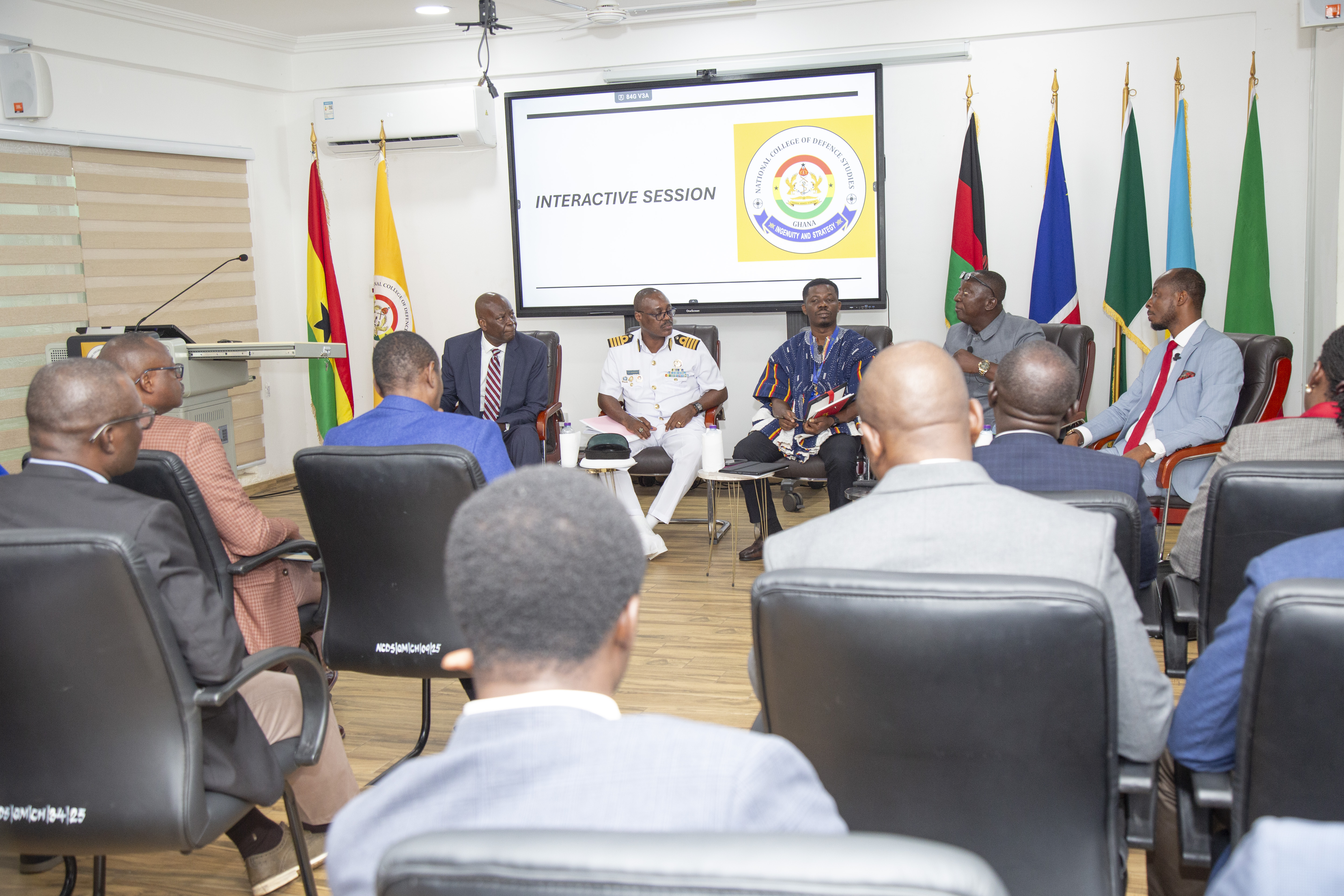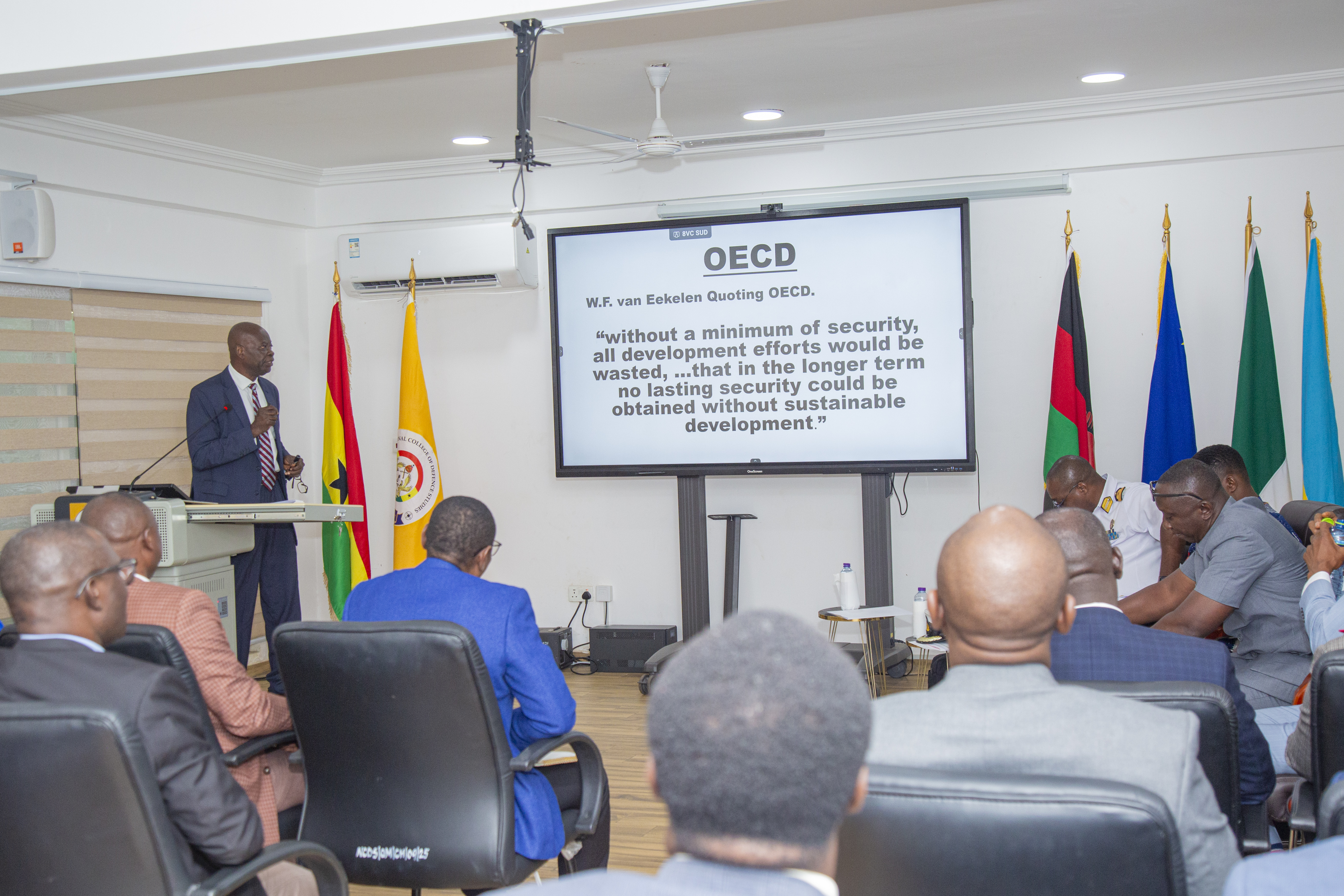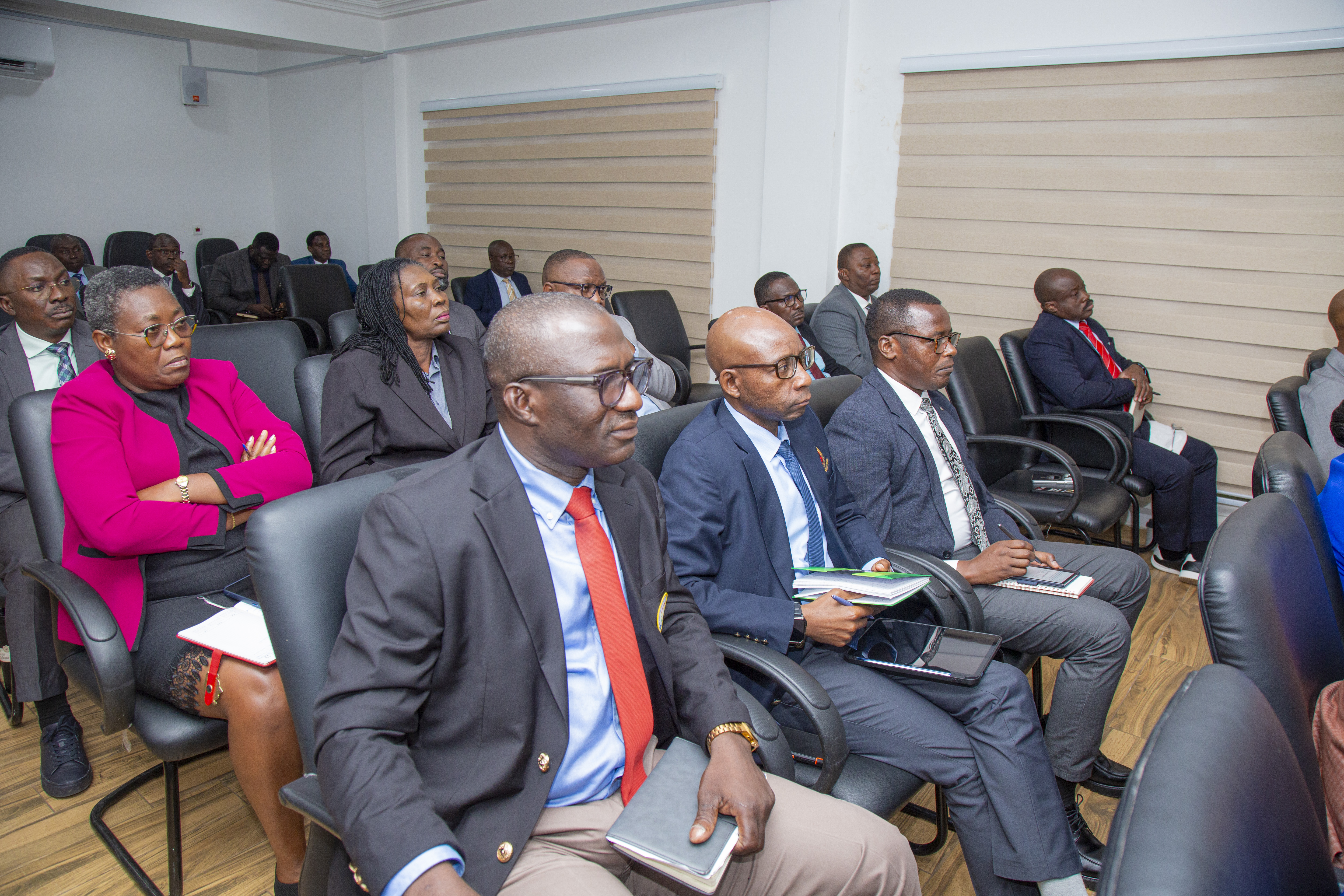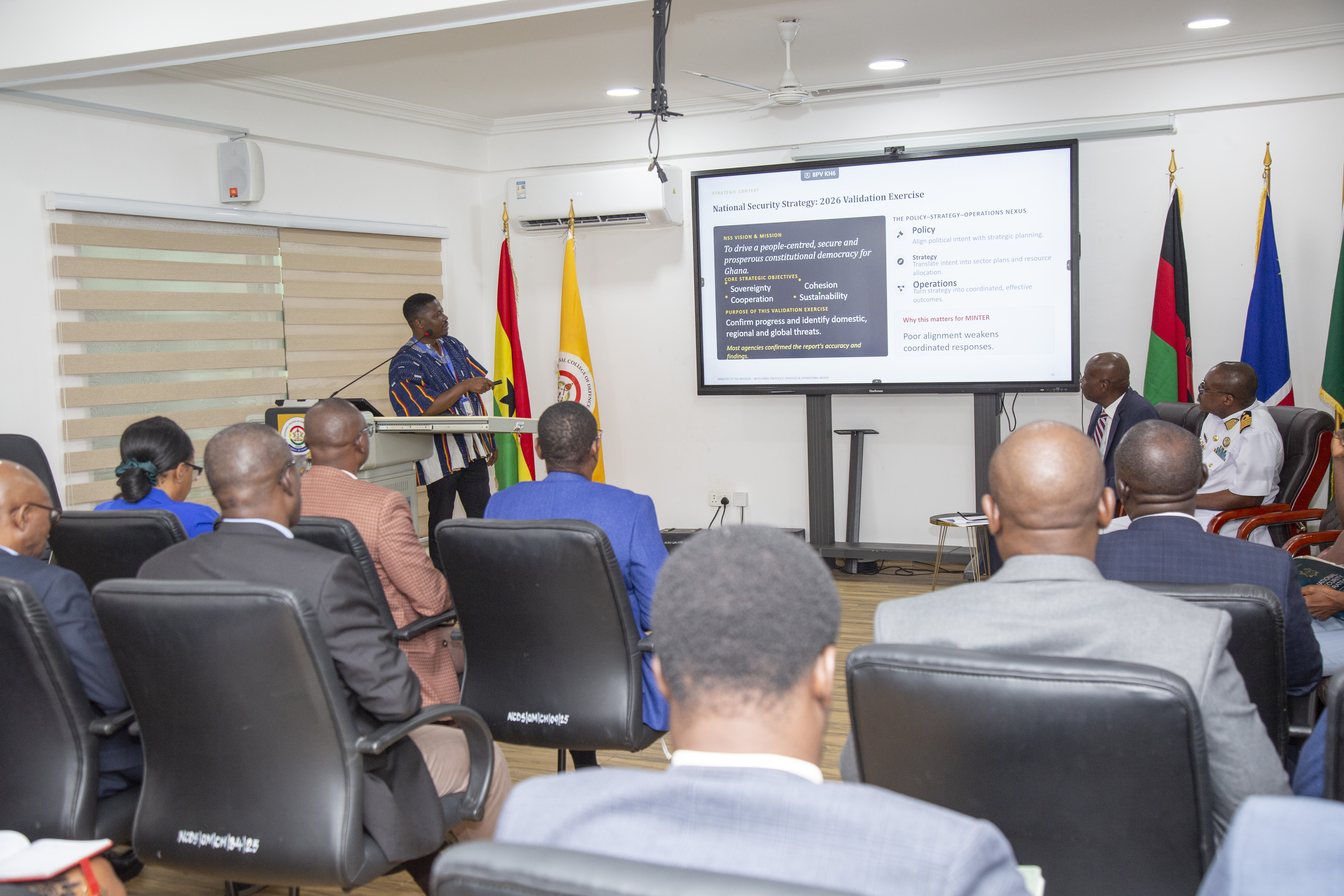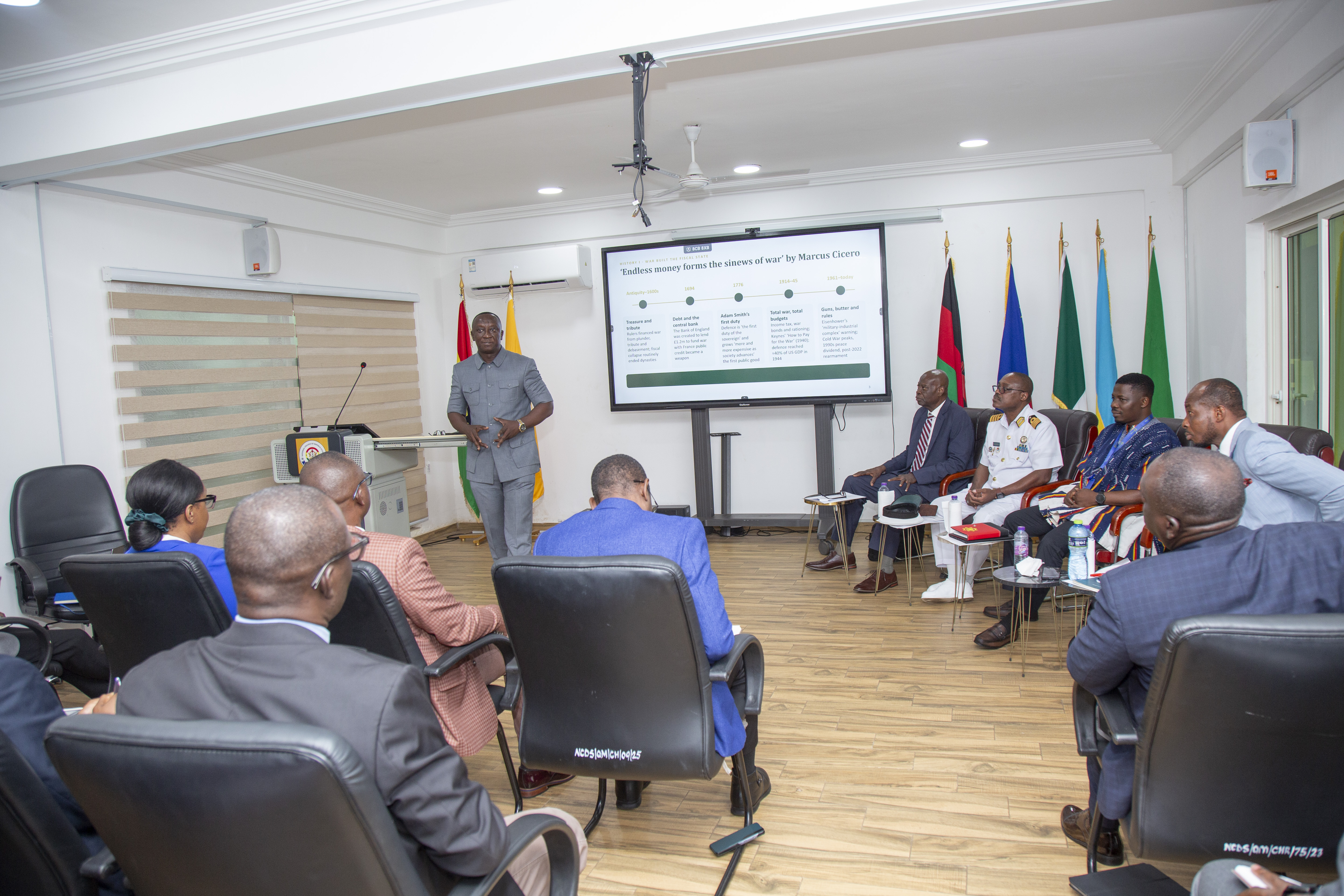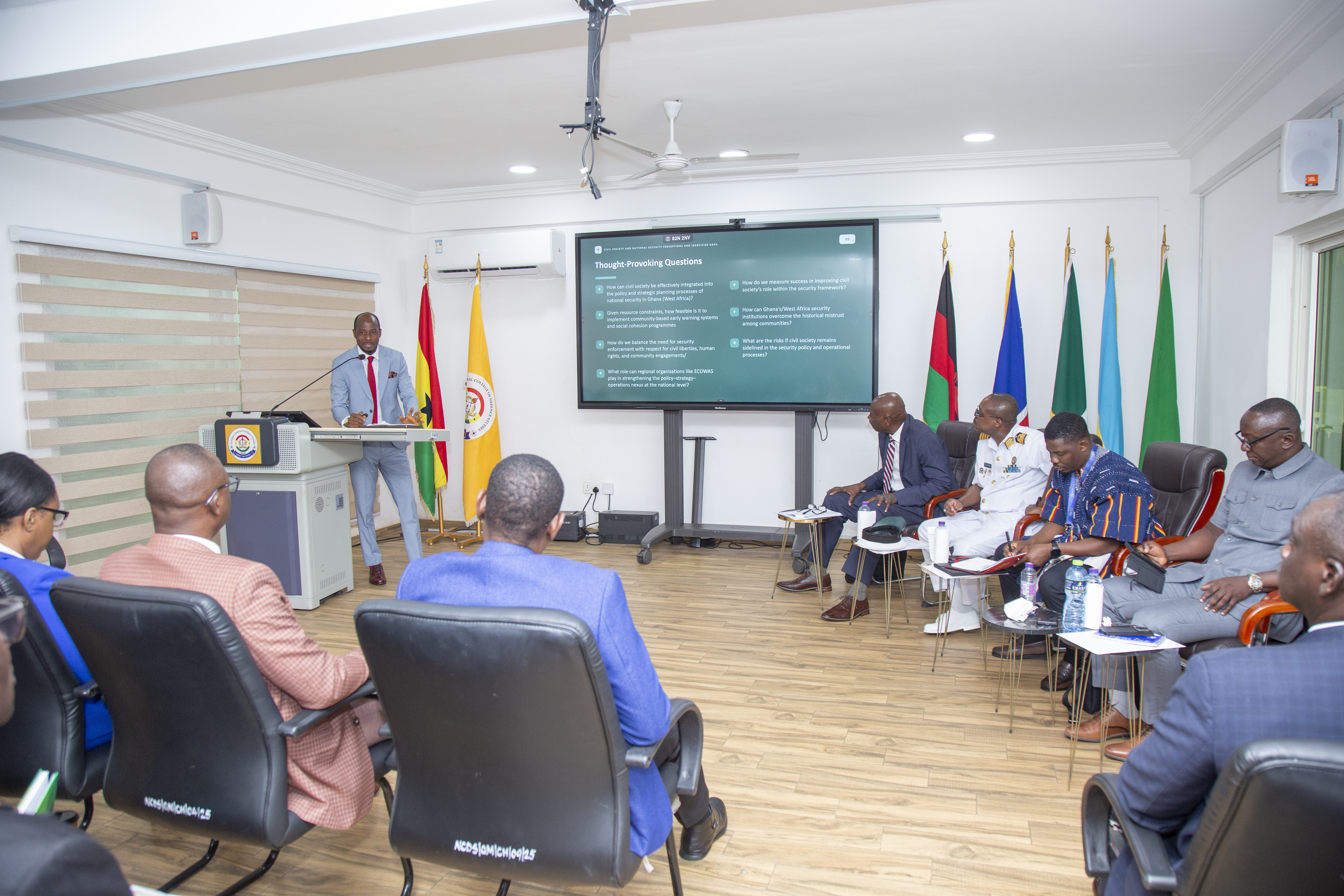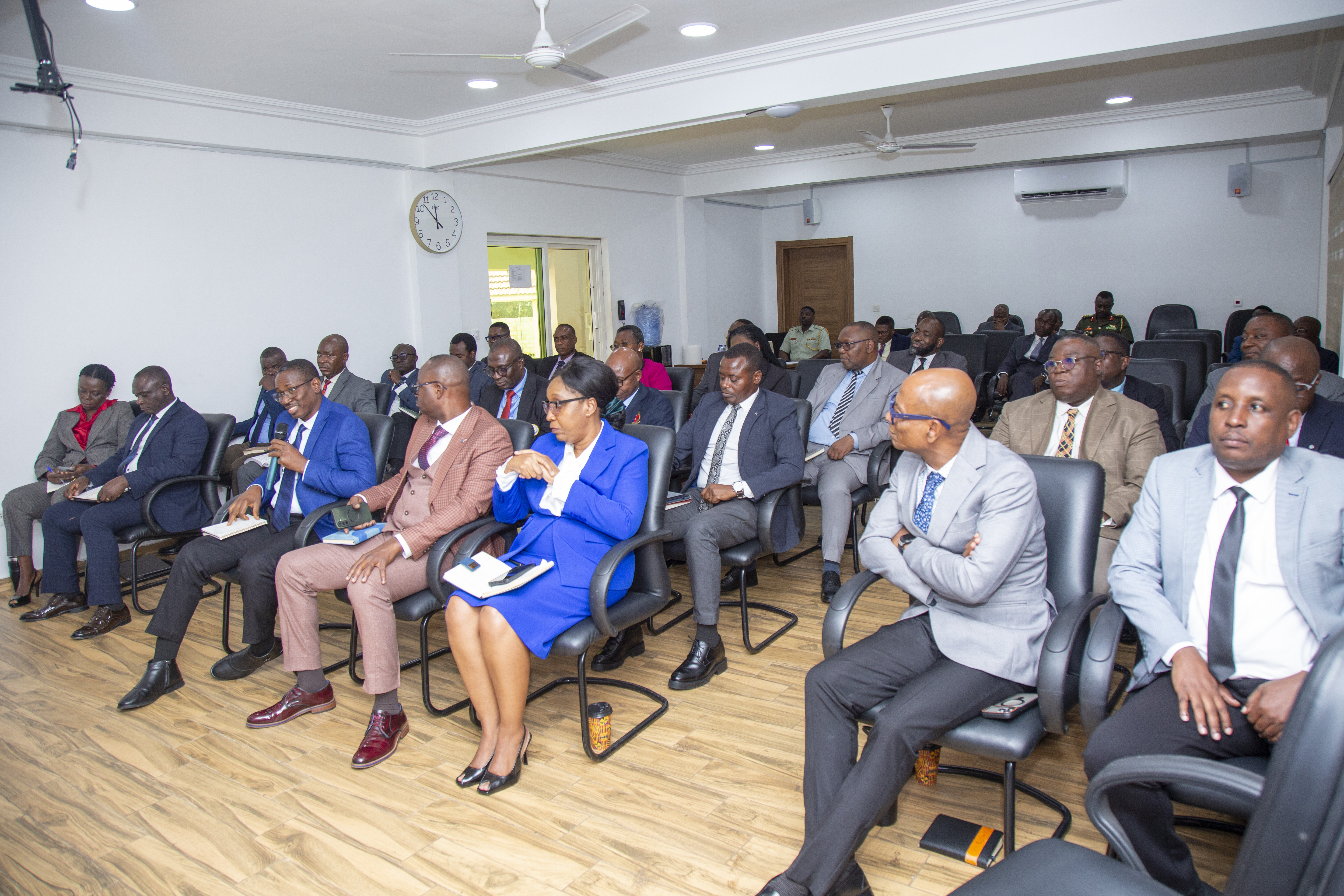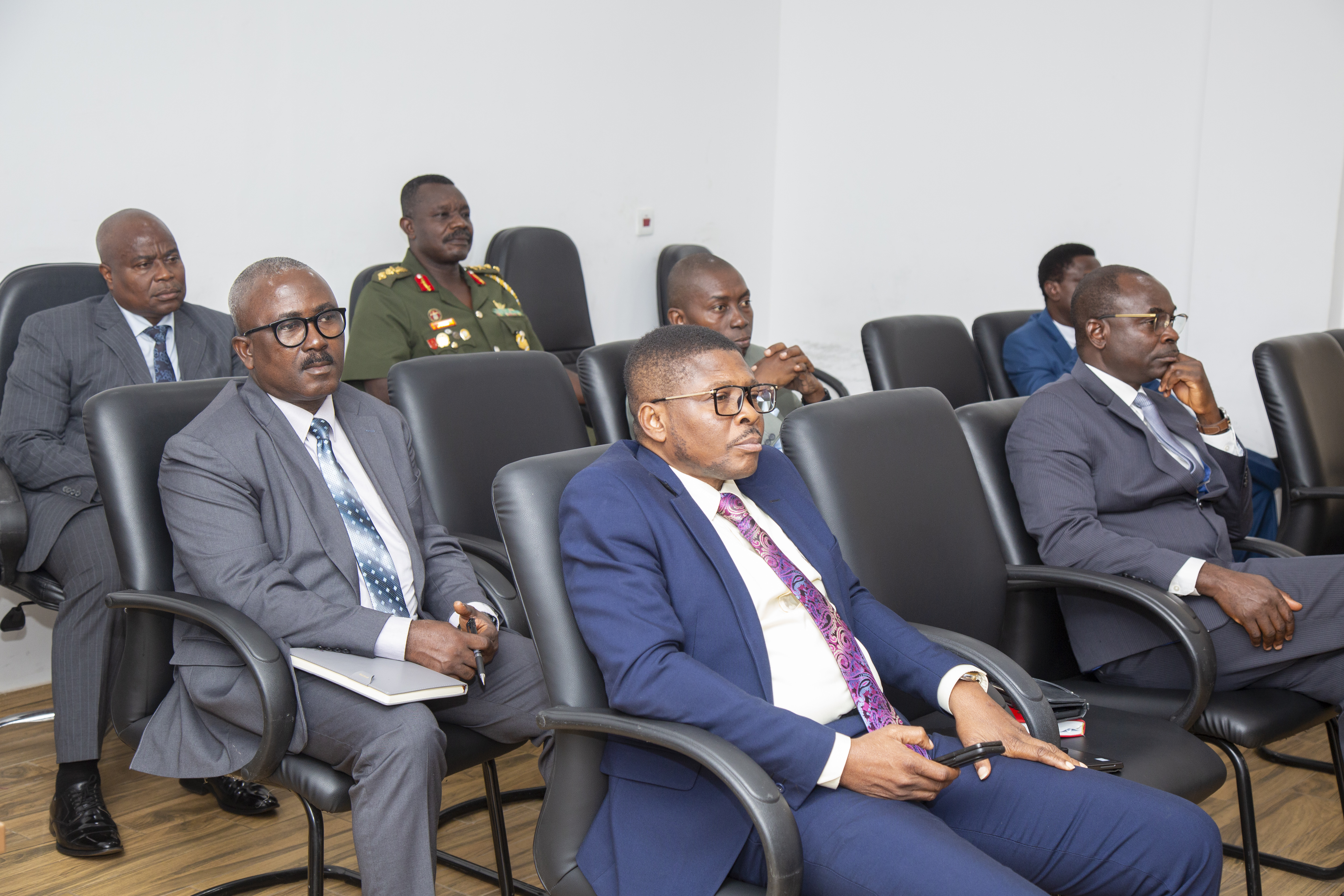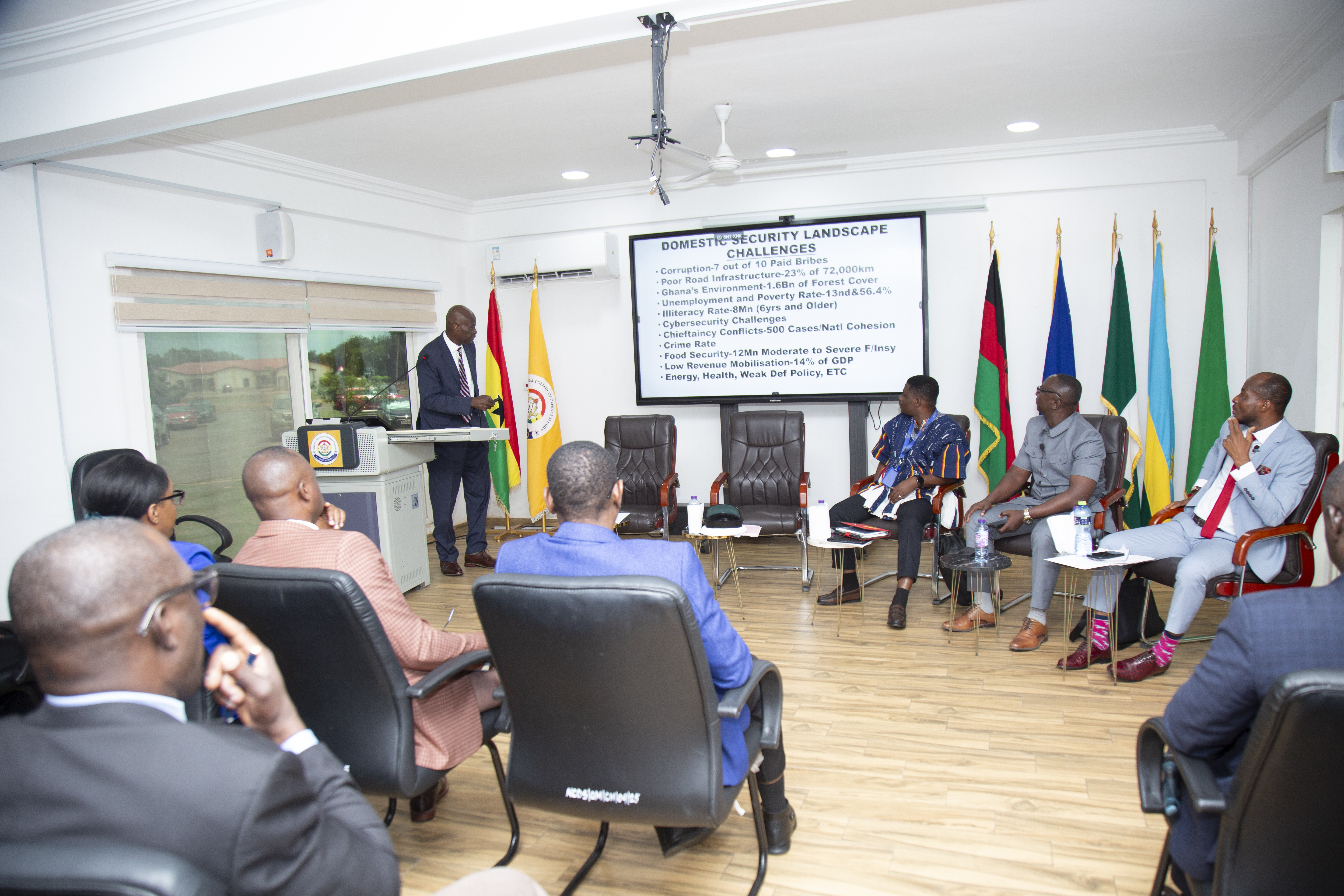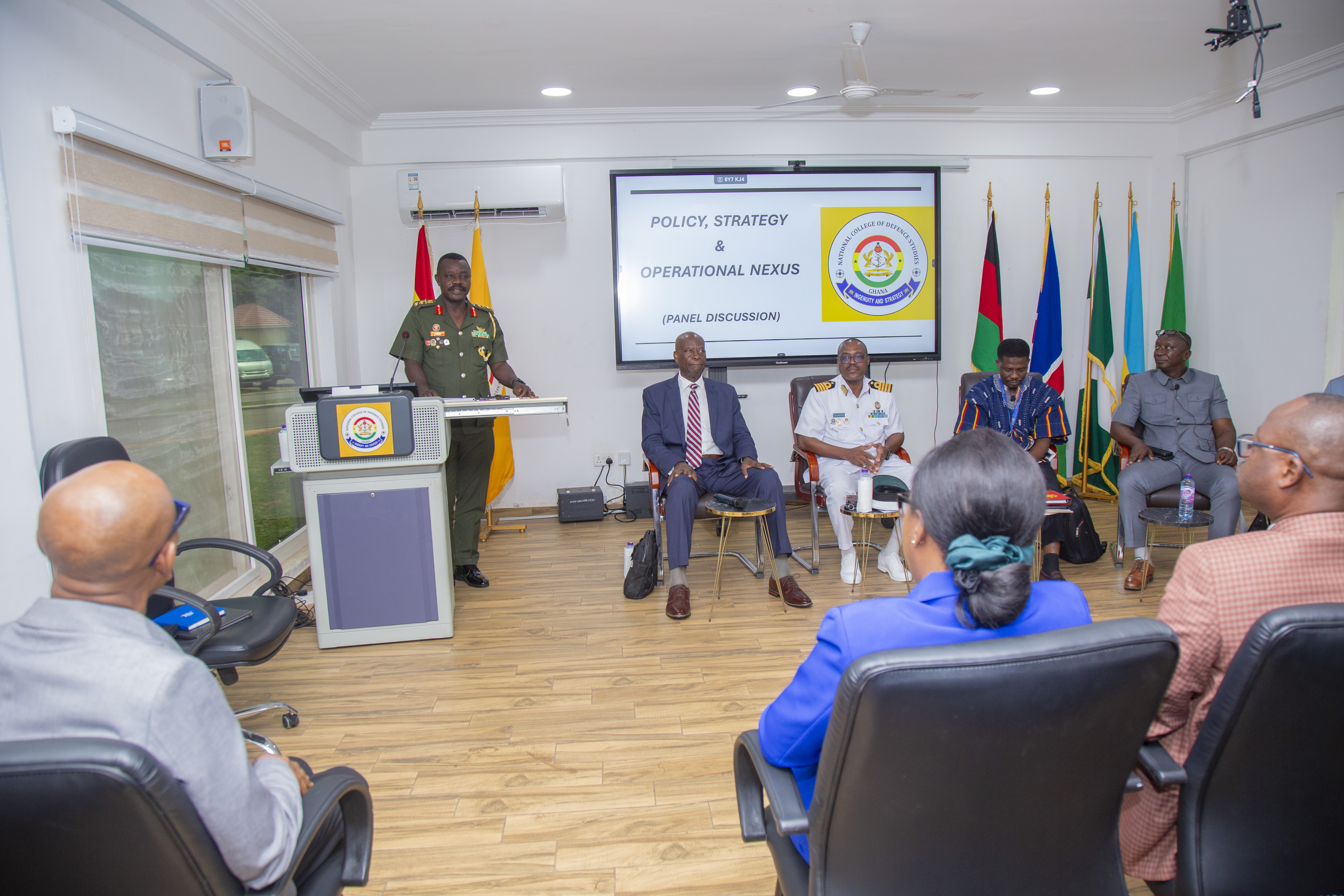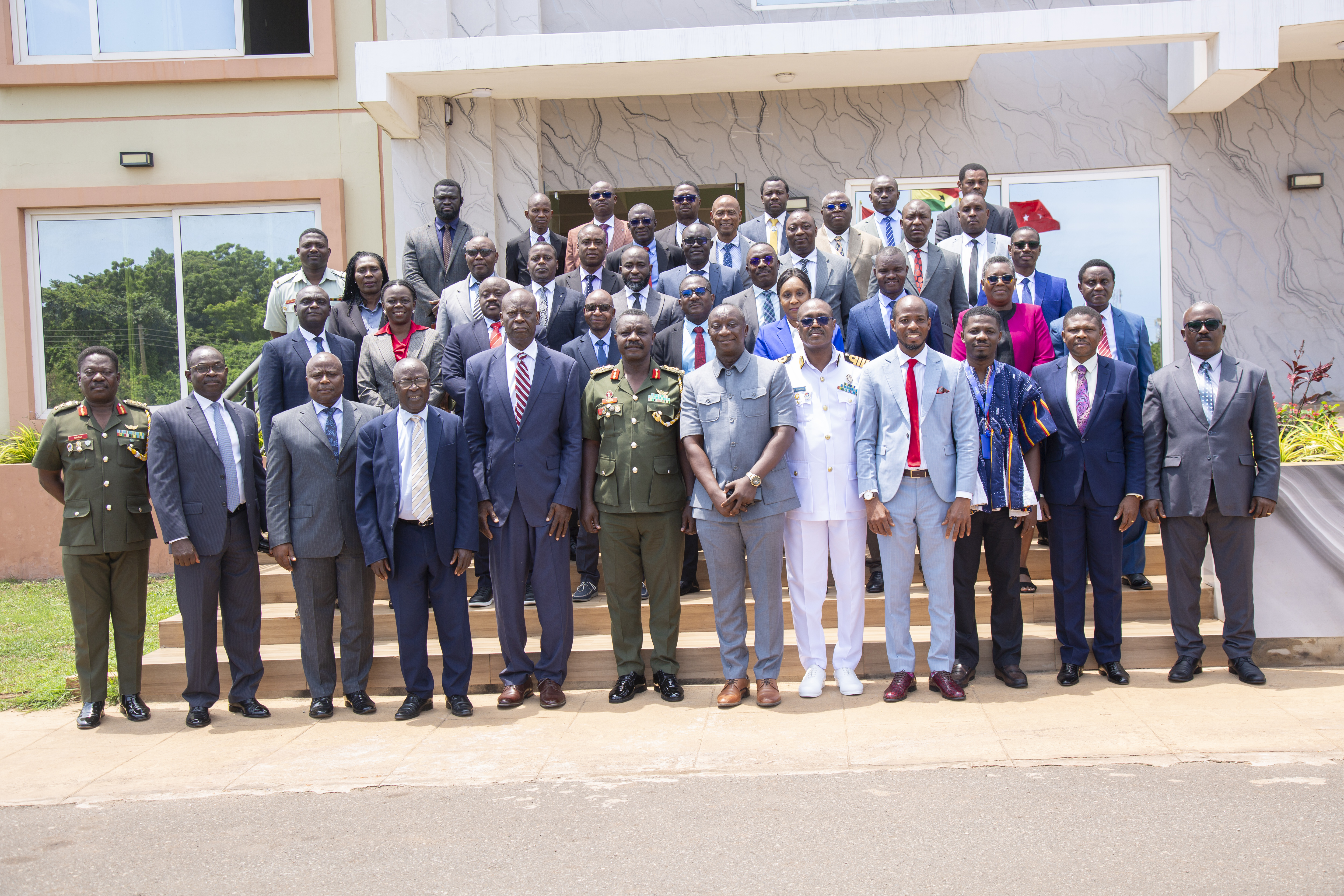
The National College of Defence Studies (NCDS) has hosted a seminar for participants of Course 3-2026 to examine the critical nexus between policy, strategy and operational execution in advancing Ghana’s national security objectives.
The seminar, held at the College’s auditorium on Thursday, 3 September 2026, brought together distinguished experts,from the Ministry of Defence,Ministry of Interior,Ministry of Finance and Civil Society from key to deepen participants’ understanding of the relationship between policy formulation, strategy development and operational implementation within the framework of the National Security Strategy(NSS)
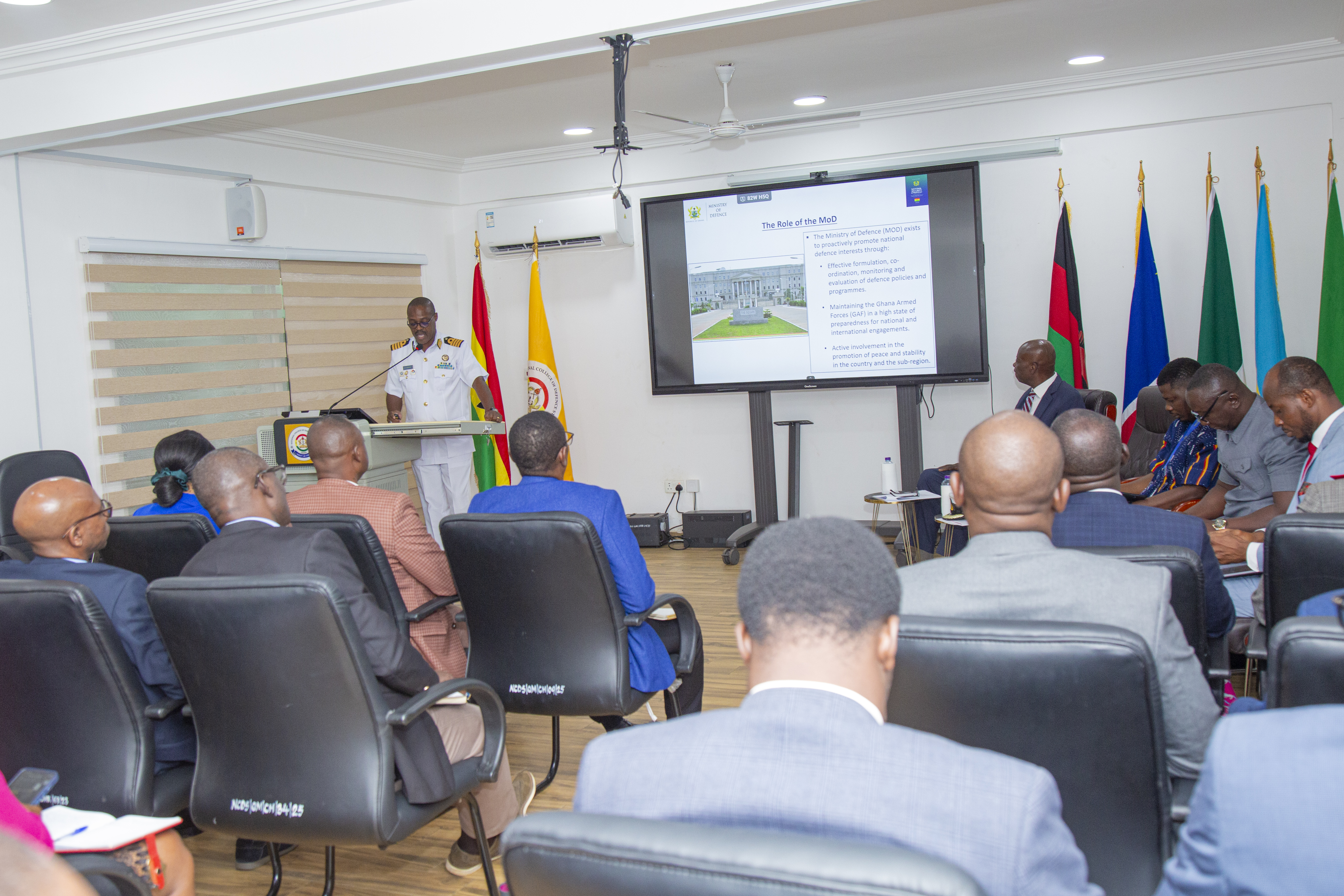
The seminar ,was chaired by the President of the Retired Commissioned Officers Association (RCOA)Brigadier General Samuel Yanyi Akofur (Rtd )Panelists included Captain (GN) Andy La-Anyane, representing the Ministry of Defence; Reverend Enoch Boadi Amo, representing the Ministry of the Interior; Mr Samuel Arkhurst, representing the Ministry of Finance; and Dr Kojo Impraim, Director of the Media Foundation for West Africa.
The discussions underscored the importance of ensuring coherence among national policy, strategic planning and operational capabilities to safeguard Ghana’s national interests, critical assets and citizens against both internal and external threats.
The panelists noted that national security extends beyond traditional military responsibilities, encompassing good governance, civic engagement, economic resilience, cybersecurity , and the protection of civil liberties.
They stressed that effective governance and national resilience depend on strong alignment between policy, strategy and operational execution. The panelists highlighted that, a well-articulated National Security Strategy must be people-centred and inclusive, incorporating the perspectives of civil society organisations and communities, particularly grassroots views on local vulnerabilities and emerging security threats.
The panel further called for proactive engagement between government and the public to promote a shared understanding of national values, interests and priorities. They identified institutional bottlenecks and bureaucratic delays within the Public Service as some of the challenges that could undermine the timely and effective implementation of national security strategies.
Other issues discussed included the integration of civil society into national policy and strategic planning , resource constraints, the feasibility of community-based early warning systems, social cohesion and the need to strike a suitable balance between security enforcement and respect for civil liberties.
The panelists also highlighted the strategic role of the Ministry of Defence in promoting Ghana’s national defence interests through the formulation, coordination, monitoring and evaluation of defence policies and programmes.
They explained that the Ministry provides policy direction and oversight to ensure that defence policies and programmes are aligned to the National Security Strategy and the constitutional mandate of the Ghana Armed Forces under the 1992 Constitution.
The seminar also drew attention to the review of Ghana’s National Security Strategy.In discussing the implementation challenges associated with the National Security Strategy (NSS)the panelists pointed the resource constraints as a major concern
The panelists also referred to the Security and Intelligence Agencies Act, 2026 (Act 1168), as an important legislative development that provides for aspects of Ghana’s national security architecture.
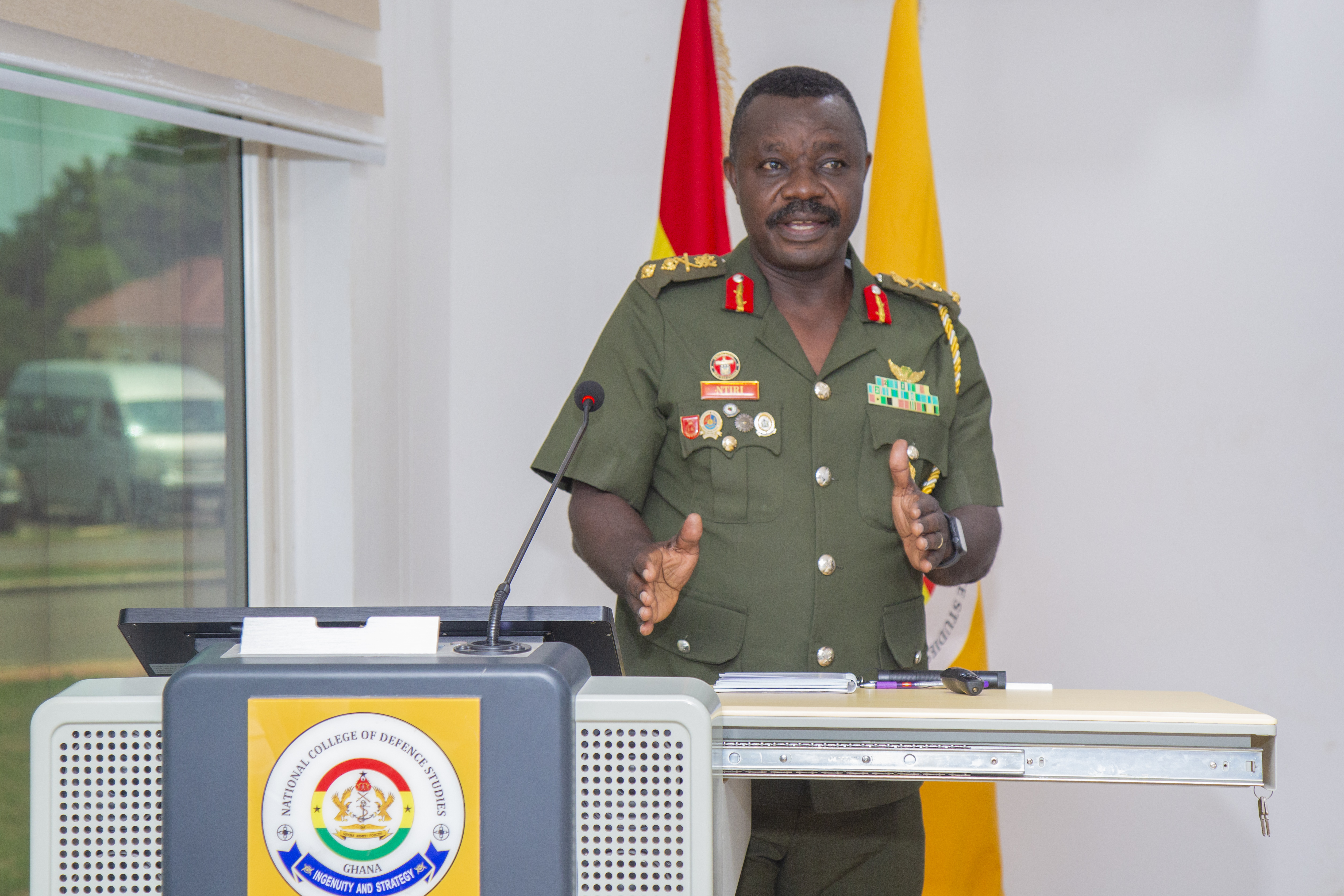
In his closing remarks, the Commandant of the National College of Defence Studies, Major General Frederick Dankyi Ntiri, expressed appreciation to the panelists for sharing their expertise, knowledge and perspectives with the participants.
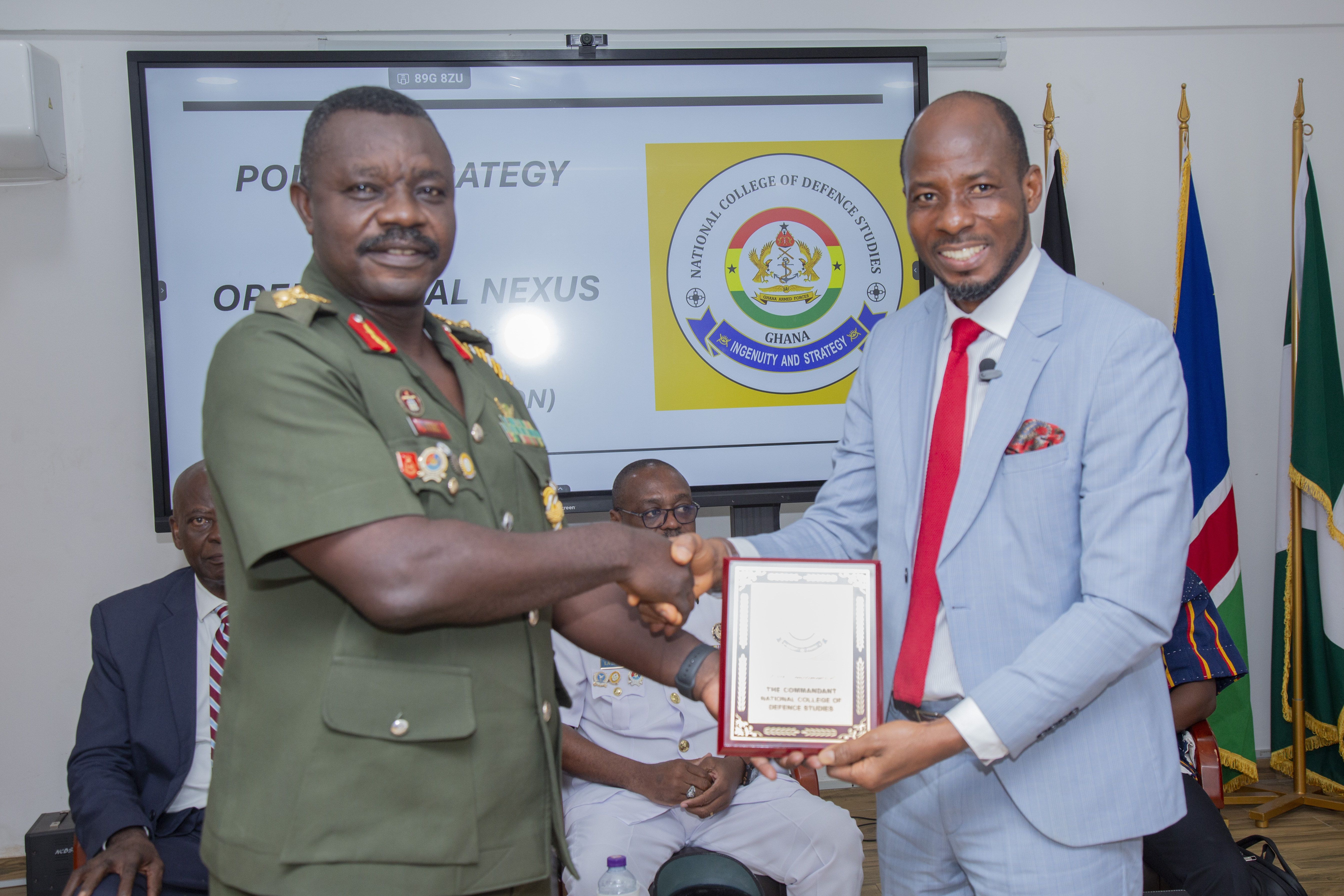
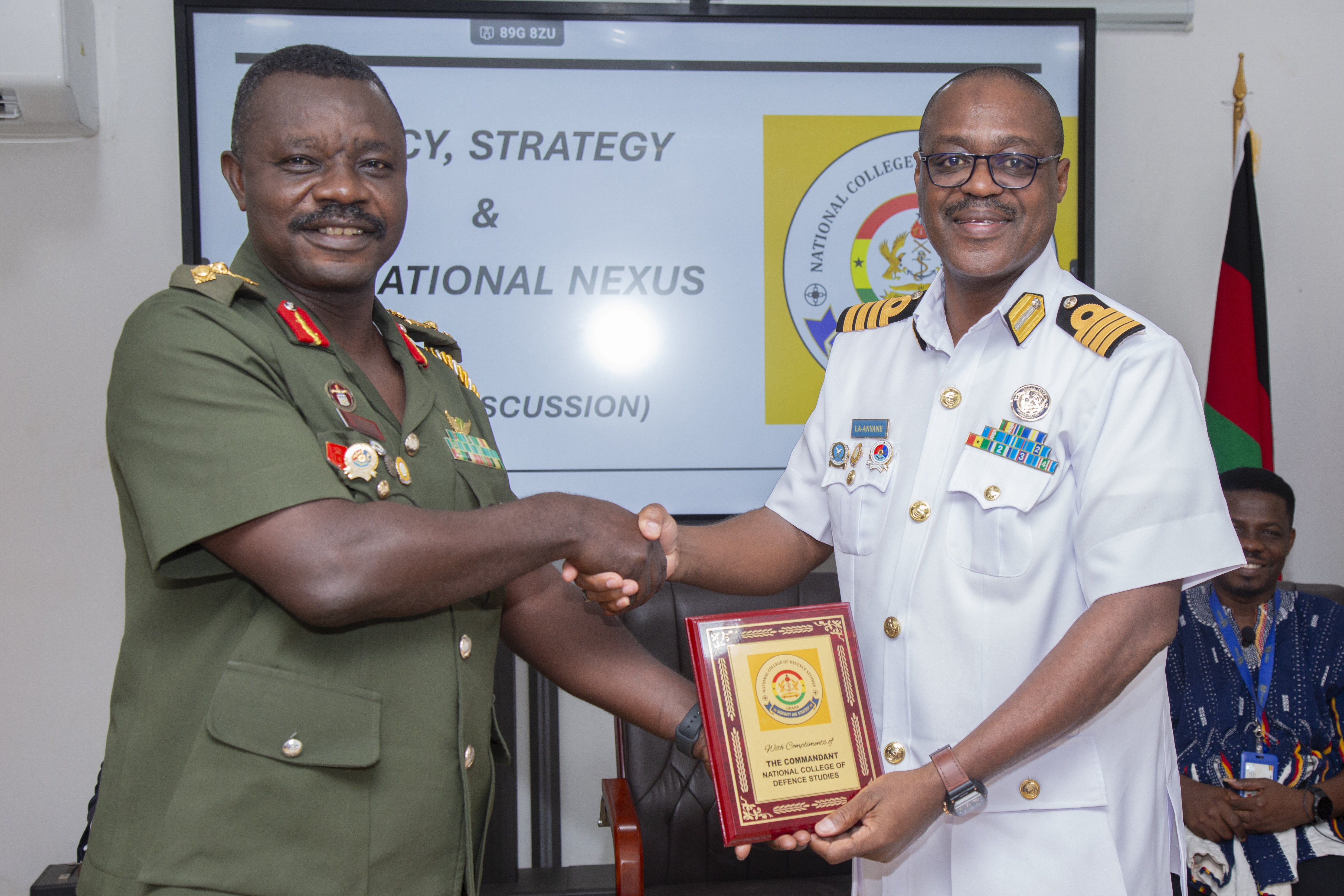
He, presented plaques as momentous to the panelists on behalf of the College in recognition of their contributions to the seminar and their commitment to strengthening professional understanding of Ghana’s national security environment.