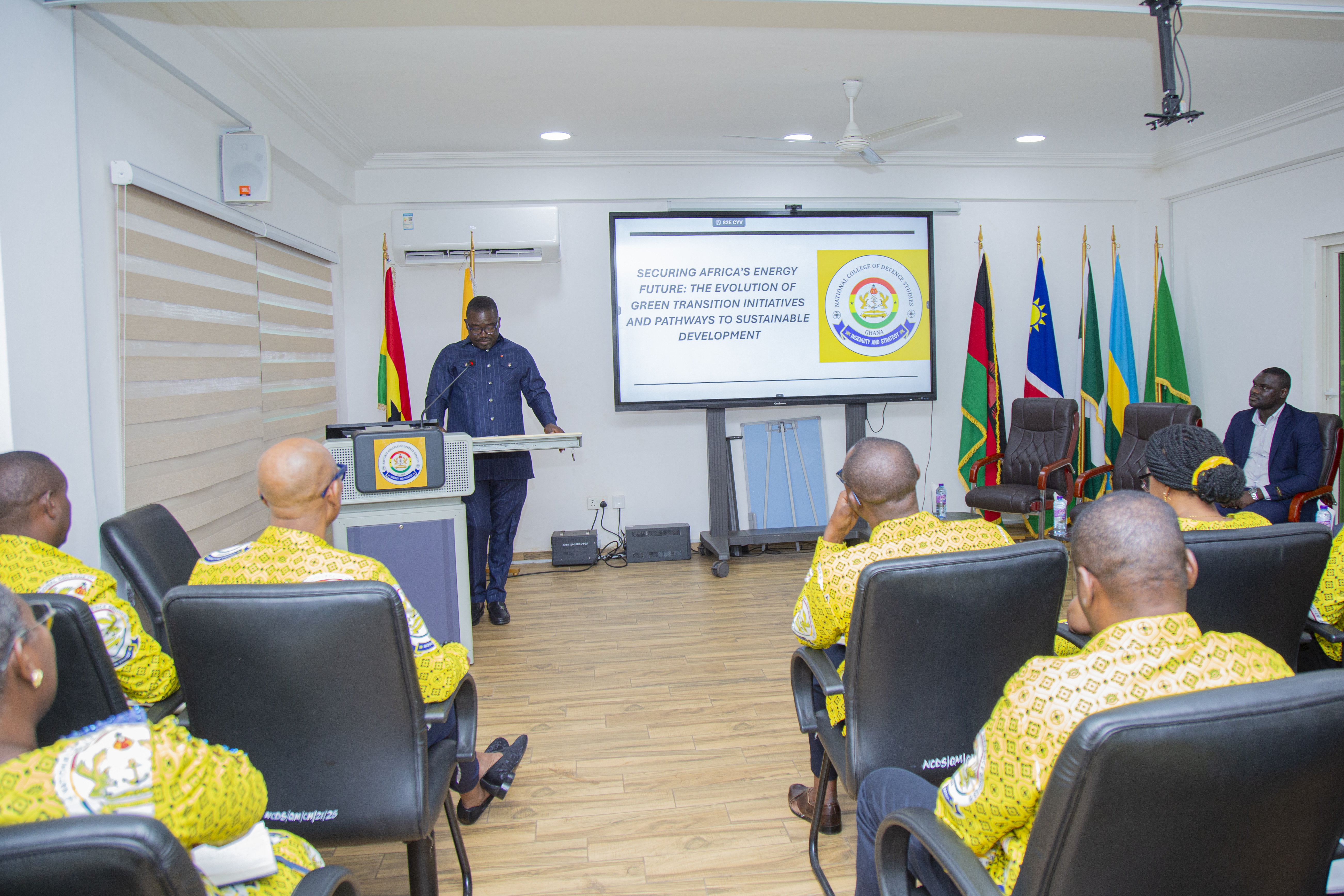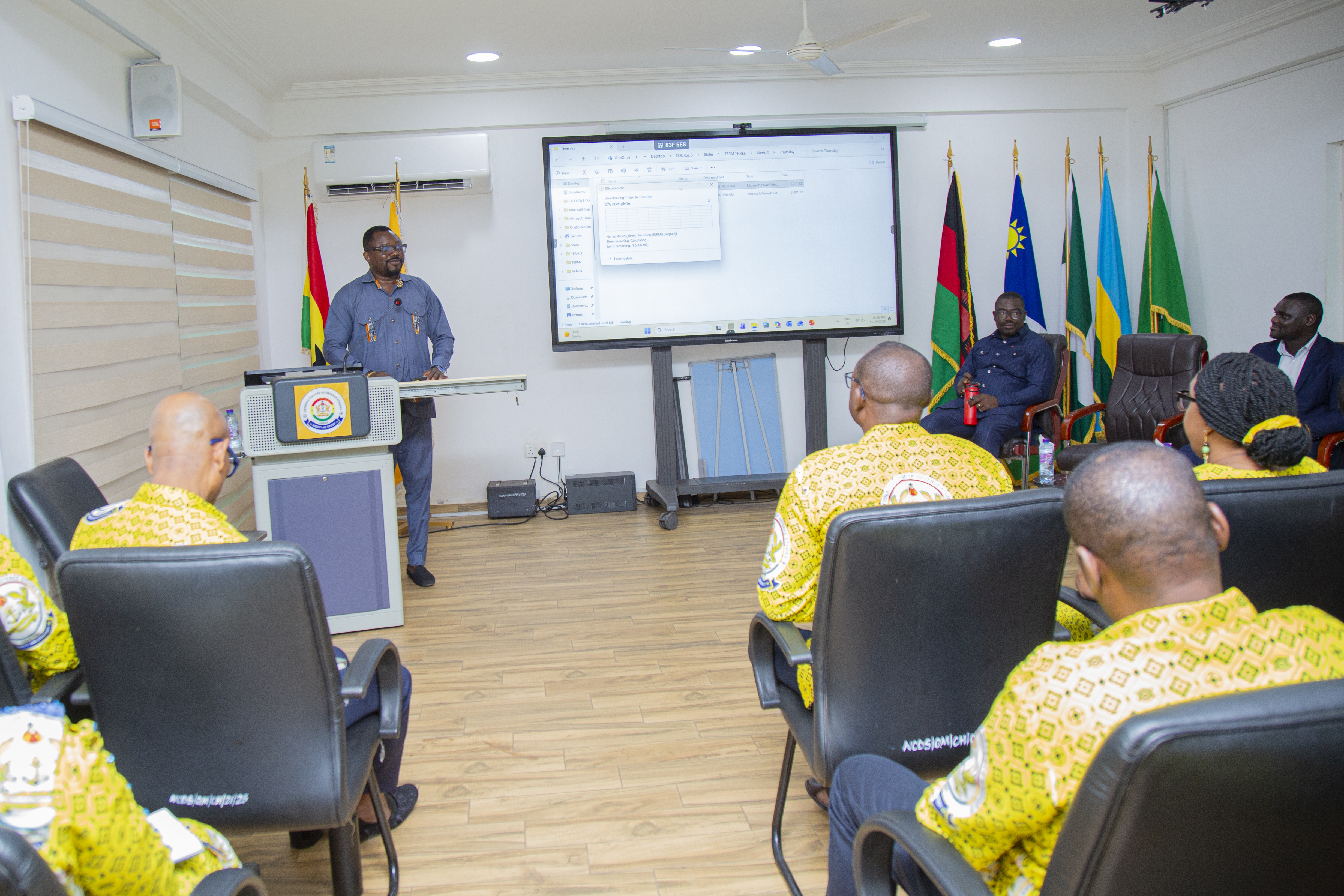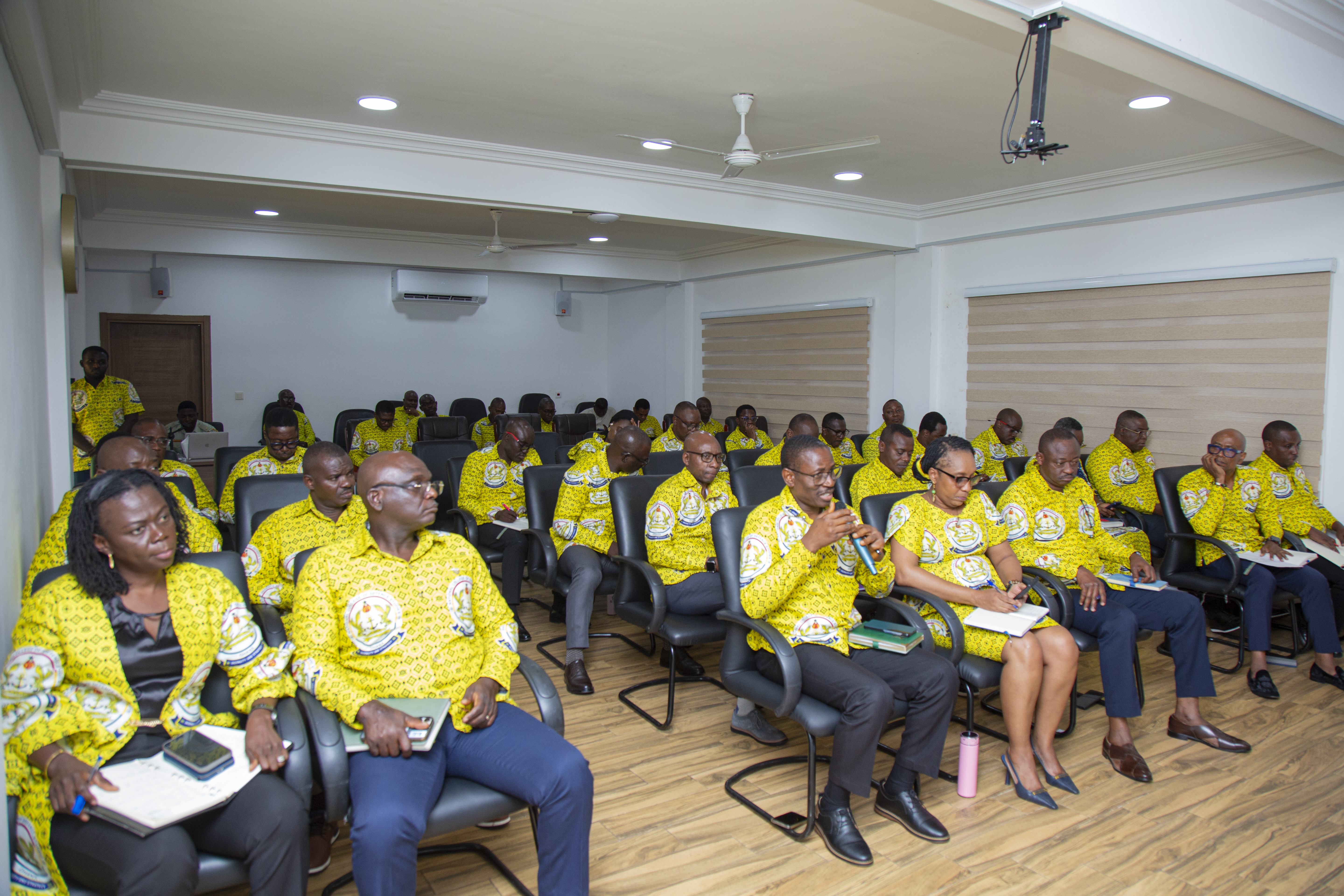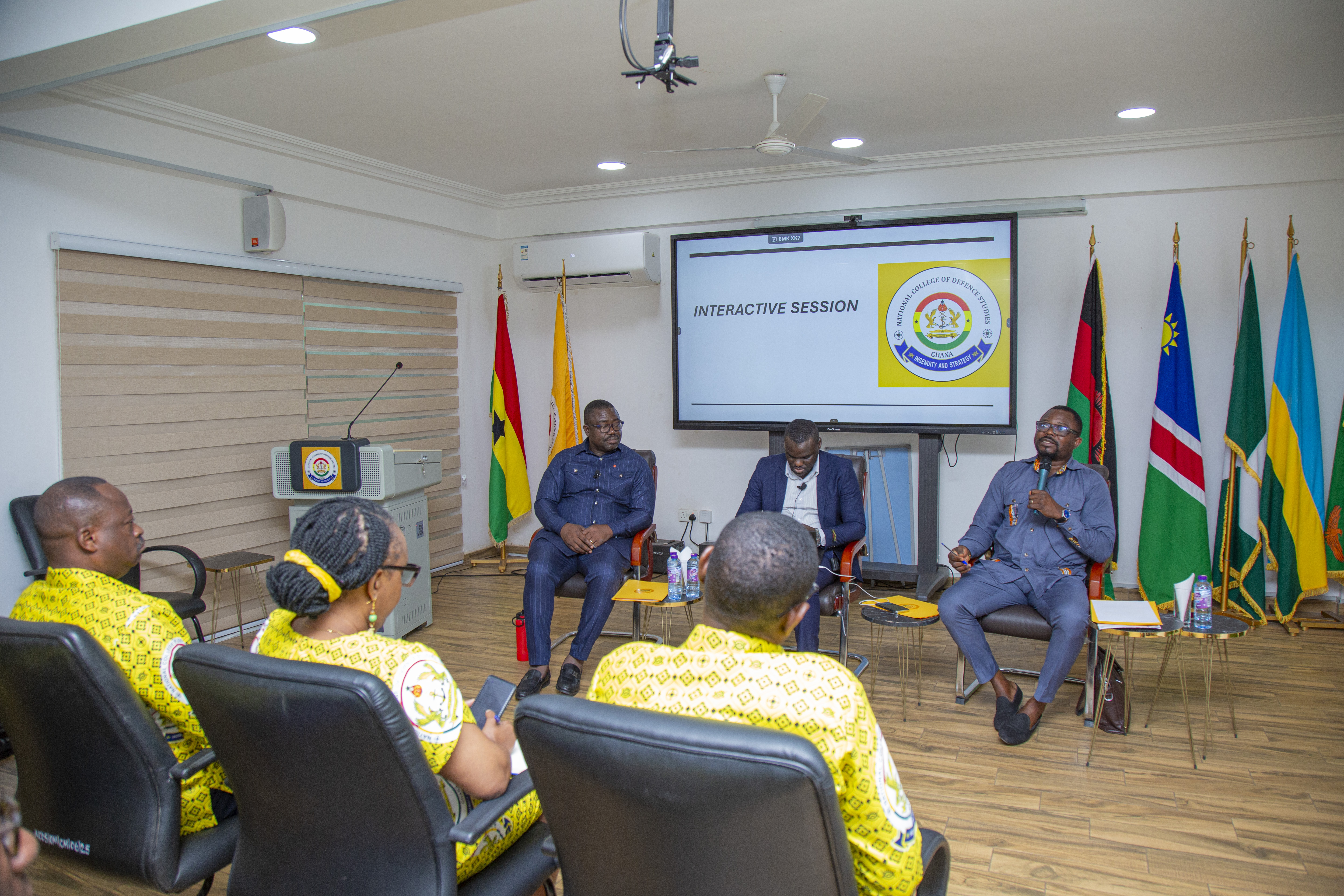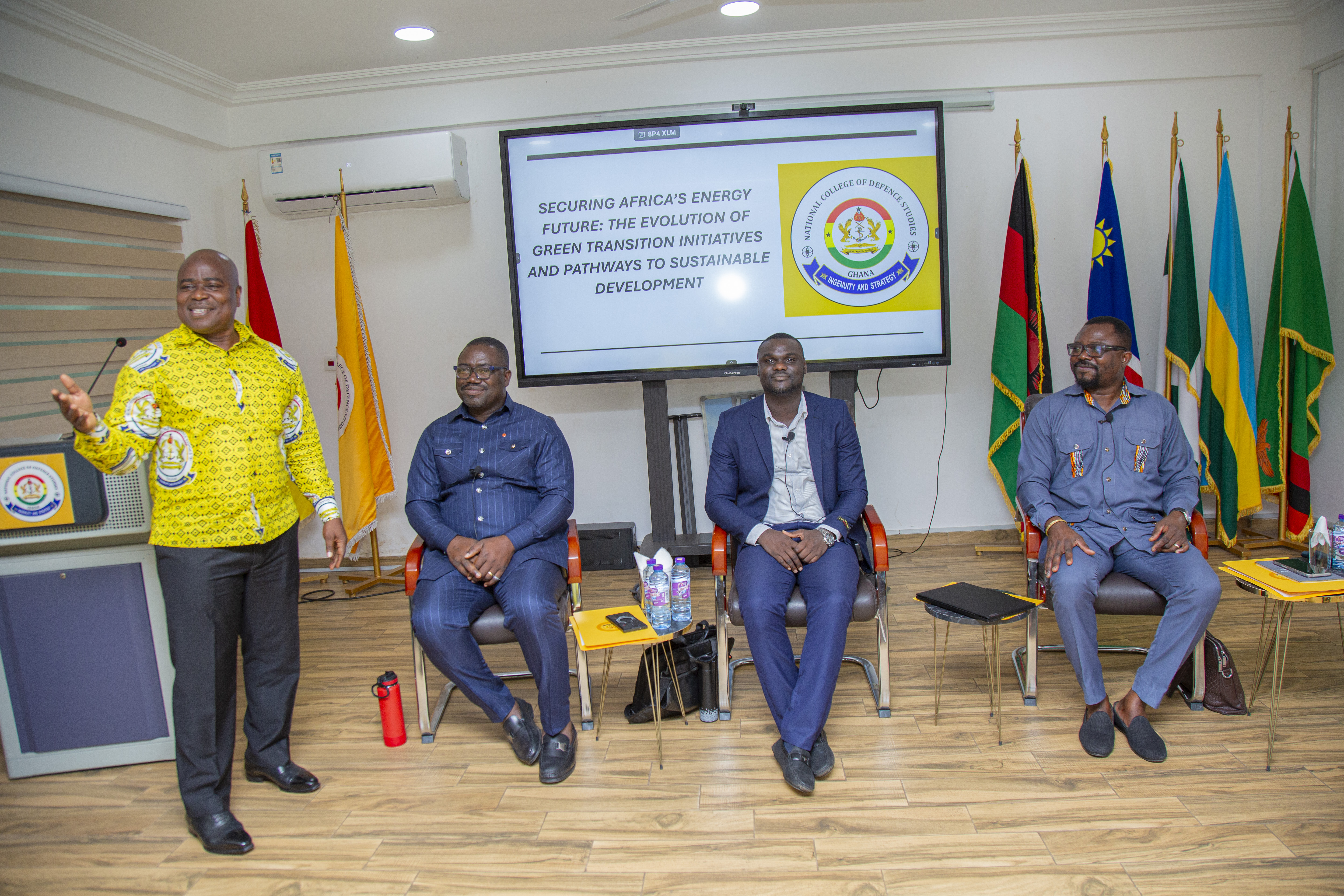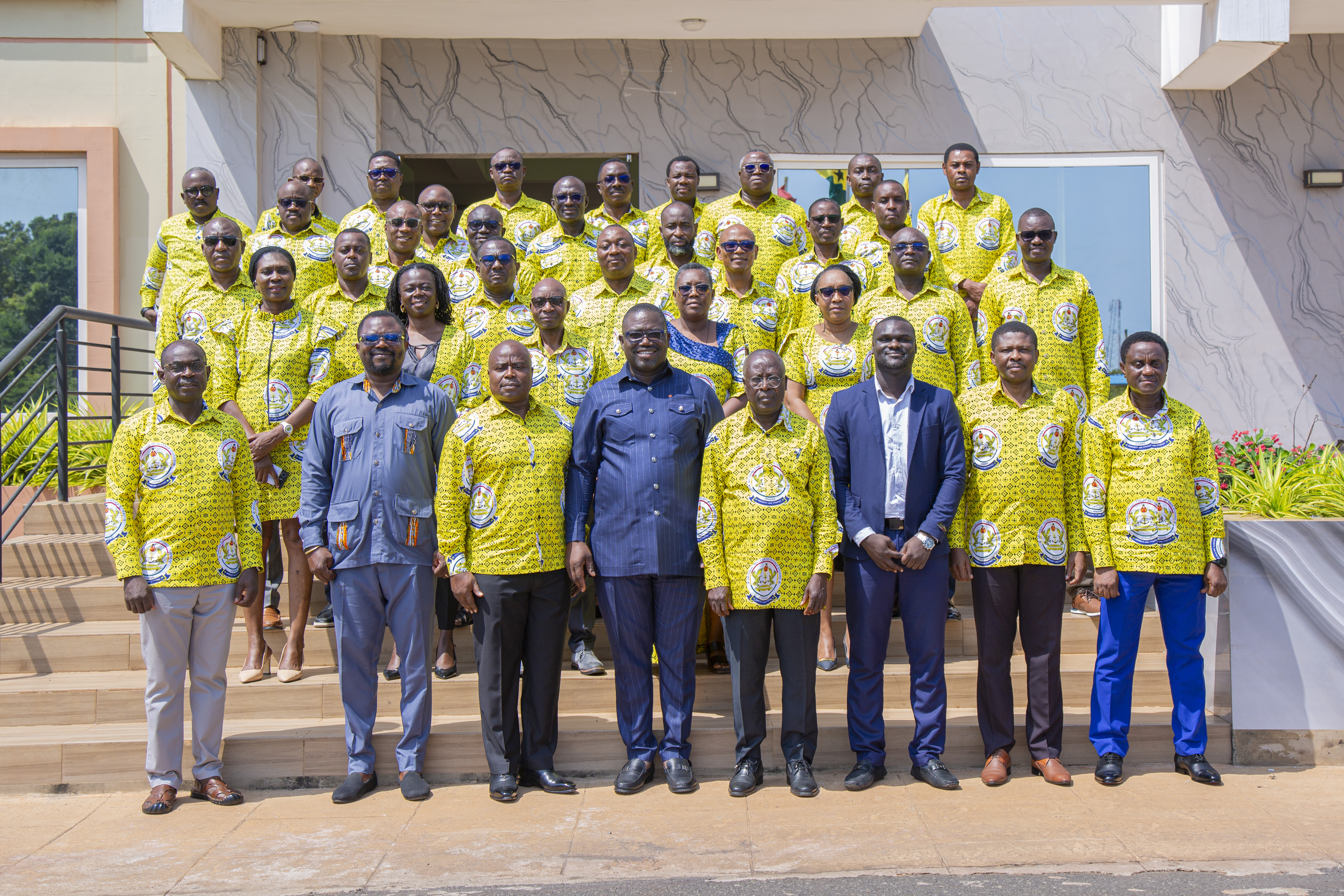
The National College of Defence Studies (NCDS) has organised a seminar on the theme, “Securing Africa’s Energy Future: The Evolution of Green Transition Initiatives and Pathways to Sustainable Development,” for participants of Course 3-2026.
The seminar, held on Thursday, 29 October 2026, at the College Auditorium, focused on the importance of green energy transition initiatives in promoting sustainable development across Africa.
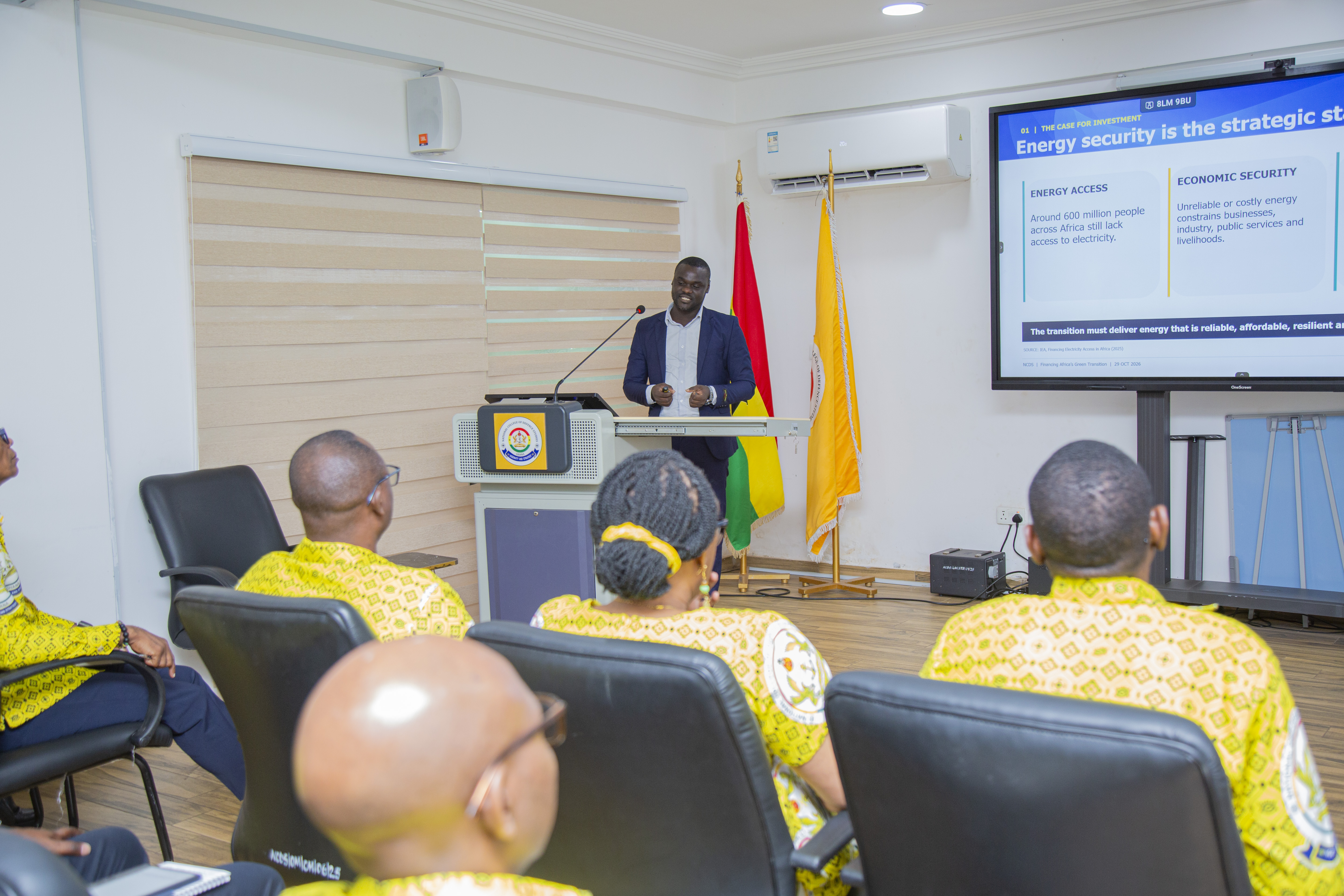
The seminar was chaired by Dr Benjamin Otchere Ankrah, Managing Director of Construction Logistics Limited and Board Chairman of Golden Beach Hotel. The distinguished panelists were Dr Robert Sogbaji of the Ministry of Energy and Green Transition, and Mr Kwabena Twumasi, representing the United Nations Development Programme (UNDP).
The discussions examined key issues surrounding Africa’s green transition, with particular emphasis on green energy mix models, poverty reduction strategies, and funding opportunities for green technology innovations. The panelists also explored the evolution of the global green transition, the opportunities available to Africa, and the financial and institutional measures required to accelerate progress.
The seminar highlighted the Continent’s paradoxical energy situation, noting that although Africa contributes approximately four per cent of global greenhouse gas emissions, it possesses about 60 per cent of the world’s solar energy potential and 30 per cent of global critical mineral resources. Despite these significant advantages, an estimated 600 million Africans still lack access to electricity.
The panelists observed that inadequate and unreliable electricity supplies continue to constrain businesses, industrial production, and essential public services across the Continent, thereby undermining economic growth and development. Tracing the evolution of the green transition from its foundational stages to its formalisation and current acceleration, they highlighted major international milestones, including the 1972 Stockholm Conference on the Human Environment. They explained that the current phase of the transition has been driven by declining renewable energy costs, increasing national commitments to net-zero emissions, and intensified international efforts to reduce dependence on fossil fuels.
The panelists stressed the need for African countries to balance environmental sustainability objectives with economic stability, employment protection, and reliable energy supplies. They further underscored the importance of harnessing the Continent’s natural resources to expand electricity access, strengthen energy security, and accelerate industrialisation.
The seminar also highlighted financing gaps as a major obstacle to Africa’s ability to implement its climate and energy commitments. The panelists called for governments and development partners to adopt appropriate financing instruments tailored to the specific needs, risks, and requirements of individual projects.
The panelists further emphasised the importance of strong institutional capacity to translate national priorities into viable projects through feasibility studies, project structuring, implementation, and monitoring. Citing Ghana’s Energy Transition and Investment Plan, which identifies approximately US$550 billion in investment opportunities by 2060, they stressed the need to convert long-term ambitions into credible, investment-ready projects capable of attracting the necessary funding.
In conclusion, the panelists reiterated that Africa’s green energy transition was not merely an environmental or technological undertaking but a strategic priority closely linked to national security, economic transformation, and social development. Additionally, the Continent’s abundant natural resources could position it as a major player in the global energy transition. However, realising this potential would depend on effective policies, accessible financing, regional collaboration, and the ability of African countries to translate commitments into measurable and sustainable results.
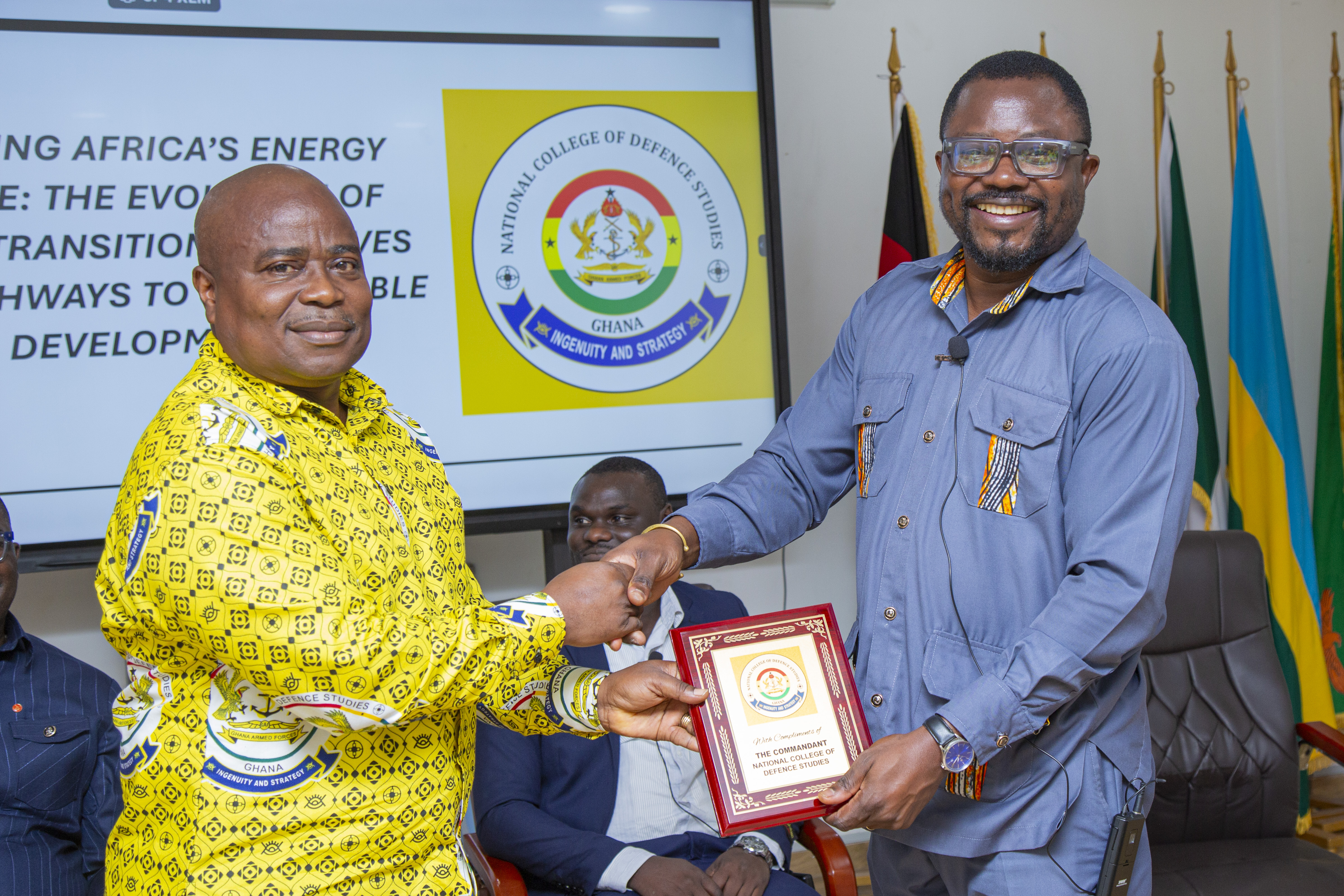
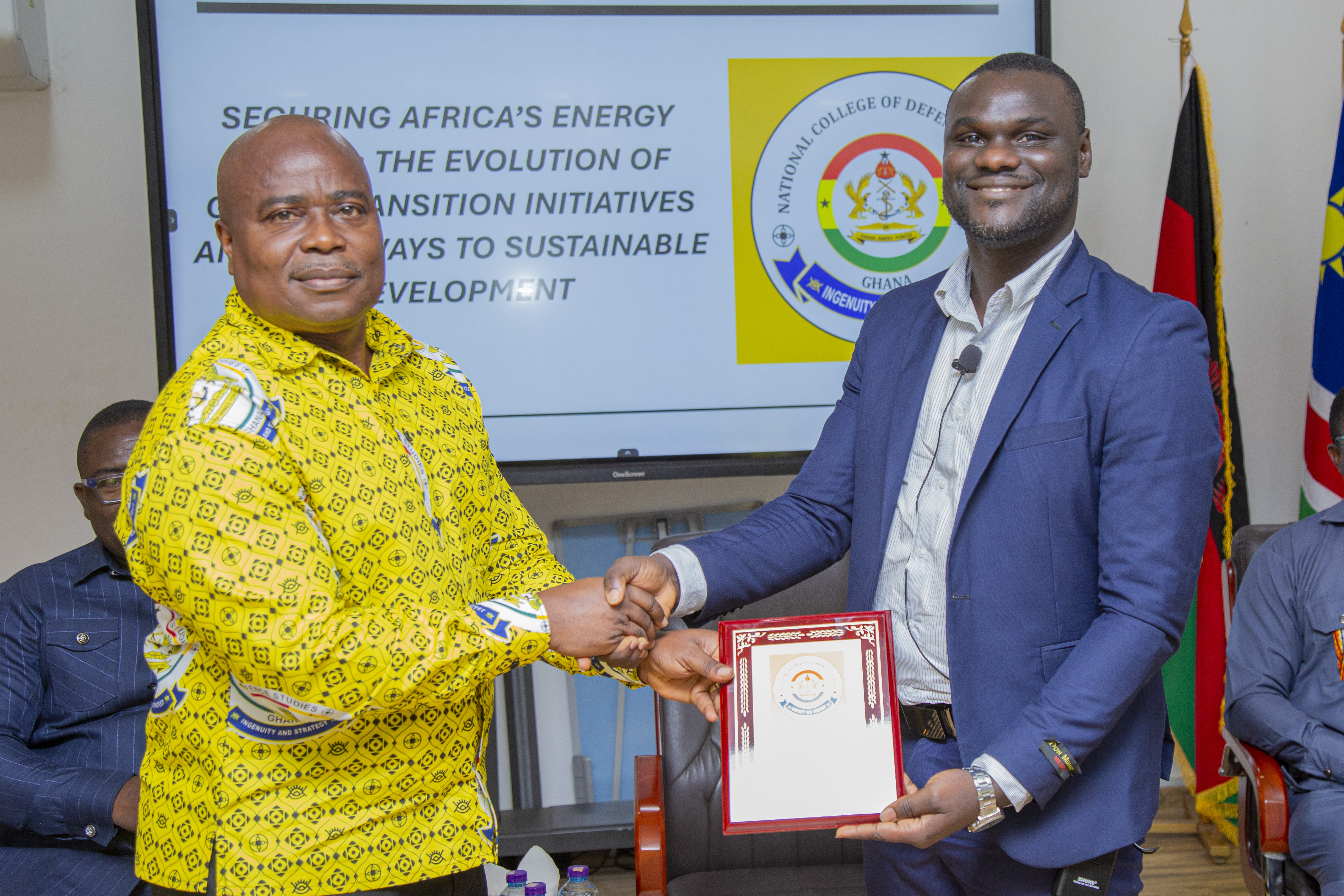
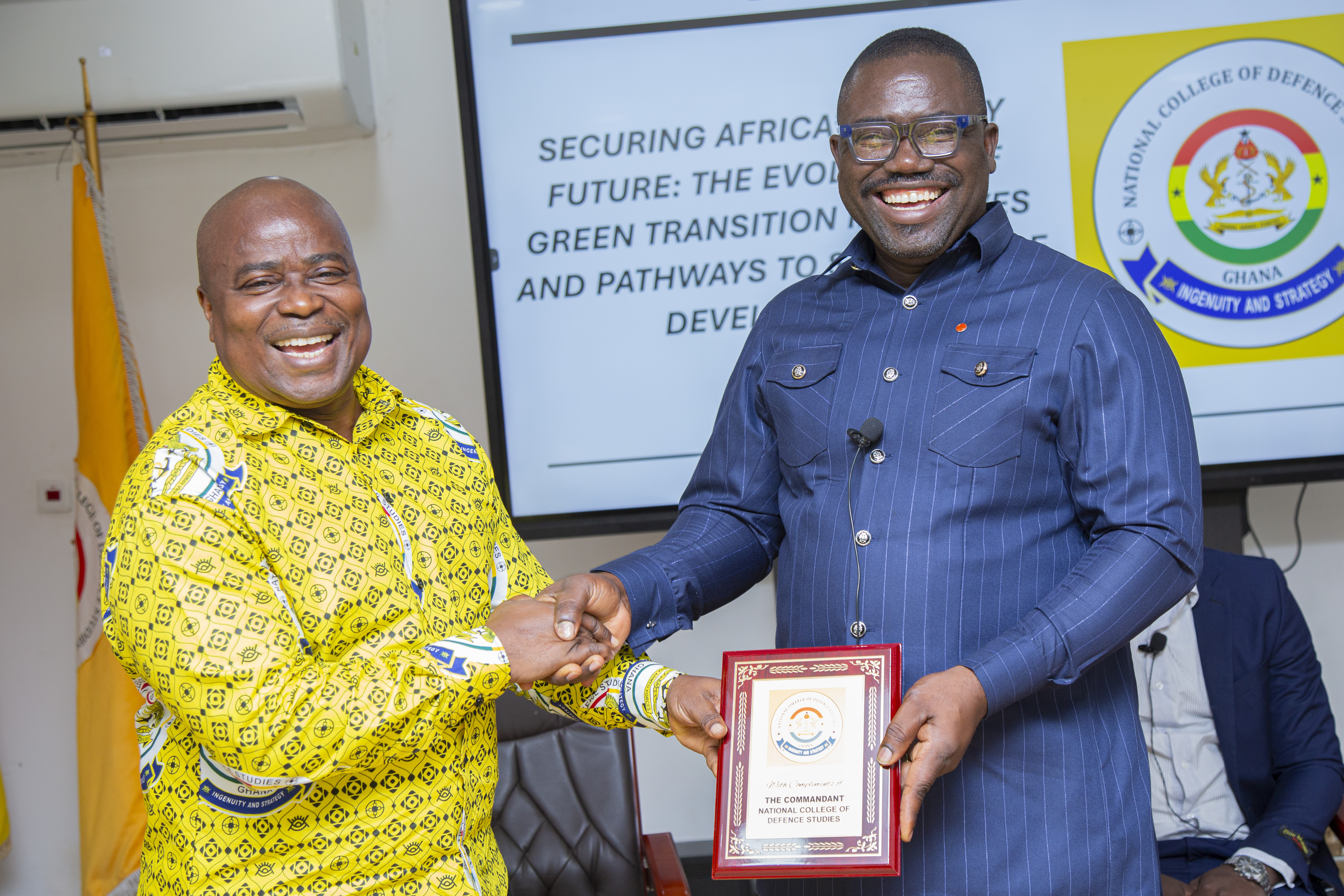
In his closing remarks, the Deputy Commandant of the National College of Defence Studies, Brigadier General Eric Konadu, expressed appreciation to the panelists for sharing their expertise, knowledge and perspectives with the participants. He subsequently presented commemorative plaques to the panelists on behalf of the College in recognition of their contributions to the seminar and their commitment.