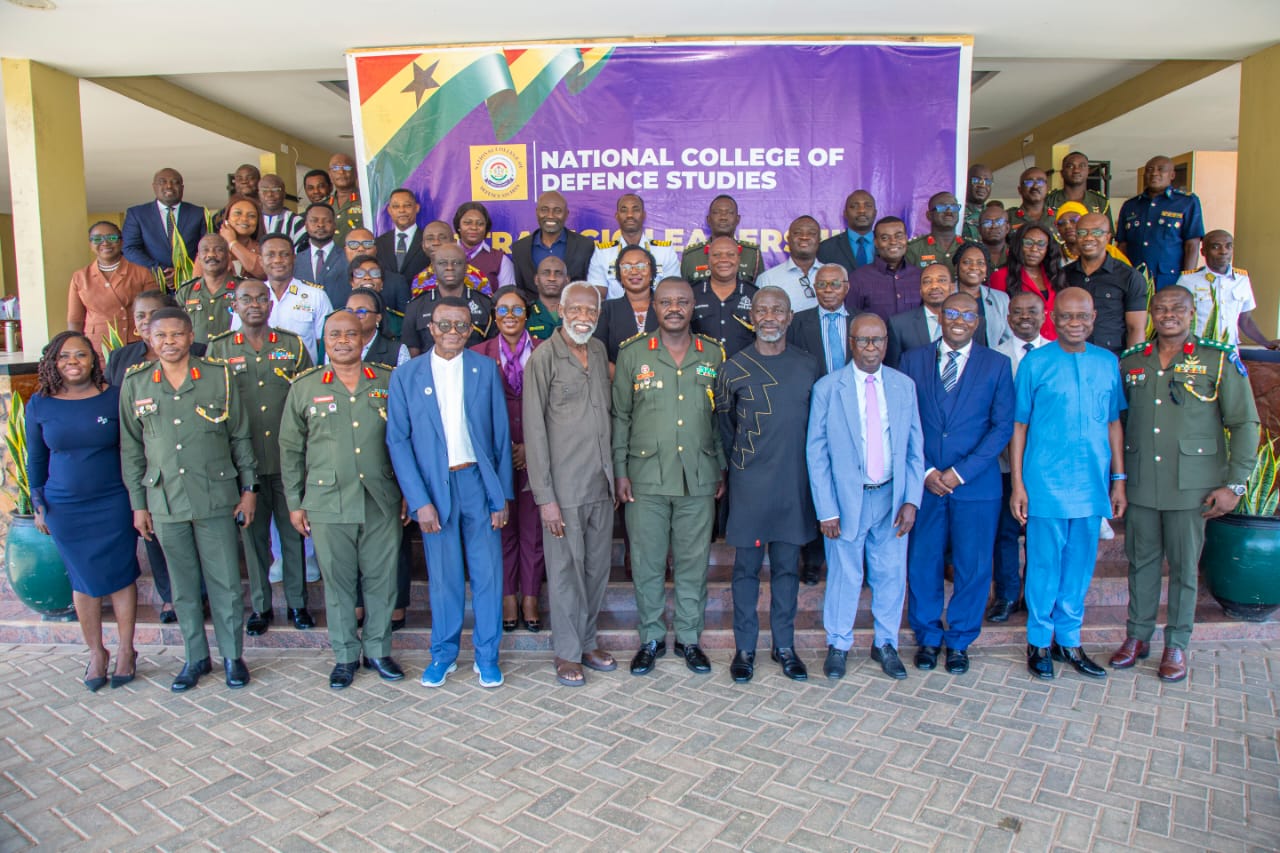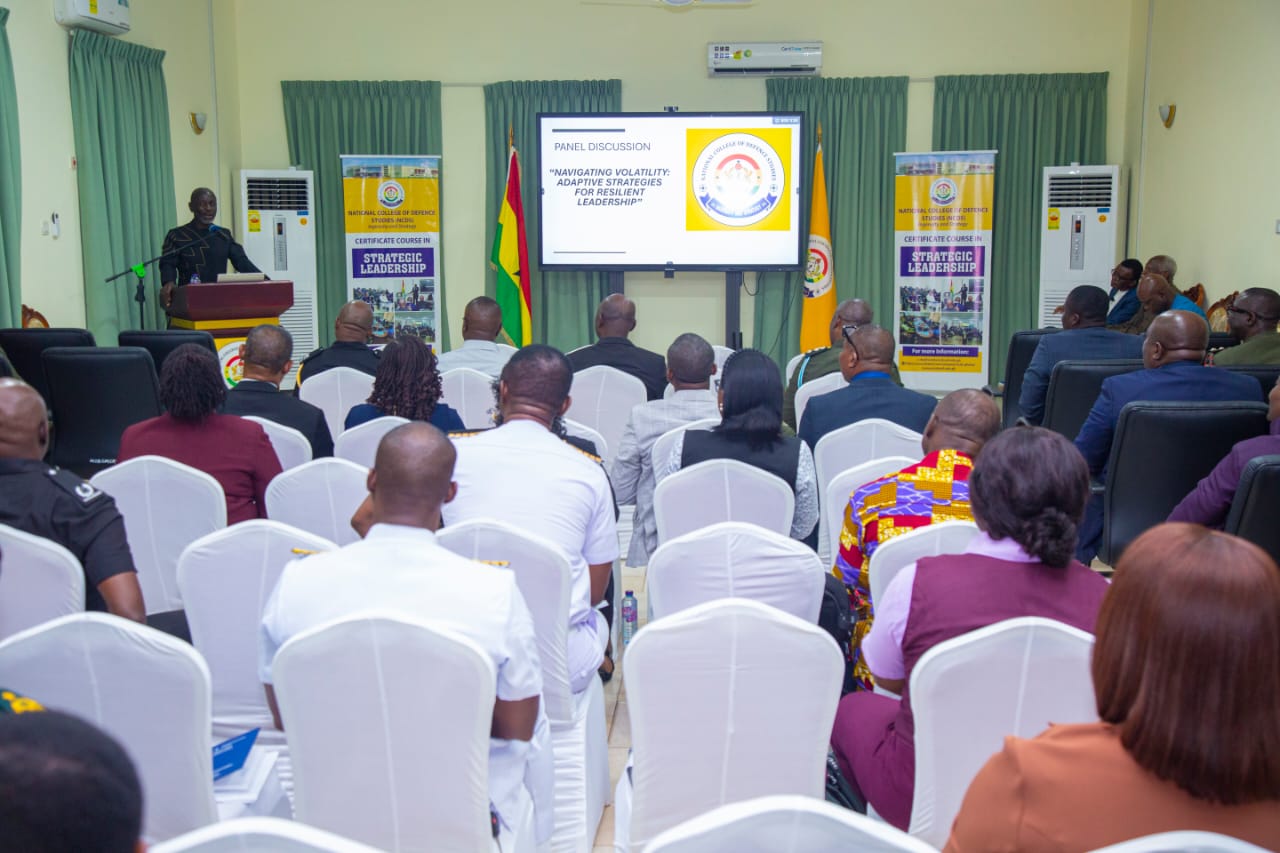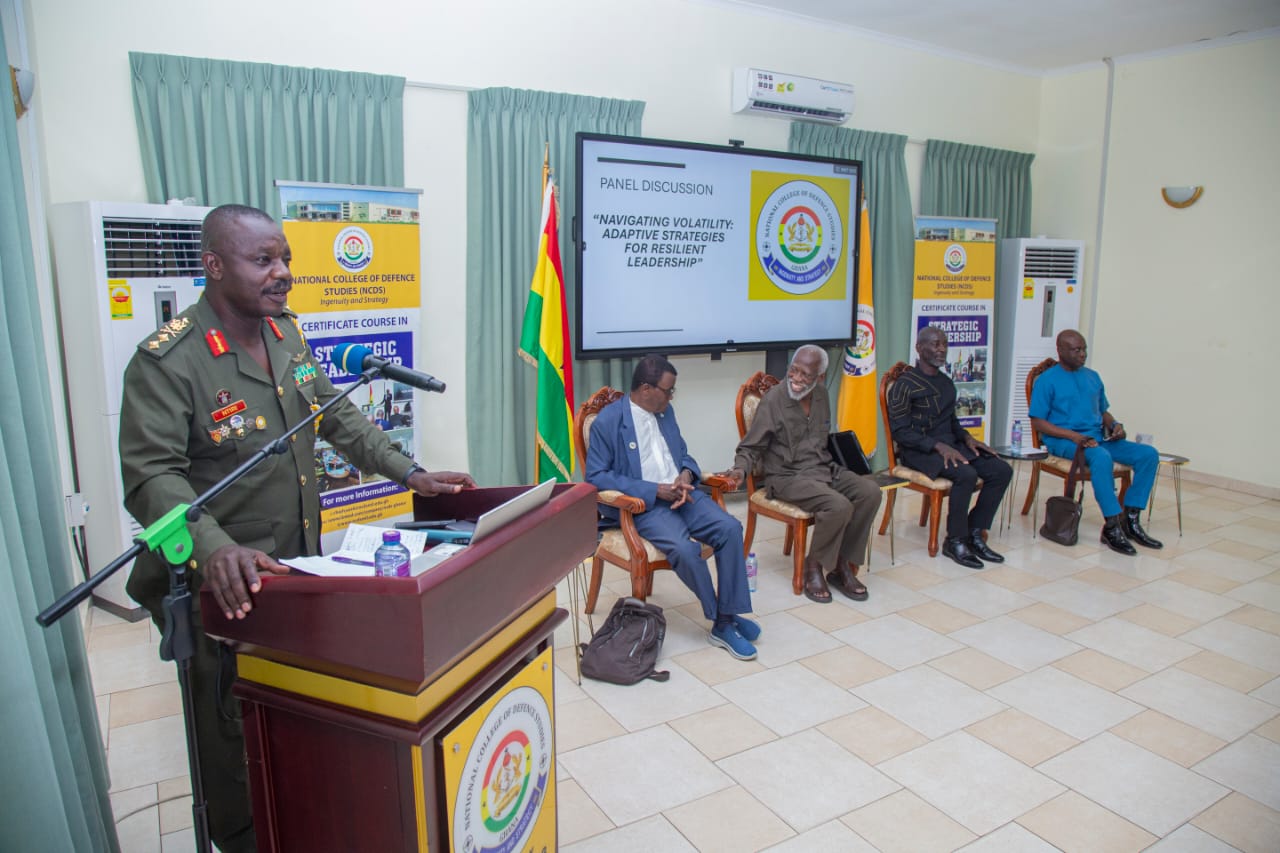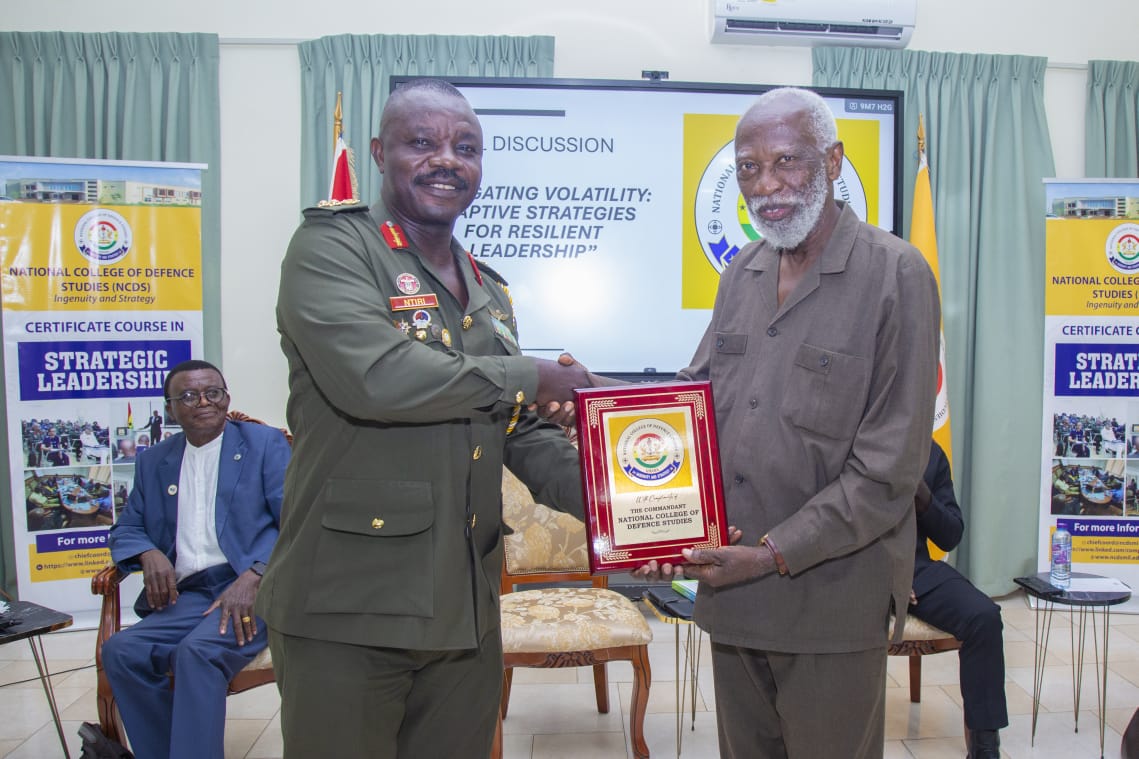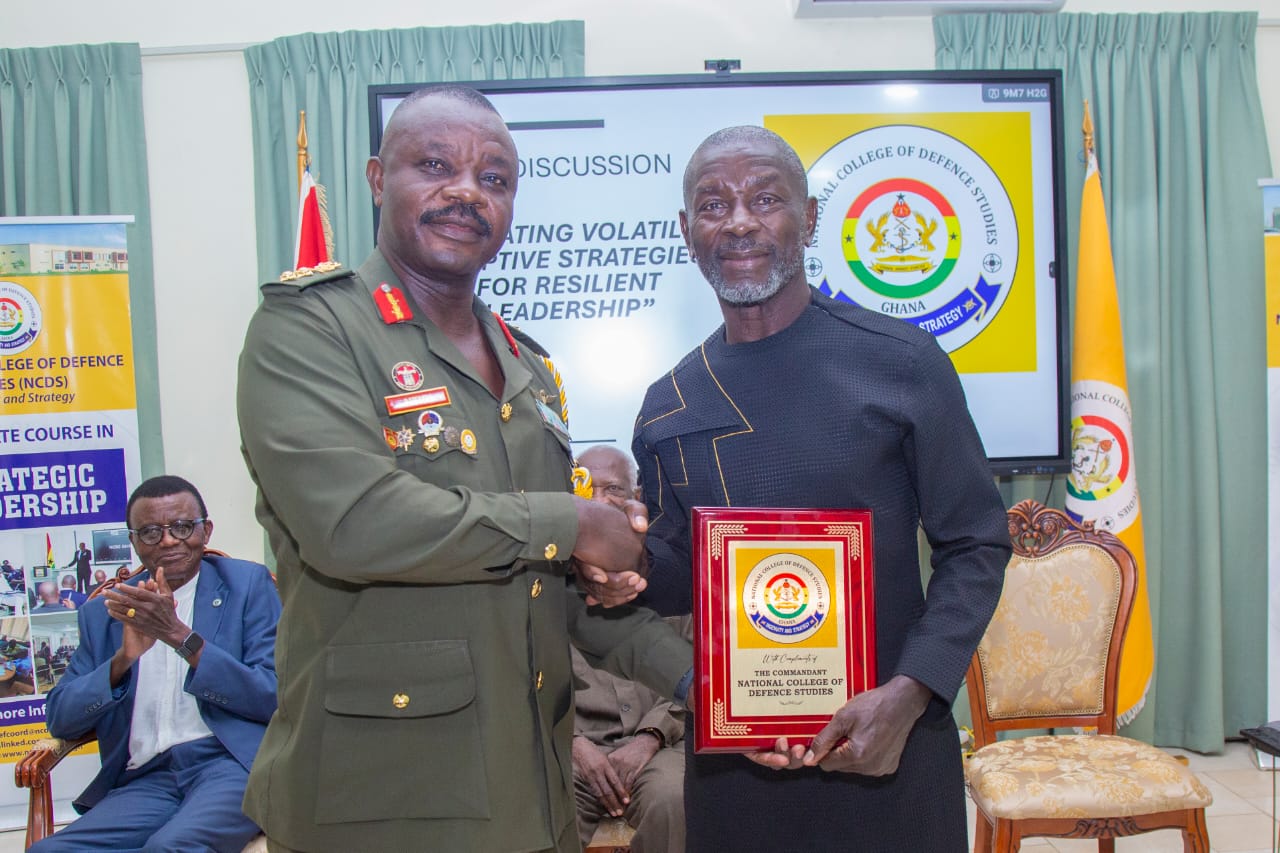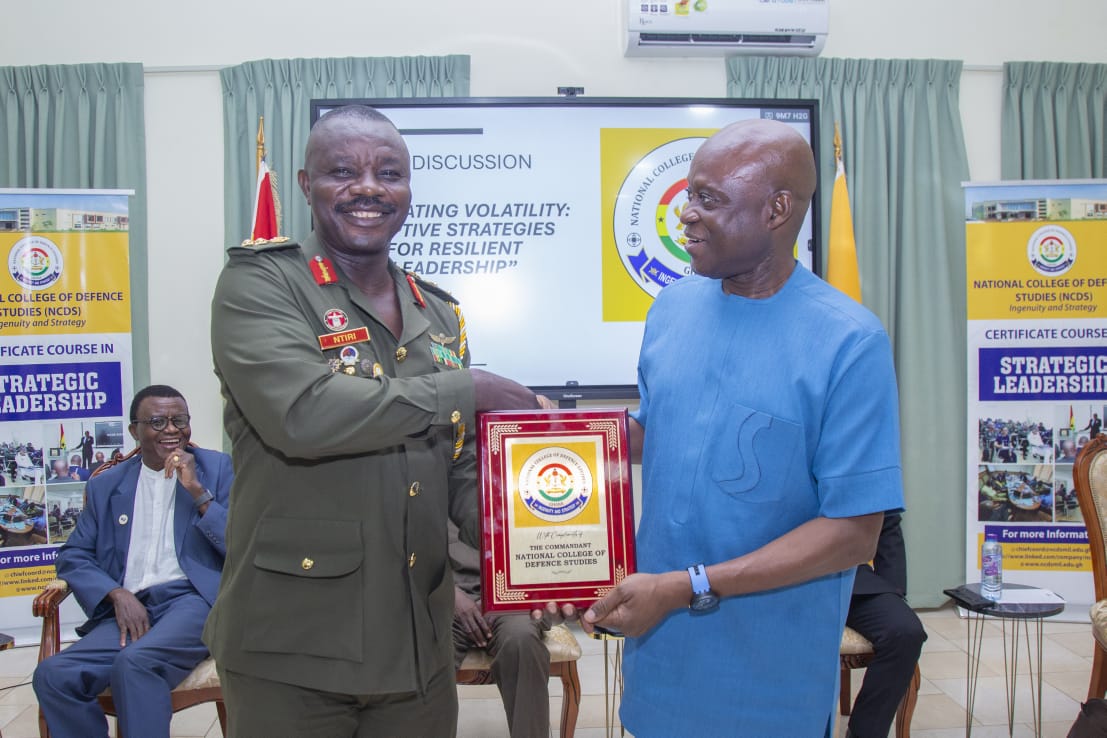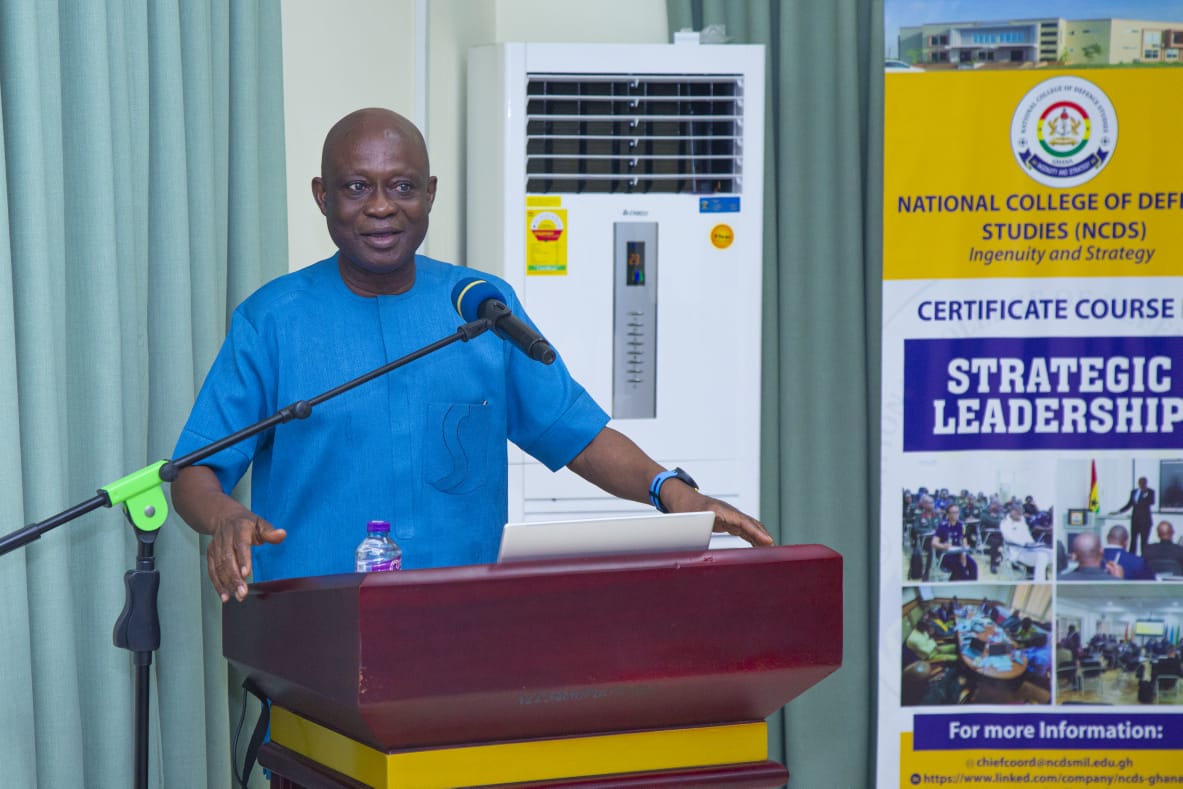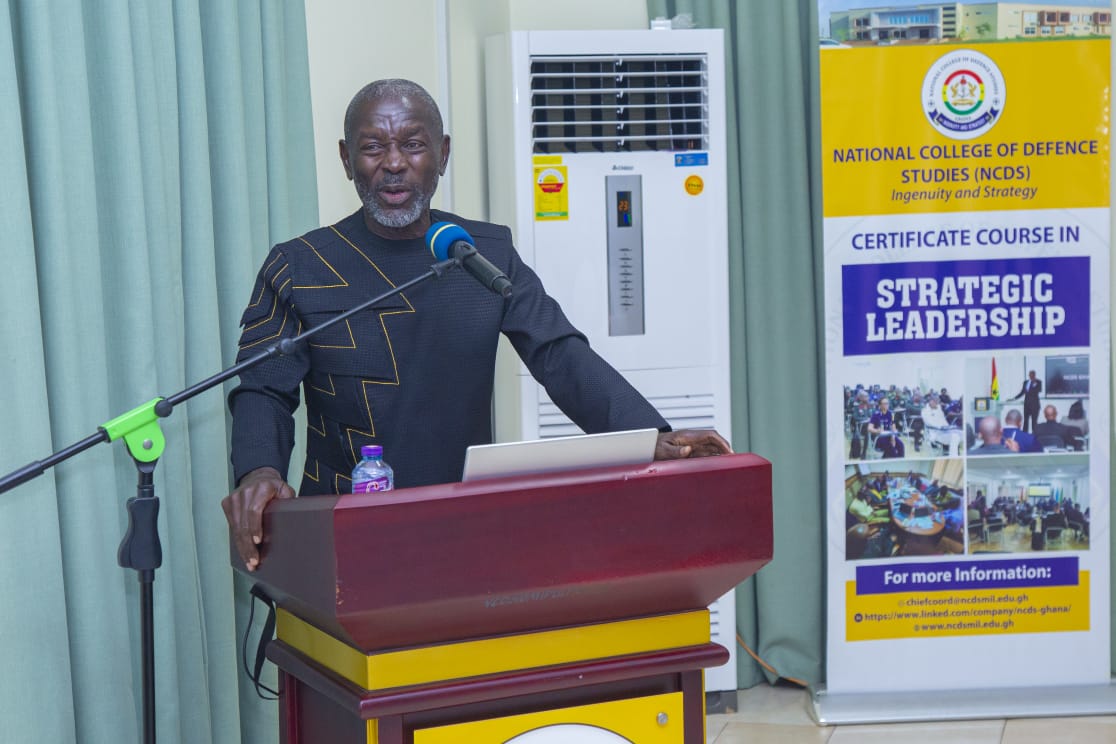
A seminar on “Navigating Volatility: Adaptive Strategies for Resilient Leadership” was held on Wednesday, 18 March 2026, at the Arakan Officers’ Mess for participants of Course 2–2026 of the Strategic Leadership programme.
The event formed part of the course requirements and was designed to equip participants with the skills necessary to make informed and critical decisions as strategic leaders in an increasingly complex global environment.
The seminar was chaired by Professor Baffour Agyeman-Duah, Chief Executive Officer of the Kufuor Foundation, and featured a distinguished panel comprising Professor Stephen Adei, former Rector of GIMPA; Captain Kofi Amoabeng, former Chief Executive Officer of UT Bank; and Major General Emmanuel Akotia, former National Coordinator and Commissioner of the Ghana Boundary Commission.
In their presentations, the panelists emphasized the critical role of the public sector in national development. They highlighted that effective public sector performance is anchored on three key leadership styles—transformational, charismatic, and authentic leadership—while underscoring the importance of calculated risk-taking in leadership.
The speakers also expressed concern over what they described as a decline in public service training, attributing it to systemic volatility and rising corruption. They called for policy reforms aimed at strengthening governance structures and restoring institutional efficiency. Additionally, they noted that government efforts to reduce treasury bill rates to 10 percent could stimulate growth in key sectors such as manufacturing and industry.
Addressing private sector leadership, the panel underscored the importance of honesty, integrity, and trustworthiness. Captain Kofi Amoabeng shared his entrepreneurial journey, recounting how he established Unique Trust with a small team and built credibility by honoring financial commitments, including paying interest on funds received from personal networks. He stressed that resilience and hard work are indispensable in navigating complex business challenges.
The discussion also examined Ghana’s broader socio-economic and political landscape, warning that the country faces significant internal and external pressures. Internally, issues such as economic instability, fiscal constraints that have necessitated IMF intervention, localized conflicts in Bawku and Nkwanta North, and illegal mining activities continue to threaten national stability and environmental sustainability. Externally, the panel highlighted concerns over the potential spillover of violent extremism from the Sahel region, as well as the impact of global geopolitical tensions on oil prices and economic conditions.
The seminar concluded with a call for resilient security structures and robust governance systems driven by effective coordination and people-centered leadership. The panelists urged strategic leaders to uphold high standards of ethics, professionalism, and discipline in order to ensure sustainable national development.