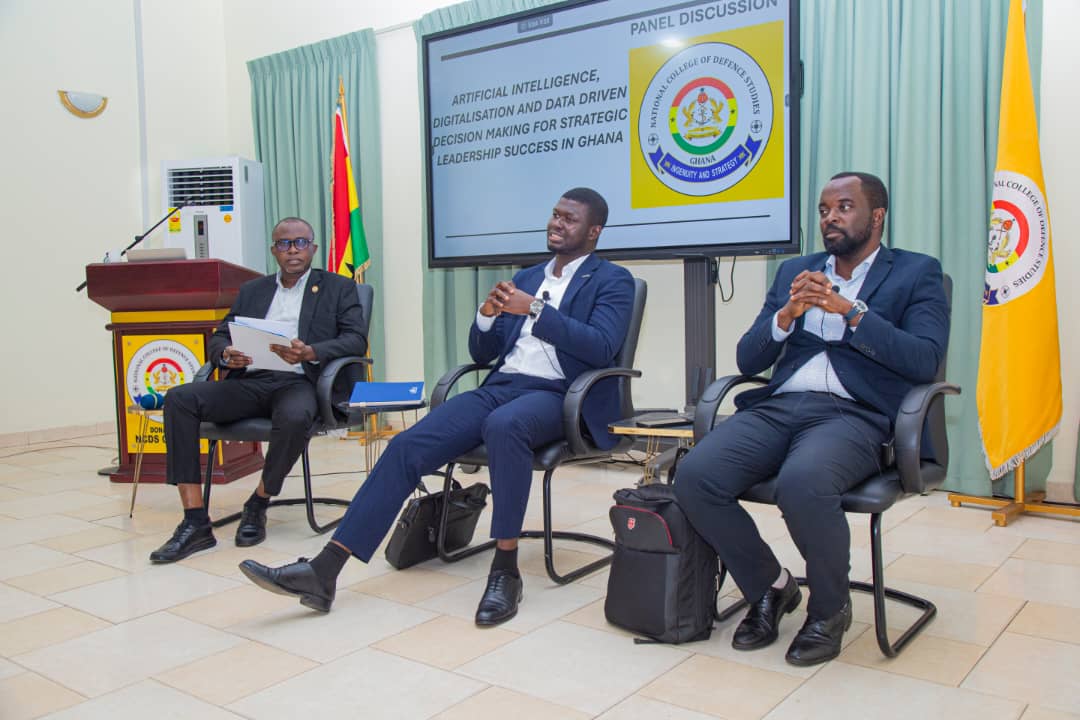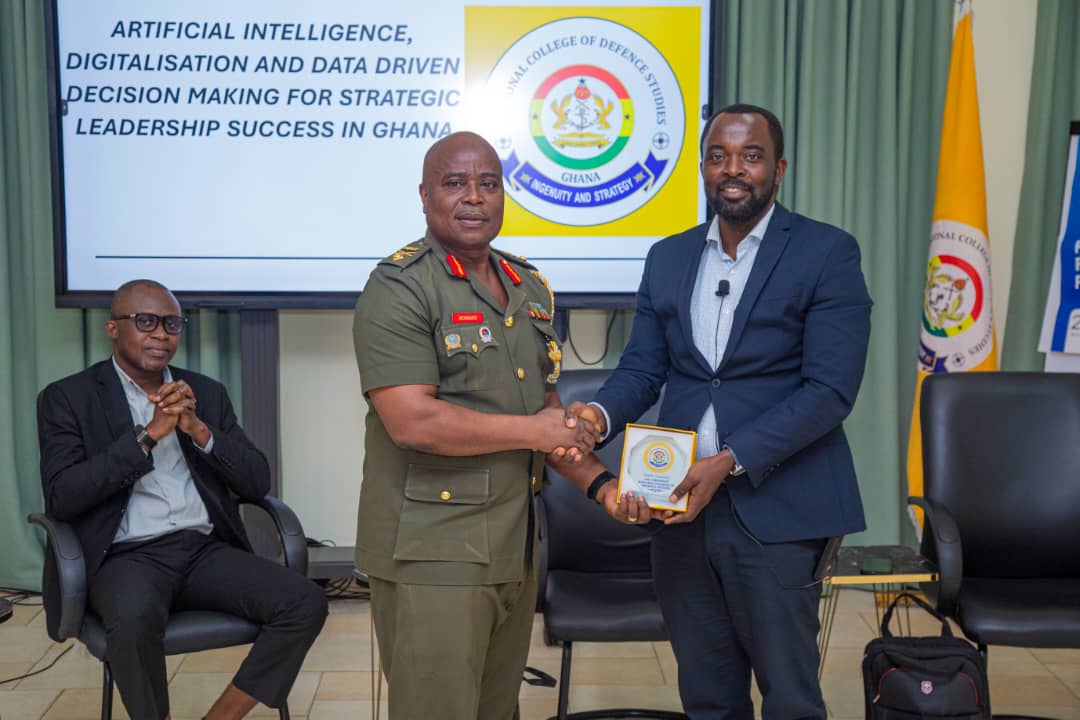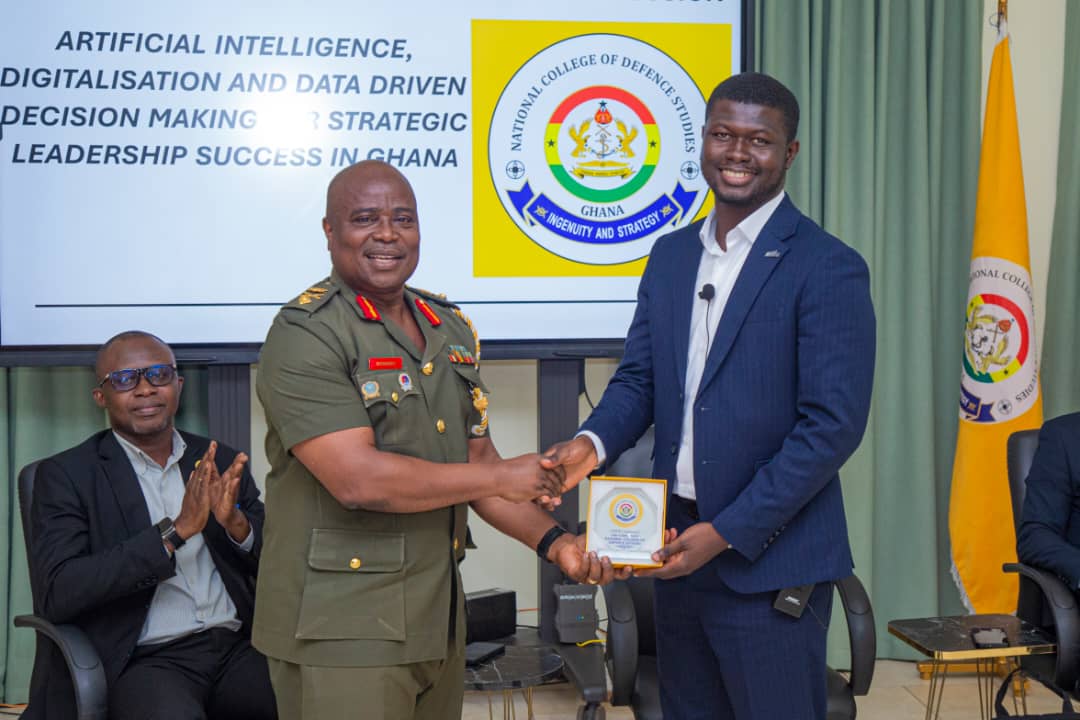
Participants of the Strategic Leadership Programme, Course 2–2026, attended a seminar on Friday, 13 March 2026, at the Arakan Officers’ Mess Conference Auditorium in Accra as part of their academic activities aimed at strengthening strategic-level leadership competencies.
The seminar featured a panel discussion on the theme “Artificial Intelligence, Digitalization and Data-Driven Decision Making for Strategic Leadership Success in Ghana.” The session was chaired by Mr. Kwasi Boakye, Librarian the National College of Defence Studies (NCDS) .
The panel comprised distinguished experts including Mr. Elijah Awintumah, Chief Information and Operations Officer at Axxend, and Professor Afful Dadzie of the University of Ghana Business School.
During the discussion, the panelists highlighted the increasing importance of artificial intelligence, digitalization, and robust data systems in enhancing leadership and decision-making at the strategic level. They explained that artificial intelligence refers to computer systems capable of performing tasks that typically require human intelligence, enabling leaders to process complex information efficiently and improve situational awareness.
The panelists noted that AI offers several advantages, including improved decision-making, increased efficiency, enhanced productivity, and stronger support for research and analytical work.
The discussion also emphasized the critical role of data collection in a rapidly evolving digital landscape, where technologies such as artificial intelligence and cloud computing continue to advance at remarkable speed. According to the panel, accurate and well-organized data allows institutions to identify patterns and trends, thereby supporting informed strategic decision-making.
Digitalization, they observed, has significantly contributed to economic growth by facilitating financial transactions through platforms such as mobile money, internet banking, and electronic payment systems.
The panel further stressed the importance of integrating and harmonizing data across institutions rather than maintaining isolated data systems. Such integration, they explained, could enhance efficiency and service delivery across sectors. For instance, sensors connected to Automated Teller Machines (ATMs) could notify banks and customers when machines run out of cash. In the health sector, digital platforms could allow patients to access healthcare services online, while emergency service providers could rely on real-time data systems to improve response times and deliver more effective services to the public.
The speakers also cited the COVID-19 pandemic as a clear example of how quality data can support global collaboration and scientific advancement. They noted that reliable data systems enabled researchers worldwide to develop vaccines and implement effective public health responses through digital collaboration.
The panelists therefore recommended stronger collaboration among universities, research institutions, and government agencies to harmonize data systems and strengthen research efforts in support of national development.