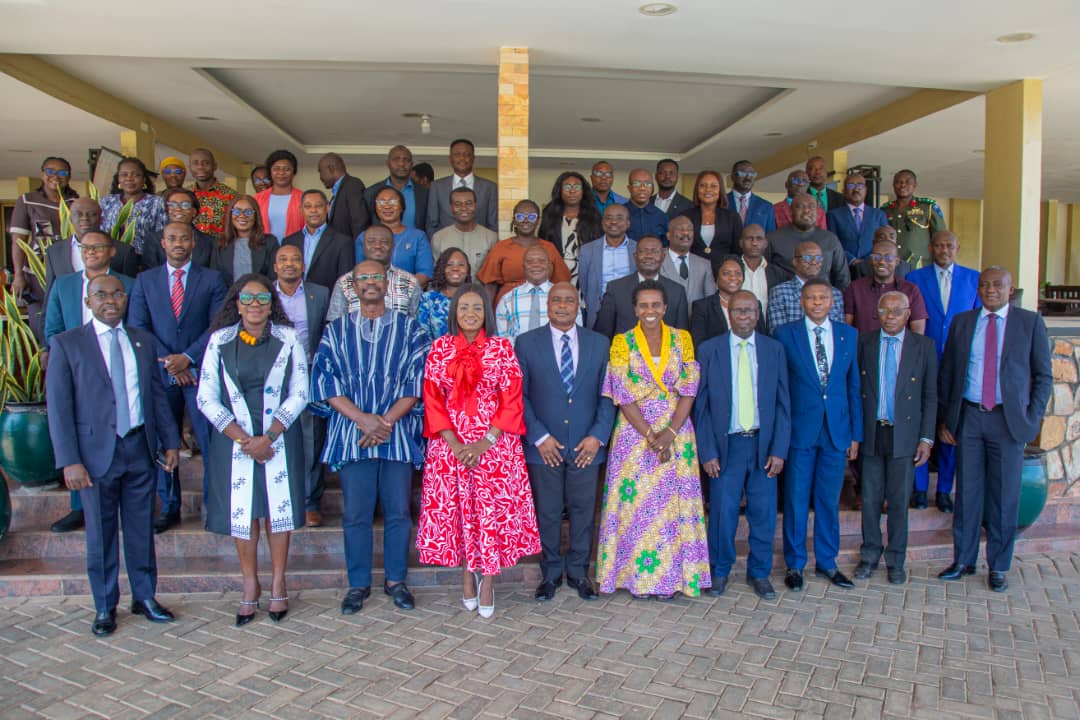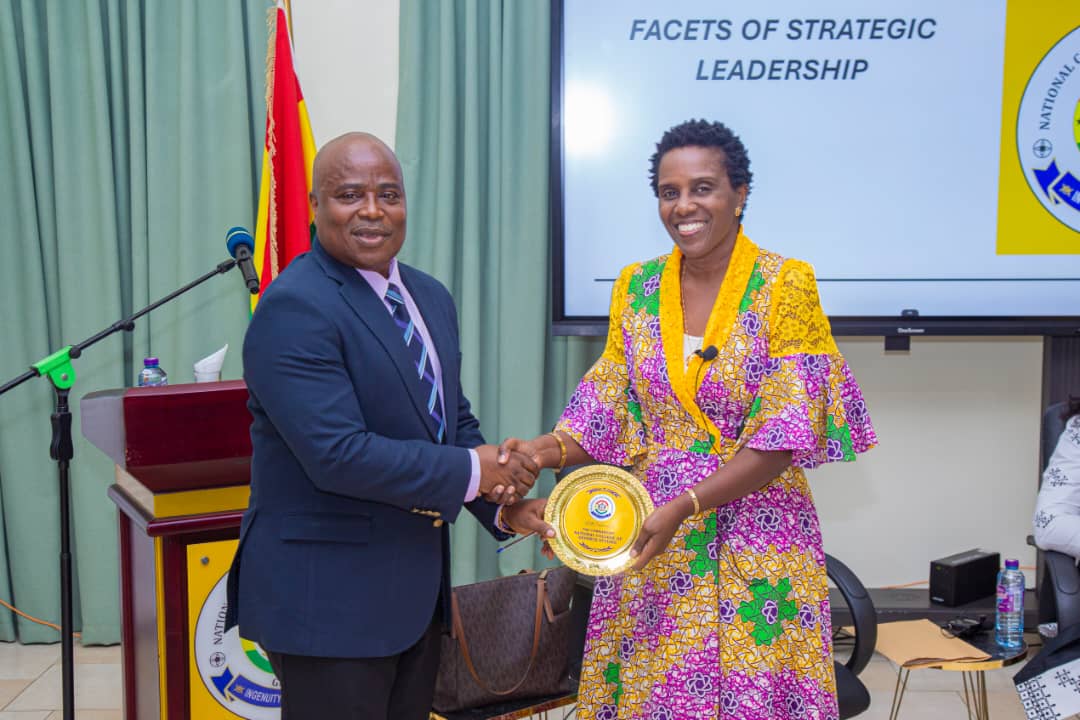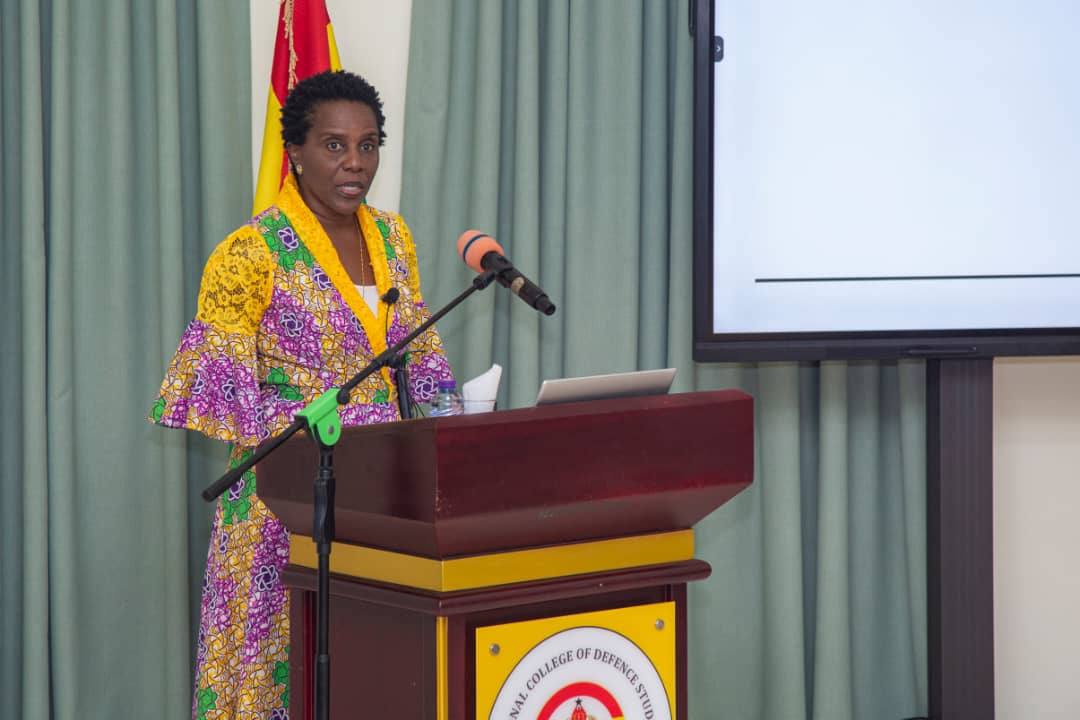
Participants of the Strategic Leadership Course 2–2026 on Thursday, 12 March 2026, attended a seminar at the Arakan Officers’ Mess Conference Auditorium as part of their academic programme designed to deepen their understanding of leadership at the strategic level.
The seminar featured a panel discussion on the theme “Facets of Strategic Leadership.” The session was chaired by Dr Benonia Aryee and brought together distinguished panelists, including Dr Stella Agyenim-Boateng, a former Ambassador to Belgium, and Ambassador Sena Siaw-Boateng.
During the discussion, the panelists examined the complex and evolving challenges confronting contemporary leaders in both public and private institutions. Among the issues highlighted were gender imbalance in leadership structures, human rights concerns, economic difficulties, corruption, and pressures arising from the external environment. The speakers noted that such multifaceted challenges require leaders who possess strategic vision and the ability to inspire hope and resilience among their followers.
A key focus of the discussion was gender equality in leadership. The panelists emphasized the need for gender mainstreaming and the creation of equitable opportunities that enable women to thrive alongside their male counterparts. They stressed that increasing women’s participation in decision-making processes and leadership roles across organizations is essential for promoting inclusive governance and sustainable development.
In this regard, the panelists referenced initiatives aimed at advancing women’s participation in leadership and peace operations, including the Elsie Initiative for Women in Peace Operations, which seeks to increase the representation of women in peace and security missions. They also noted that women currently hold 41 seats in the Parliament of Ghana, representing approximately 14.9 percent of the legislature.
Further reference was made to the Affirmative Action (Gender Equity) Act 2024, which mandates that women’s representation in public, political, and decision-making positions should range between 30 and 50 percent. According to the panelists, effective implementation of the legislation would contribute significantly to achieving the broader development aspirations outlined in Agenda 2063, the African Union’s long-term development blueprint.
Addressing leadership within the public sector, the speakers underscored the responsibility of leaders to ensure that institutional systems function efficiently. They called for the reduction of bureaucratic bottlenecks and unnecessary delays so that public institutions can deliver services more effectively. The importance of collaboration, strategic partnerships, and strong professional networks in enhancing institutional performance was also emphasized.
The panel further examined challenges confronting multinational organizations, particularly those arising from environmental and cultural dynamics in an era defined by VUCA (Volatility, Uncertainty, Complexity, and Ambiguity). The speakers observed that global developments increasingly influence national economies, noting that no country operates in isolation. As a result, leaders must demonstrate cultural intelligence and sensitivity when engaging with diverse cultures, fostering mutual respect while avoiding ethnocentrism in international and multicultural environments.
Emotional intelligence was also highlighted as a critical component of effective leadership. Leaders were encouraged to cultivate self-awareness, remain attentive to their surroundings, and build strong emotional connections that foster trust within their organizations. Adaptability, flexibility in leadership style, and effective communication were identified as essential attributes that enable leaders to guide their institutions successfully in a rapidly evolving environment.
The panelists underscored that leadership is fundamentally about service and stewardship. They emphasized that leaders are entrusted with the responsibility to make meaningful impact, serve the people under their care, and remain accountable to those they lead. Rather than exercising authority as overlords, effective leaders must demonstrate humility, responsibility, and a commitment to the welfare and development of their organizations and society.
The seminar provided participants with valuable insights into the evolving nature of strategic leadership and reinforced the importance of ethical, inclusive, and adaptive leadership practices in addressing contemporary governance and organizational challenges.